Late Bloom Branching Questline: 'Demonic Incursion'
Add a header to begin generating the table of contents
Goal
- Design and write a narrative-focused project.
- Improve interactive narrative design and writing skills, processes, and format within a realistic studio production context.
- Understanding of collaborative processes between game writing, narrative design, and other disciplines.
- Soft skills like productive disagreement, conflict resolution, and standing out in a large team setting.
- Iterative skills like feedback gathering, analysis, and application.
-
Overview
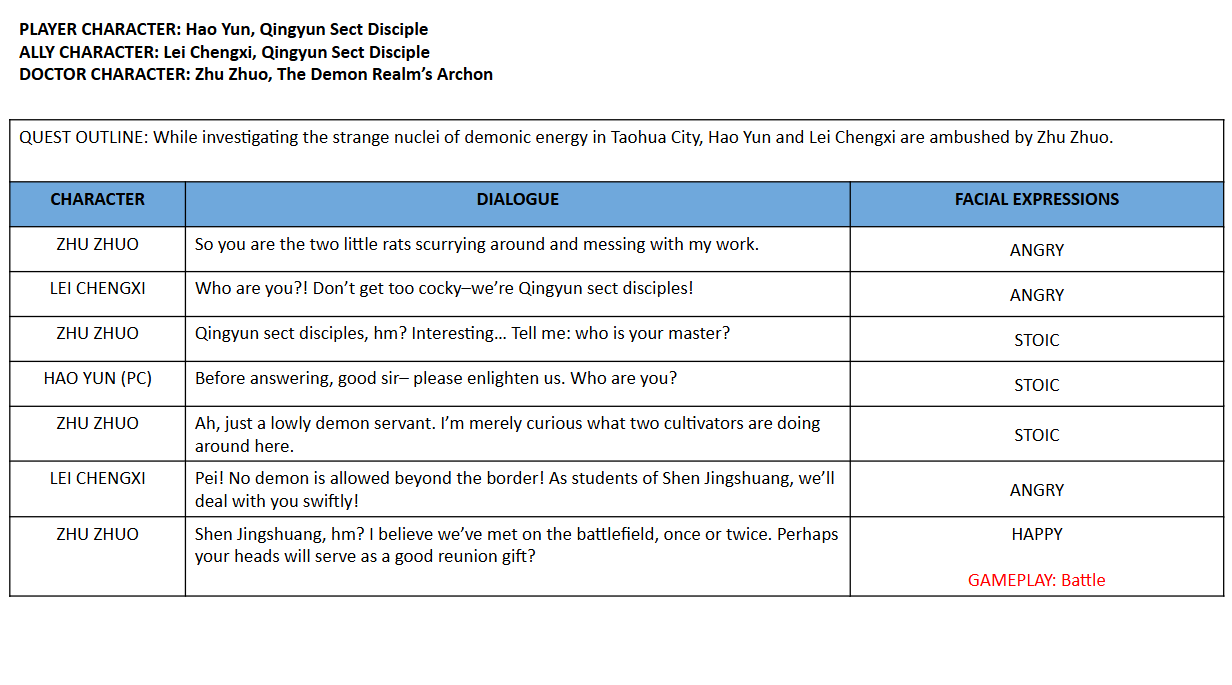
Linear & Branching Dialogue
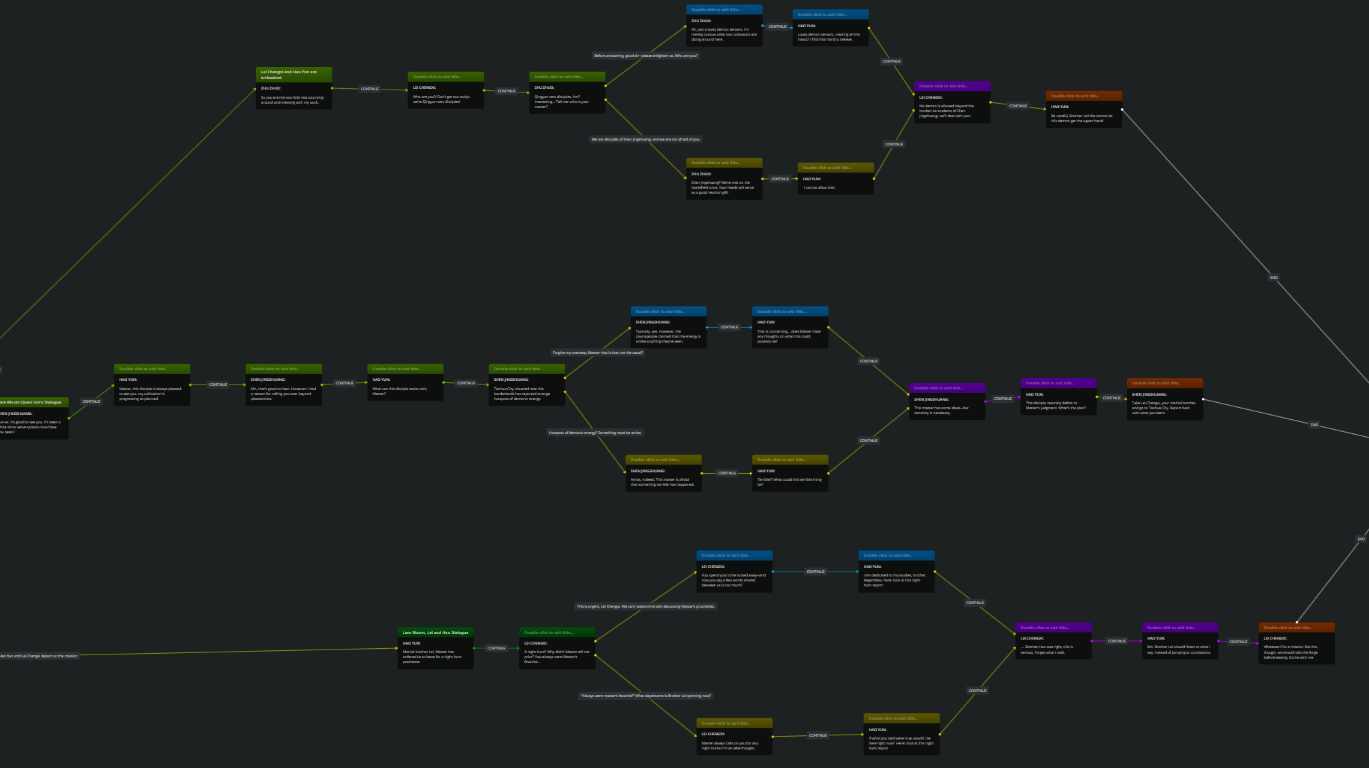
Designed Quest Branching Dialogue
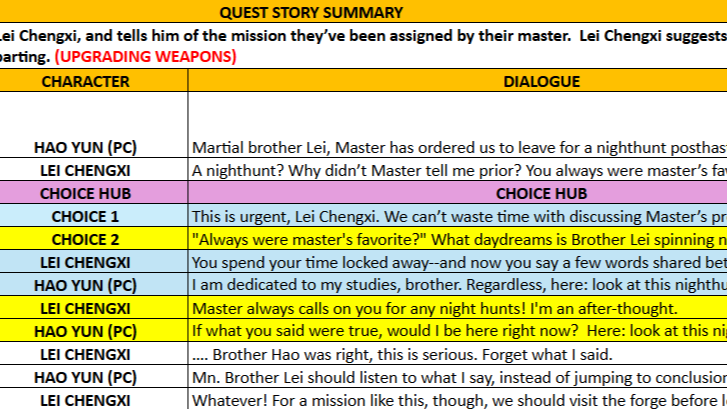
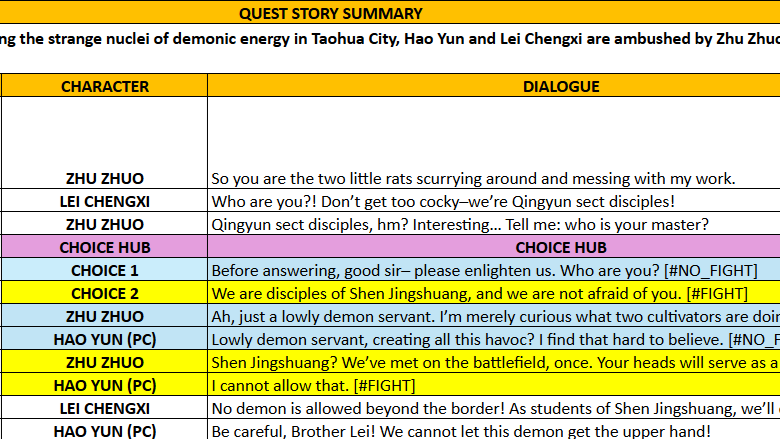
I designed branching dialogue threads that integrated variables and choices smoothly into gameplay. I did so by creating:
- Role-play Choice Hub: Allows the player to pursue their style of gameplay through polar opposite choice options.
- Tutorial Quest – As this quest is still part of the tutorial, there are no quest acceptance hubs.
I also created thematic choices to increase player immersion:
- Urgent Stakes: Guaranteed clarity on the narrative urgency for the Upgrading Weapons, Healing the Player, and Battle gameplay.
- Respected Player Character: Designed quest dialogue purposefully to ensure that the player’s choice feels impactful.
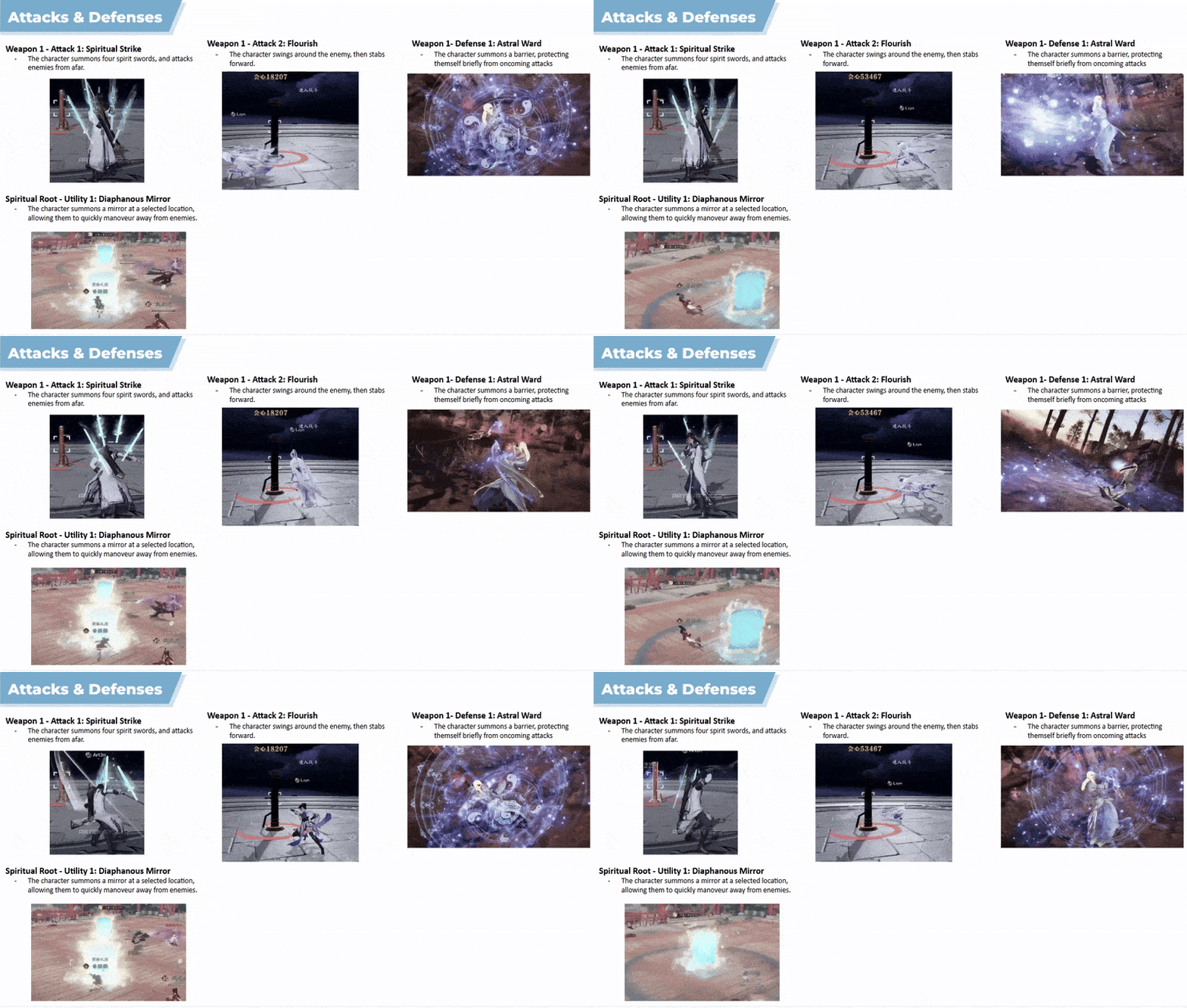
- Tied to Gameplay – Ensured dialogue was tight, informative, and quickly led to gameplay.
Lastly, I made a prototype with the following goals:
- Optimize Player Tap/Clicks: Through a clickable prototype, the script can be playtested to improve player experience.
- Live Design Space – Arcweave allows for comments and notation, allowing for cross-team collaboration.
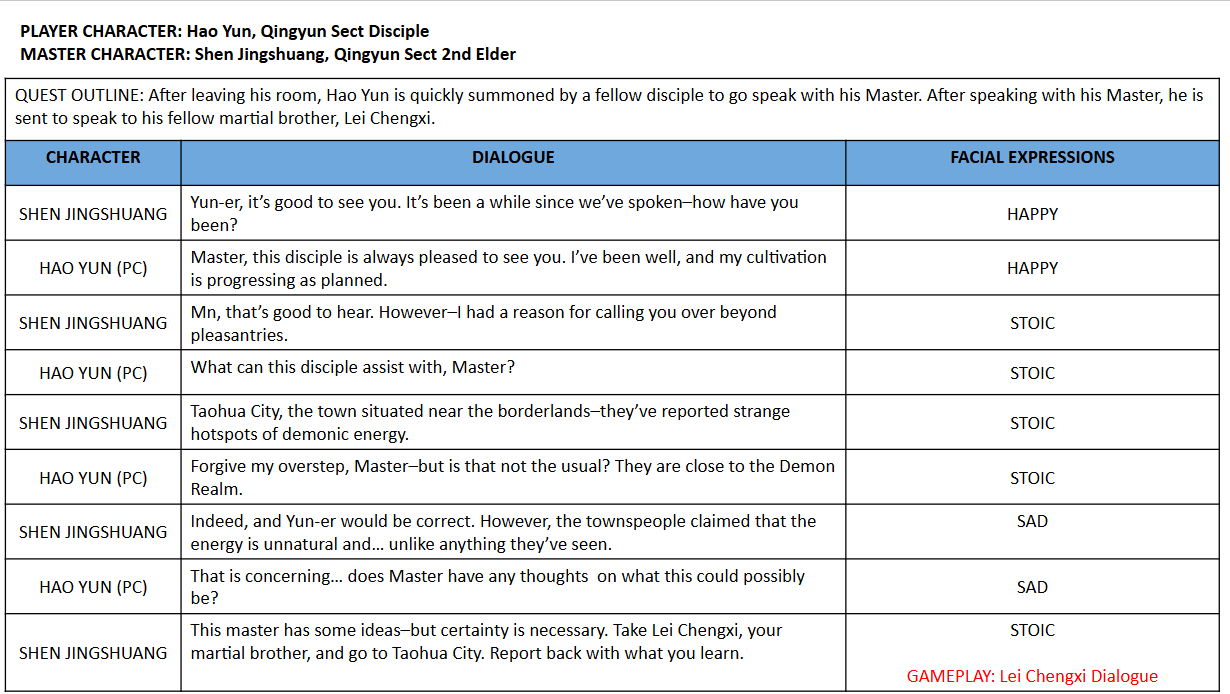
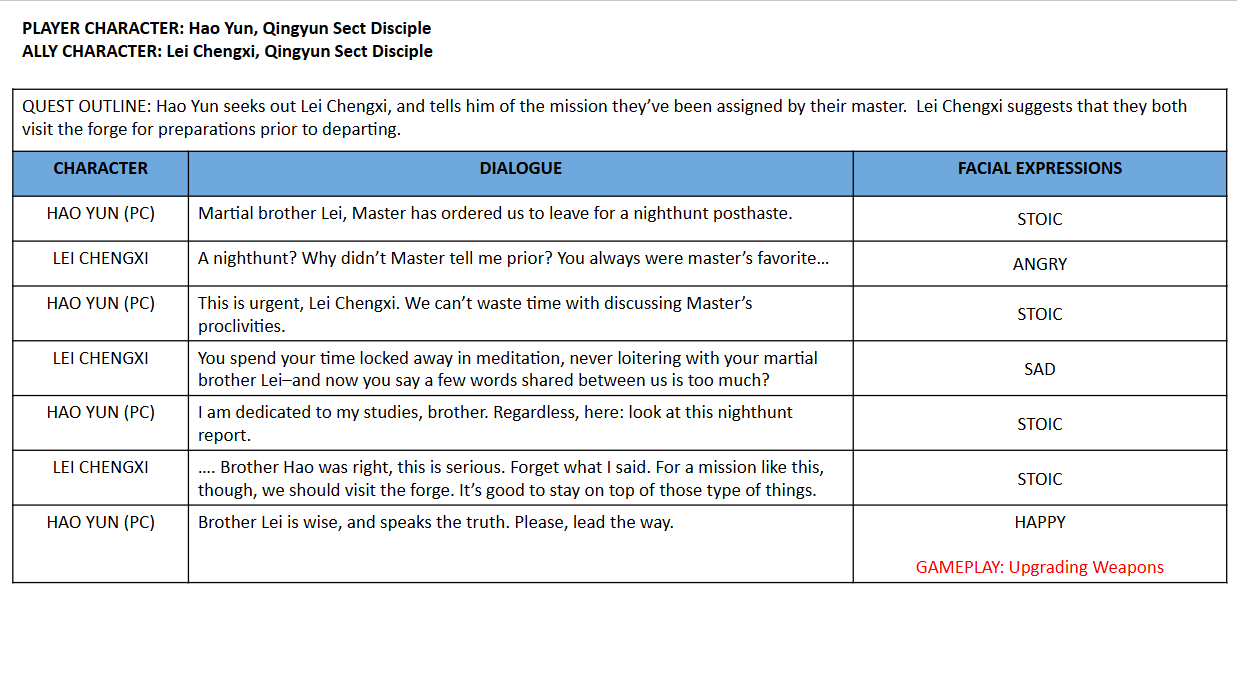
Linear Dialog
I included the following linear dialogue design considerations when designing my linear dialogue:
- Gameplay Needs – As part of the tutorial section, this interaction was designed to raise tension and encourage player investment into the narrative, while also introducing key characters.
- Quest Reminders – Remind the player of the quest and narrative expectations.
I also wanted to ensure:
- Clear Goals – Considering that this questline was intended to be introductory, the quests were simple and concise.
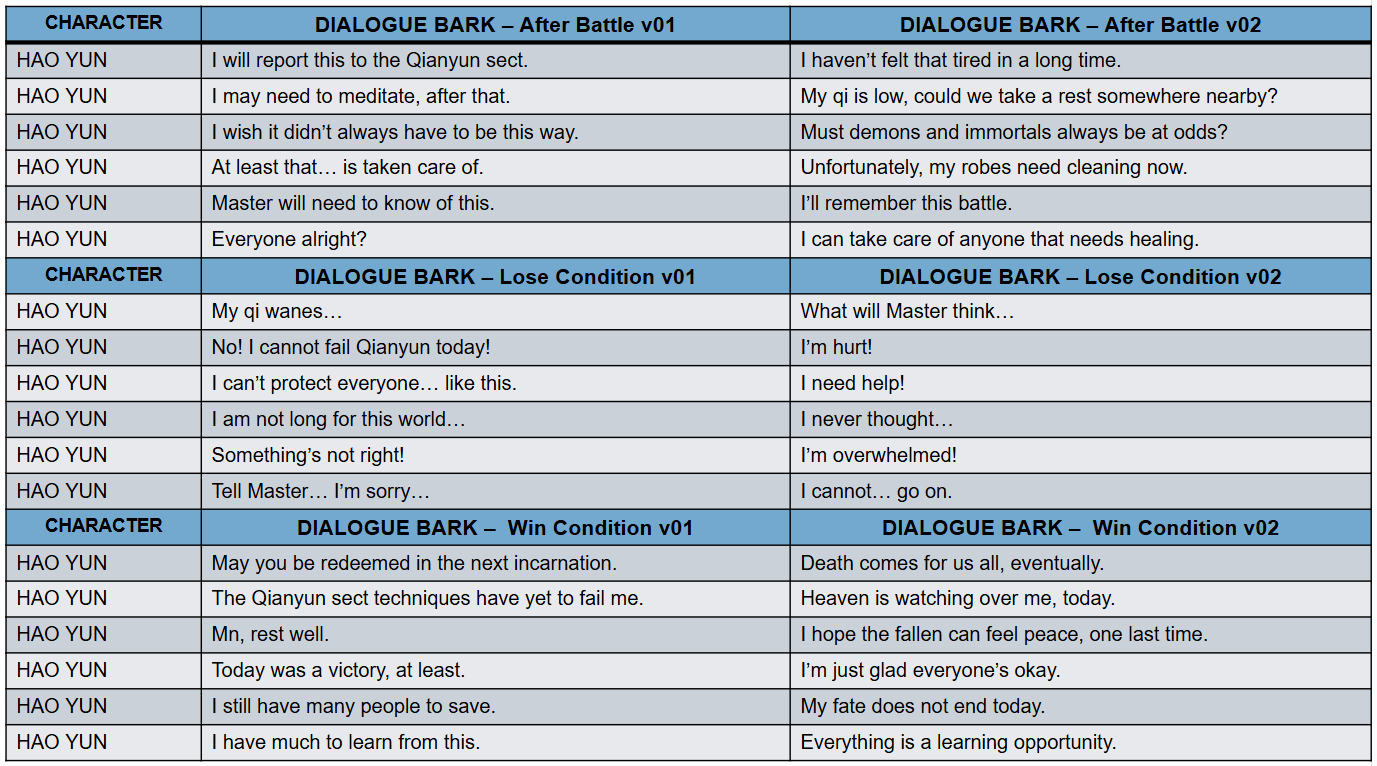
Character Design & Barks
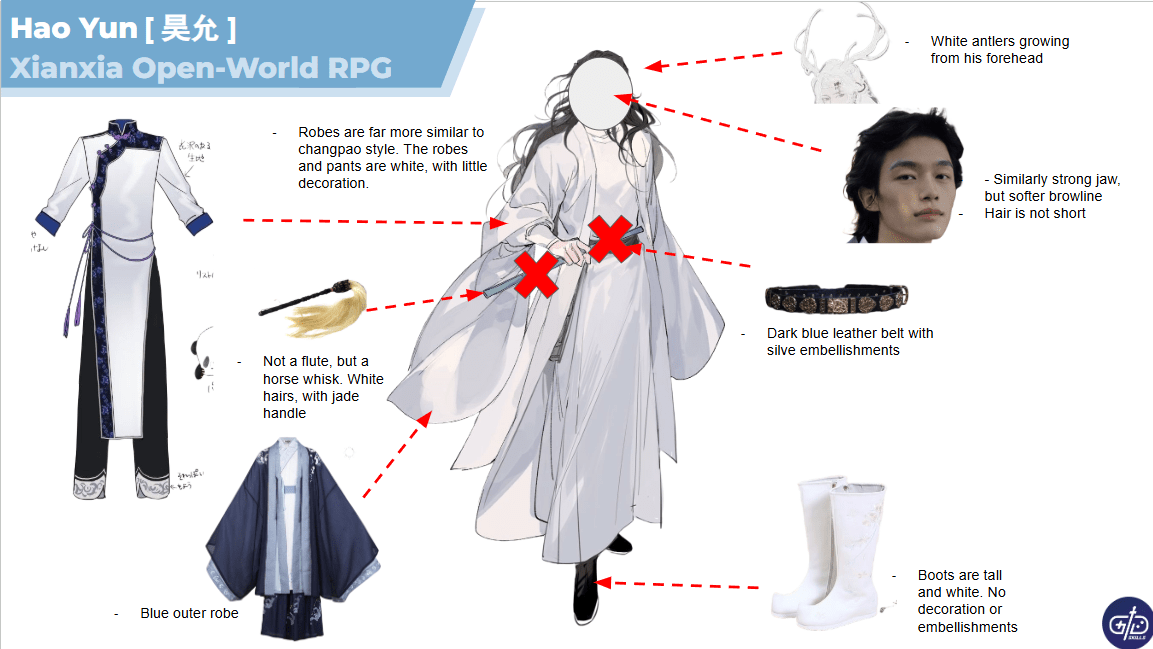
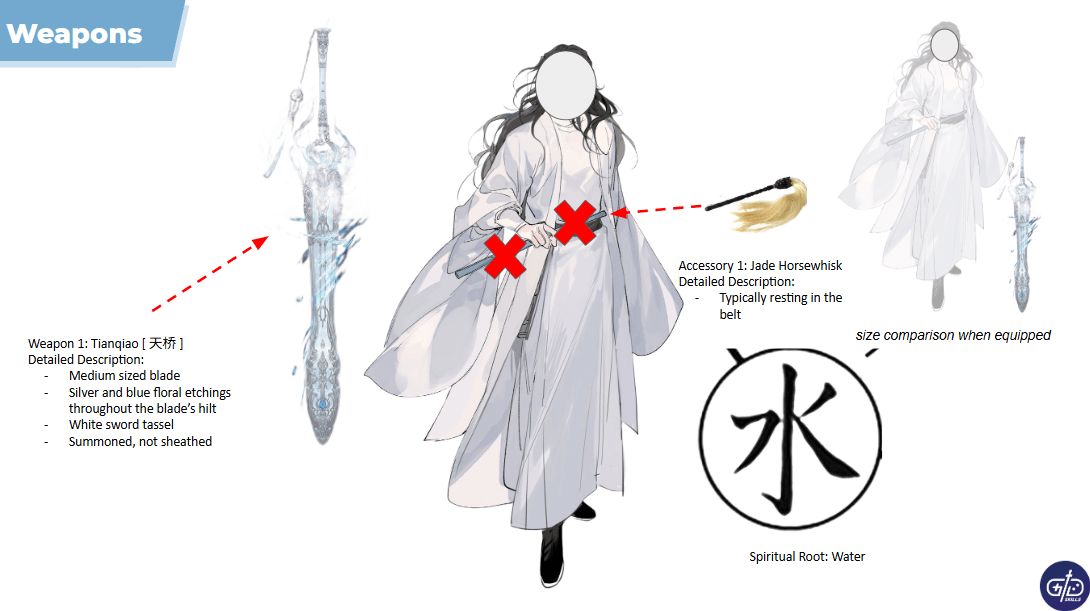
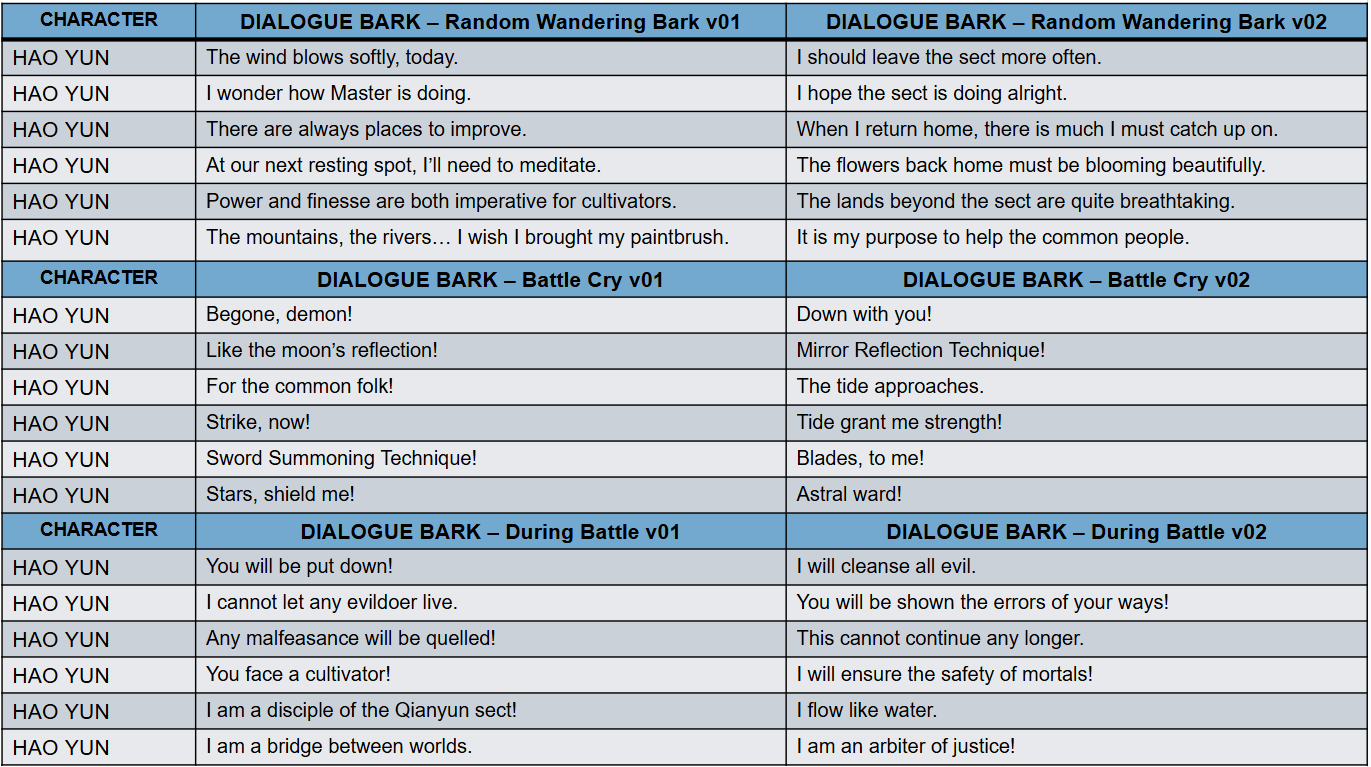
Player Character: Hao Yun 【 昊允 】
Hao Yun is the player character.
Typically, in martial arts works, the main characters are either righteous, law-abiding cultivators or explosive, eye-catching playboys. I had wanted Hao Yun to be far more like the former, but with a blander ego.
That isn’t to say that Hao Yun is a bland character. Instead, I designed Hao Yun this way so that the player can develop their personality throughout the game, and allow the player more agency in what kind of cultivator they want to be. The virtuous do-gooder, or the developing rebel that eventually challenges Heaven.
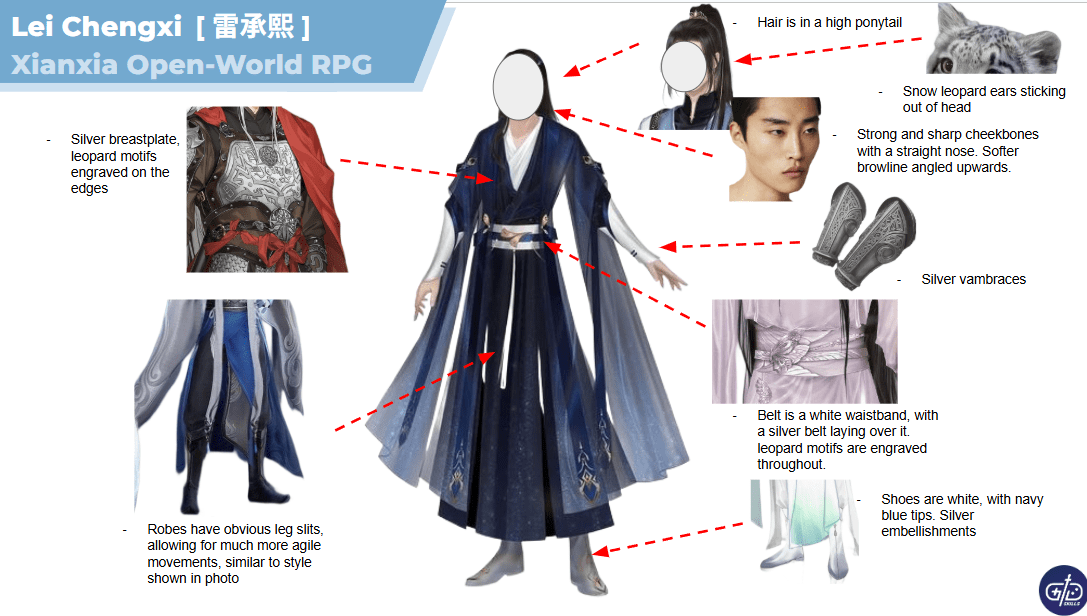
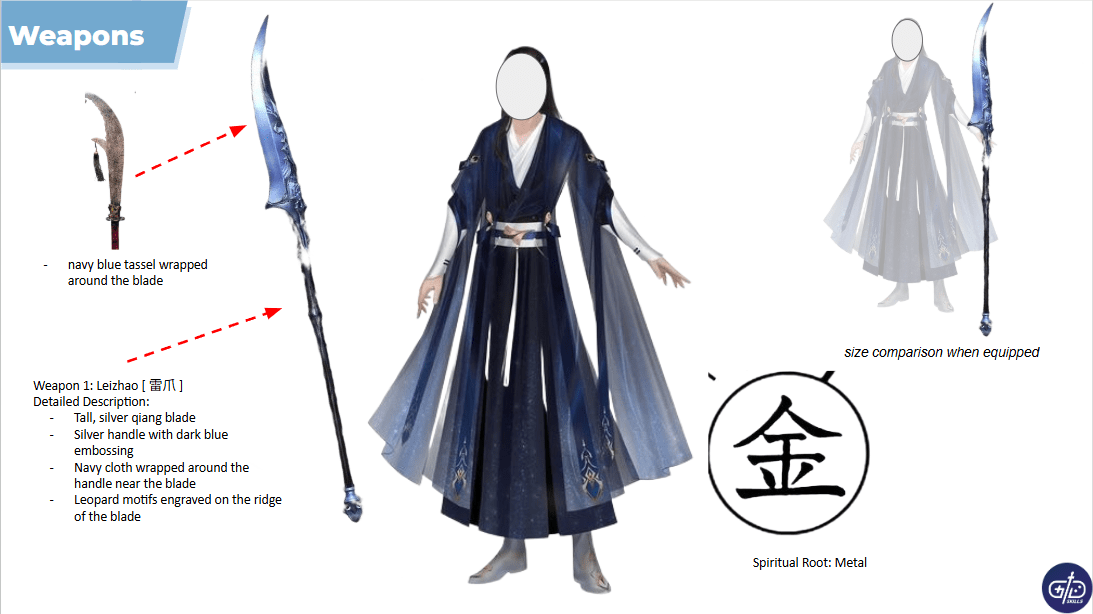
Ally NPC: Lei Chengxi 【 雷承熙 】
Lei Chengxi is one of the first companions that the player meets.
Since Hao Yun was designed as a character that’s somewhat insipid and “middle of the road” initially, I wanted Lei Chengxi to represent the opposite: ambitious, battle-hardened, and vain.
Lei Chengxi’s purpose was to serve not only as a metaphorical rival to Hao Yun, but also to challenge the player. If the player also pursued similar goals to Lei Chengxi, what would be the outcome? Lei Chengxi is shown as hot-headed and egotistical throughout his interactions with others. In a world as wild and unyielding as the Jianghu, what could be the result?
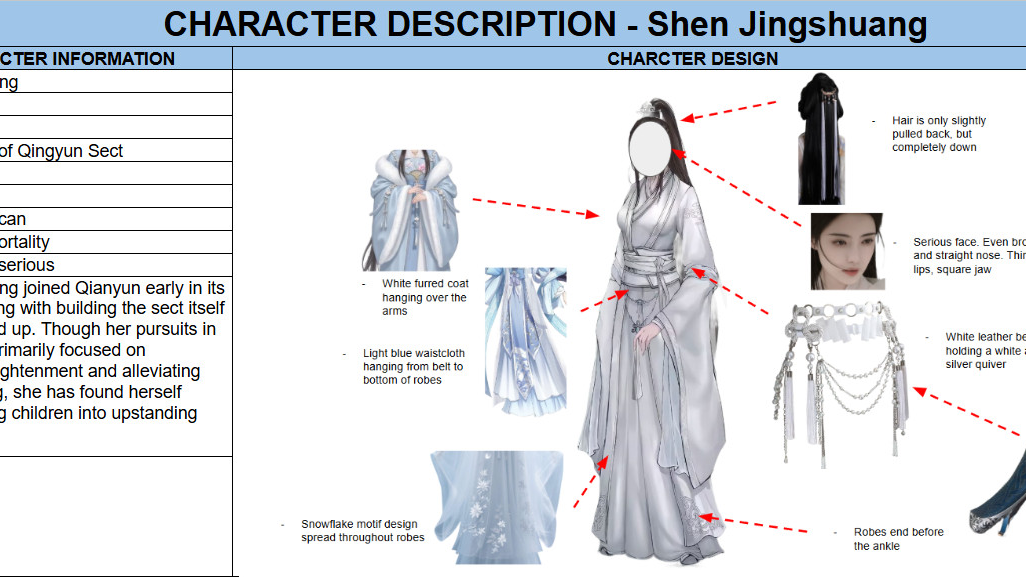
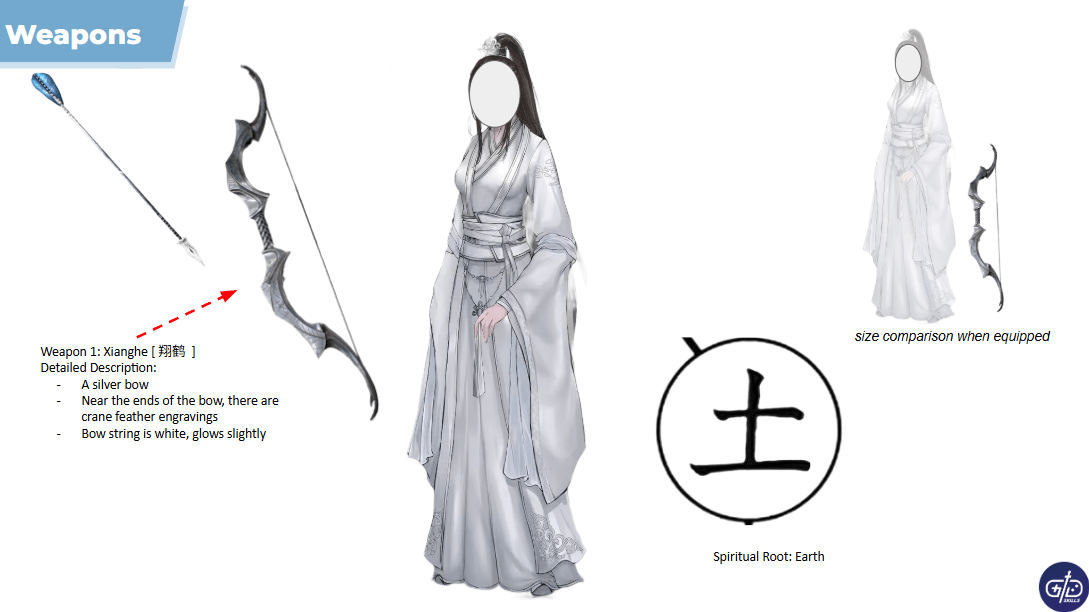
Master NPC: Shen Jingshuang 【 沈静霜 】
Shen Jingshuang is one of the elders of the Qingyun sect.
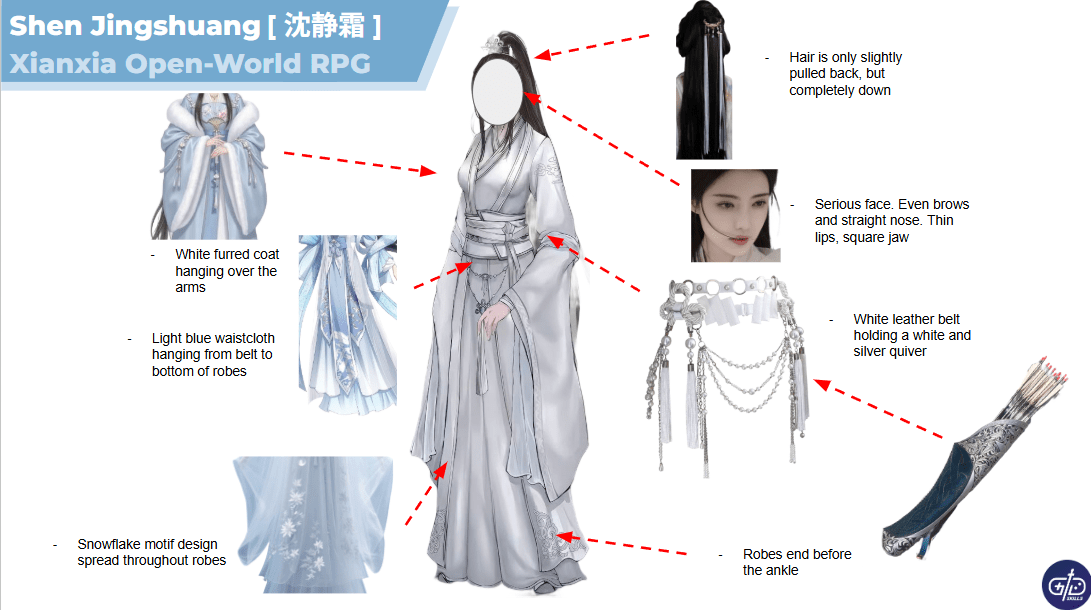
She serves as both Lei Chengxi and Hao Yun’s master, and a goalpost to reach for the “honorable above all else” cultivator.
Like Lei Chengxi, Shen Jingshuang serves as another metaphorical rival to Hao Yun—the other end of the spectrum. Once again, this was designed to challenge the player’s perspective of what they want to be within the Jianghu. Since Late Bloom is intended to be an RPG, the player’s choice (or illusion thereof) is tantamount.
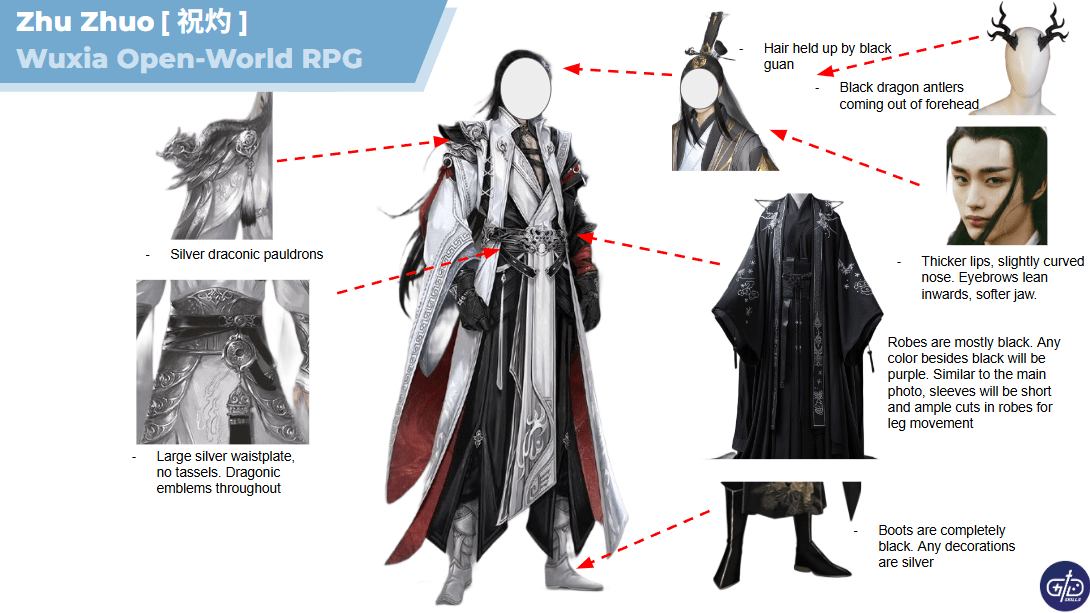
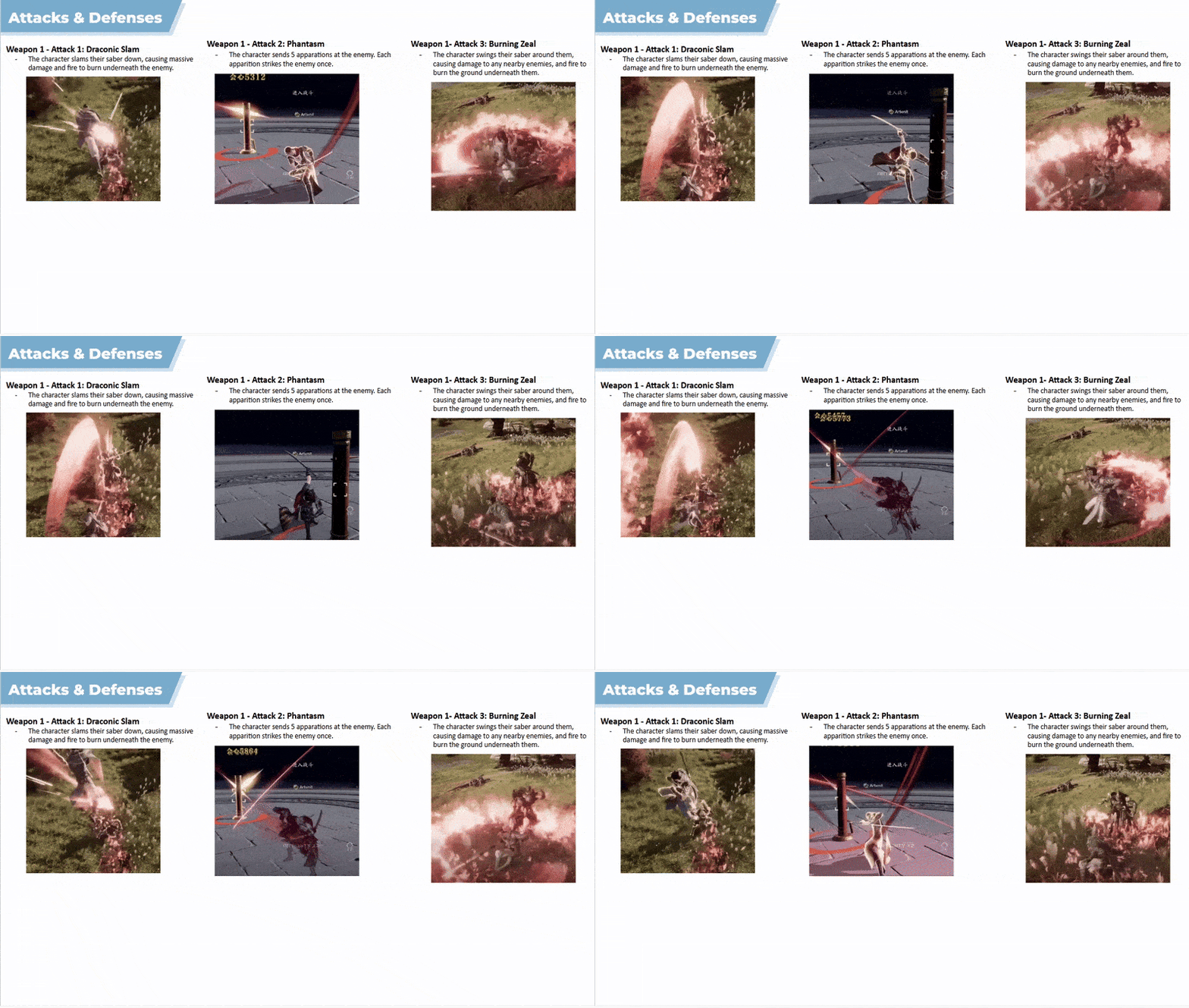
Enemy NPC: Zhu Zhuo 【 祝灼 】
Since I was creating a martial arts work, I naturally had to feature demons of some kind. Within xianxia novels, movies, and TV shows, my favorite characters were the demons who disputed their wretched fate.
Zhu Zhuo is no different in this regard. He represents the suffering of demons, and their climb towards redemption, even if that redemption looks far more distinct from what “mortals” are used to.
Zhuo Zhuo is hot-headed and full of defiance and will stop at nothing to wipe every cultivator off the face of the earth. He cannot tolerate the sins that immortals have committed against his kind—and will ensure to return the favor tenfold.
Storyboarding & Trailer Script Writing
Storyboarding
Storyboard Overview
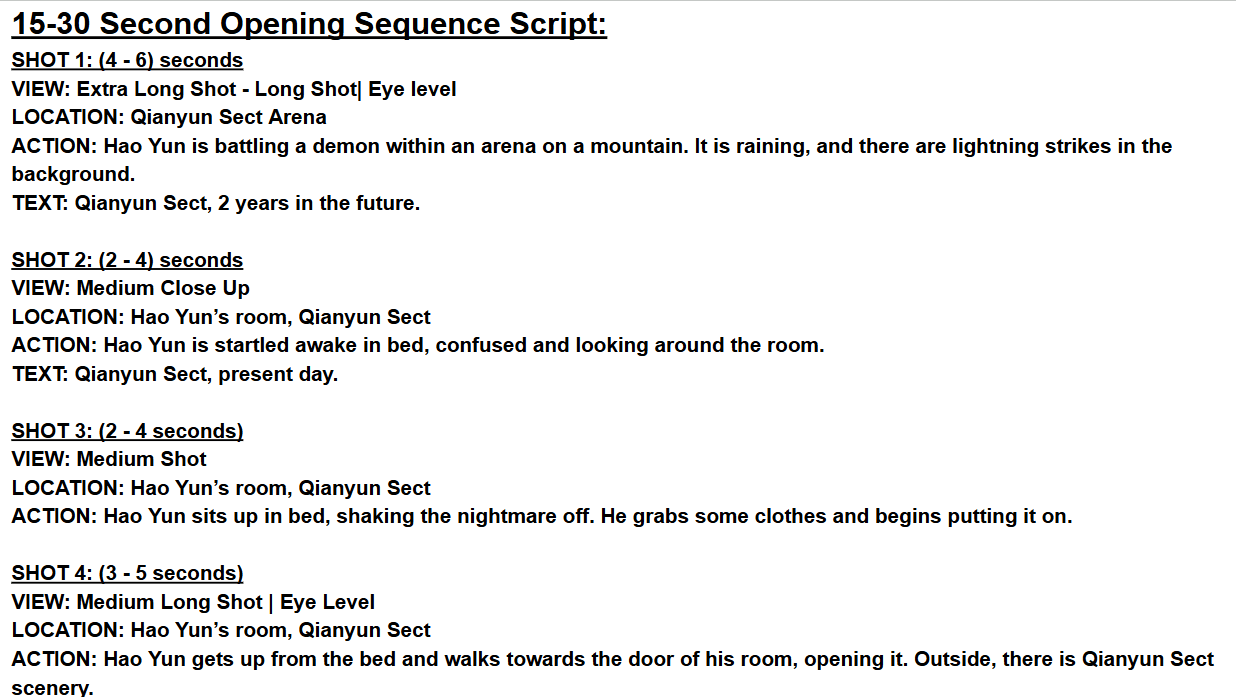
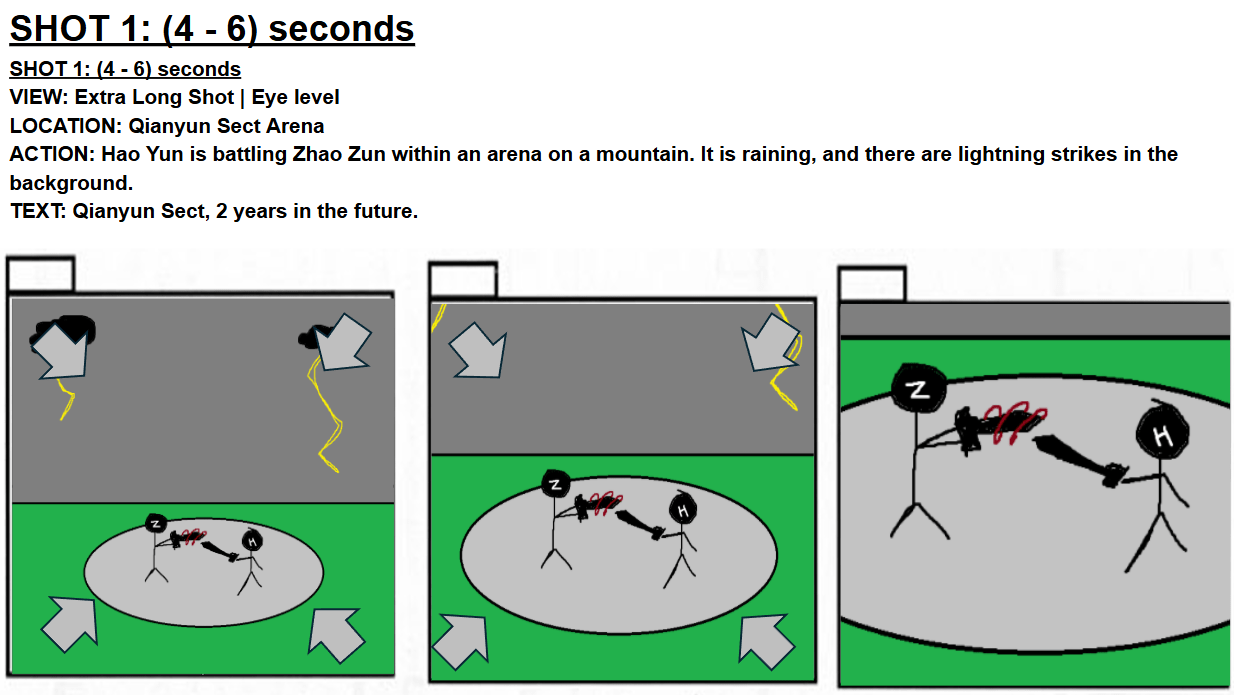
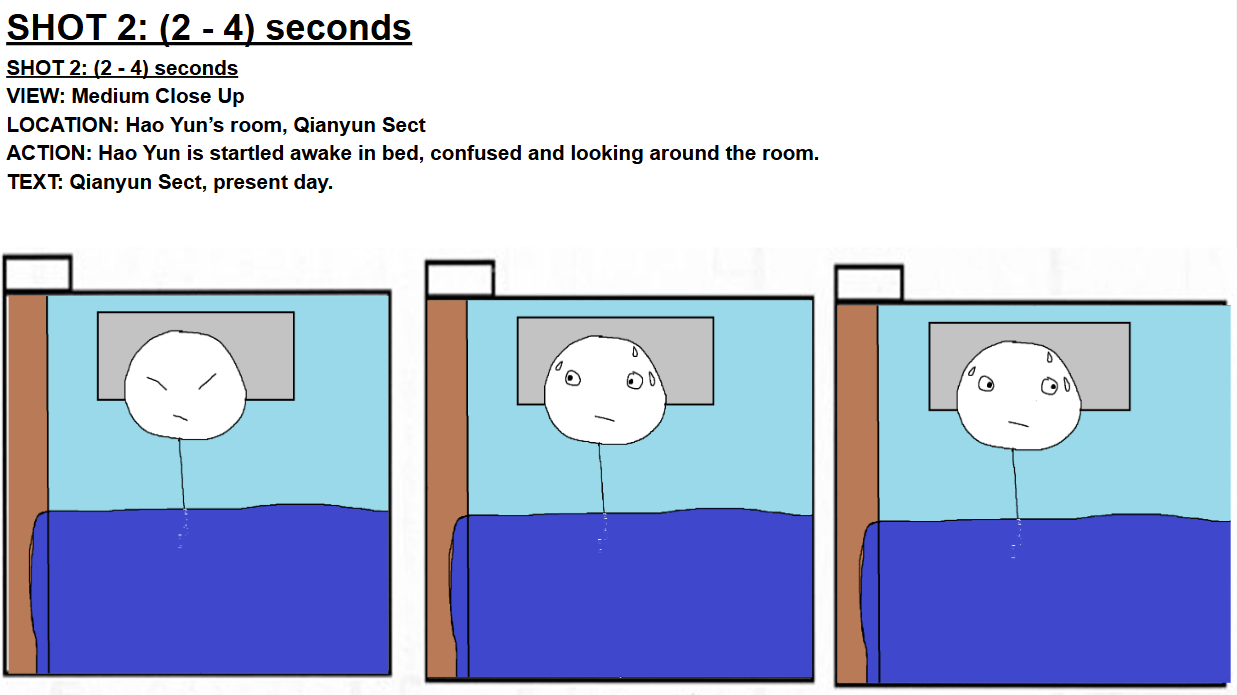
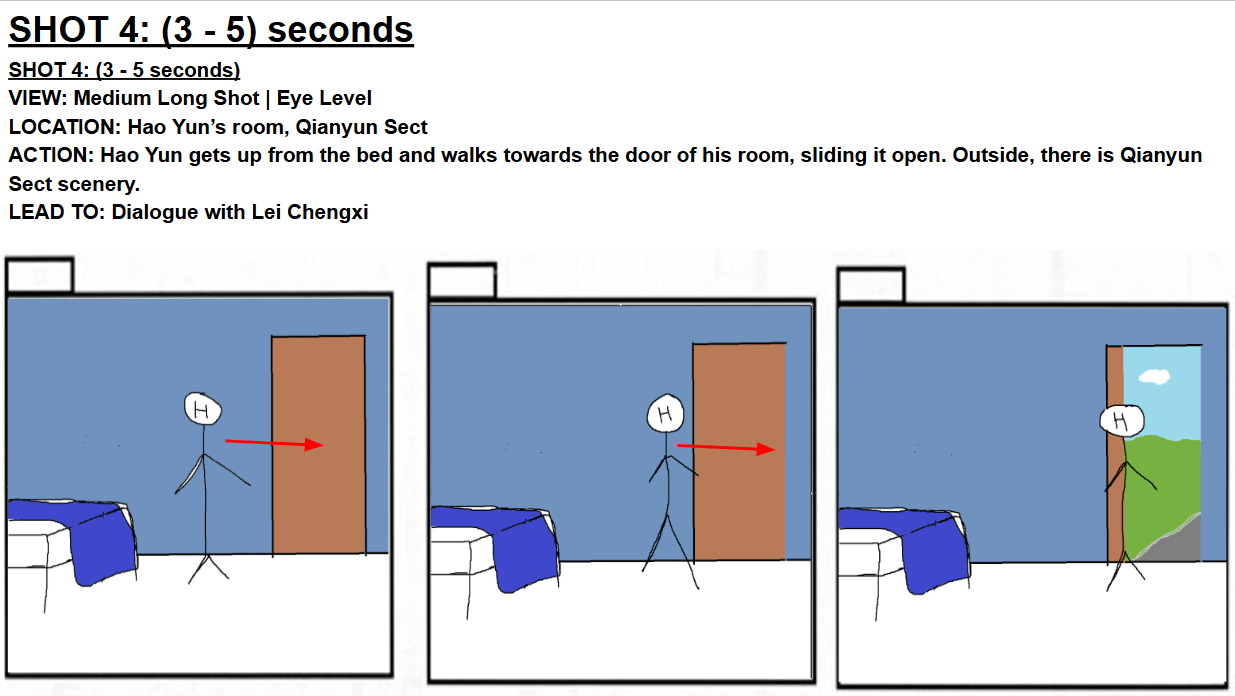
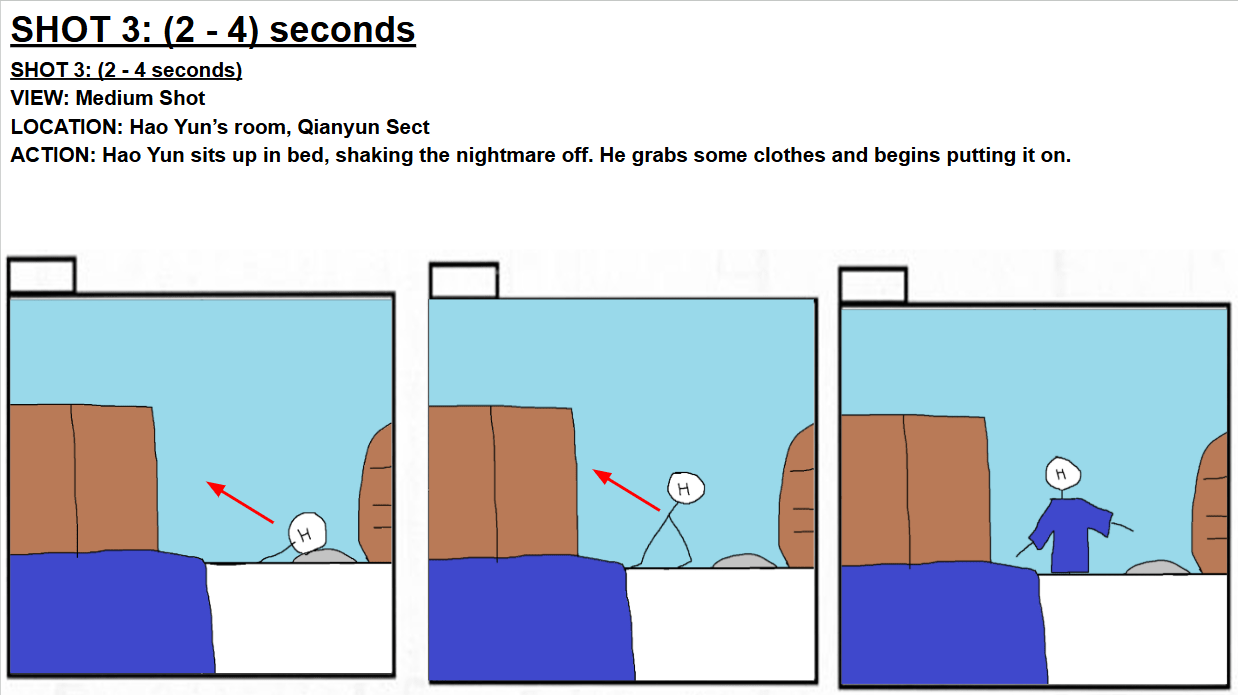
I wrote a storyboard script to describe the opening sequence of the game and also designed a preliminary storyboard for collaboration with potential art and marketing teams for internal approvals:
- Designed shots with worldbuilding in mind by creating a sequence that can serve as both a trailer for the game and the introductory cinematic before the tutorial.
- Specified location, camera view, and action for reference by the art team.
- Considered any potential narrations done by NPCs or main characters when designing specific storyboard beats.
- Drafted a storyboard prototype with simple assets and a simplistic design to maintain quick and efficient communication between different internal teams.
Voice Over Documentation
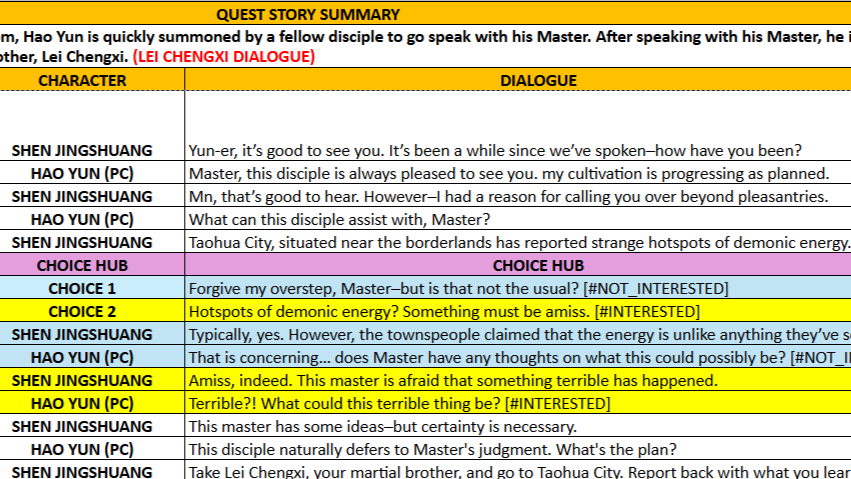
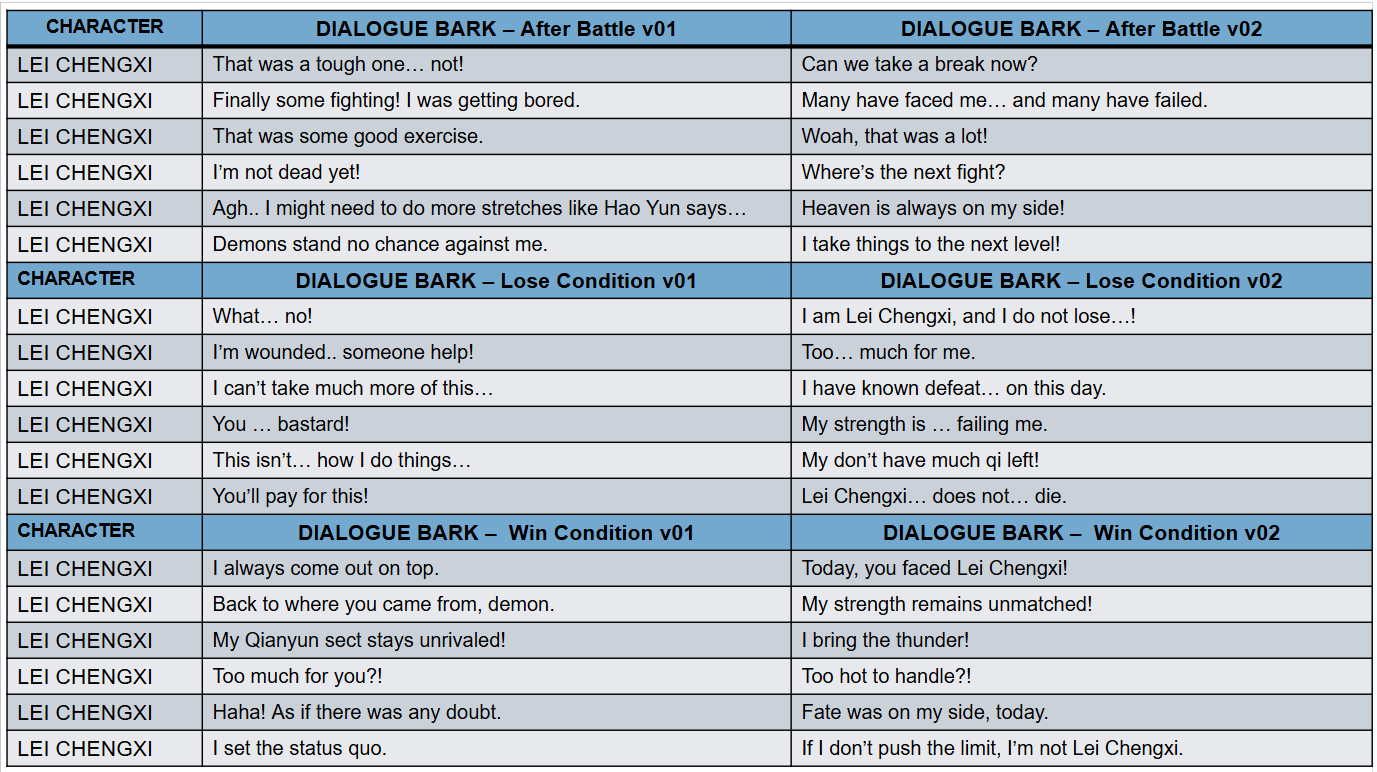
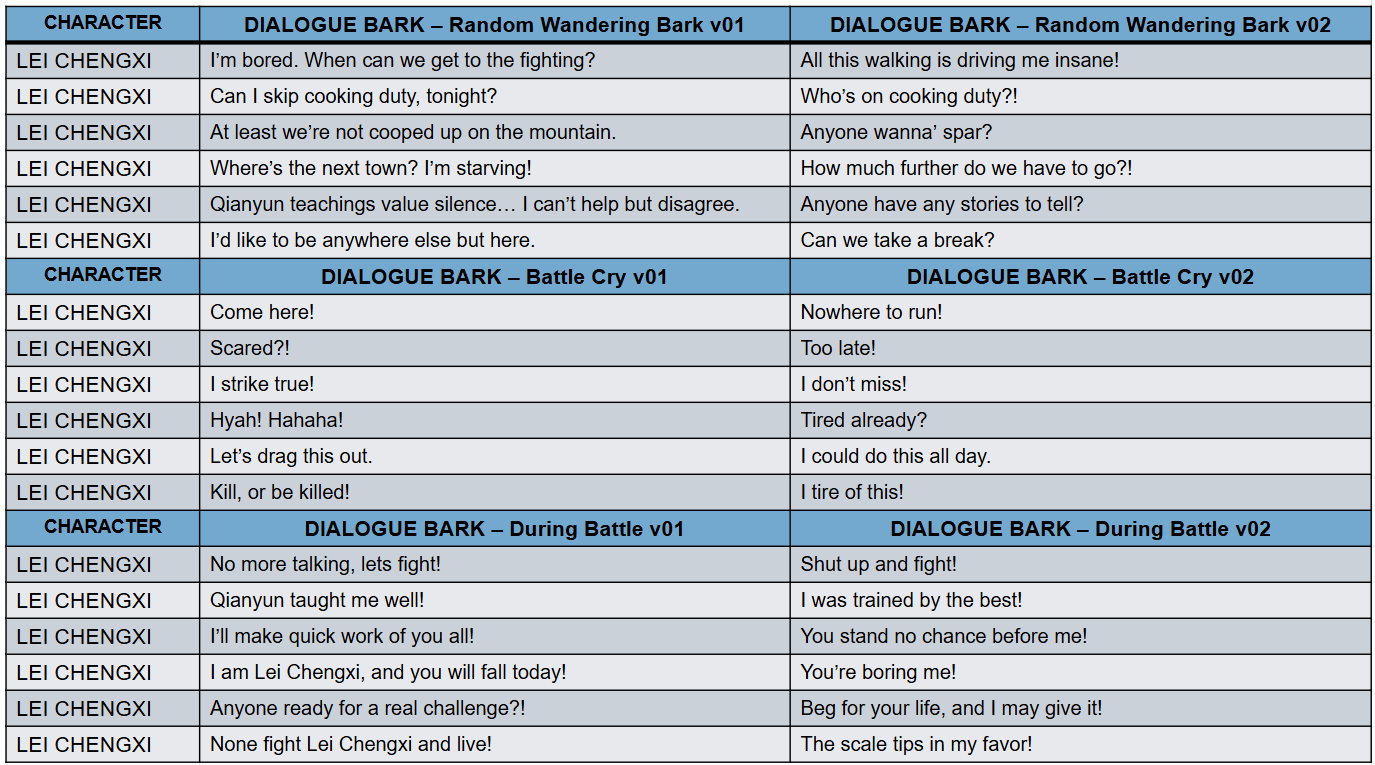
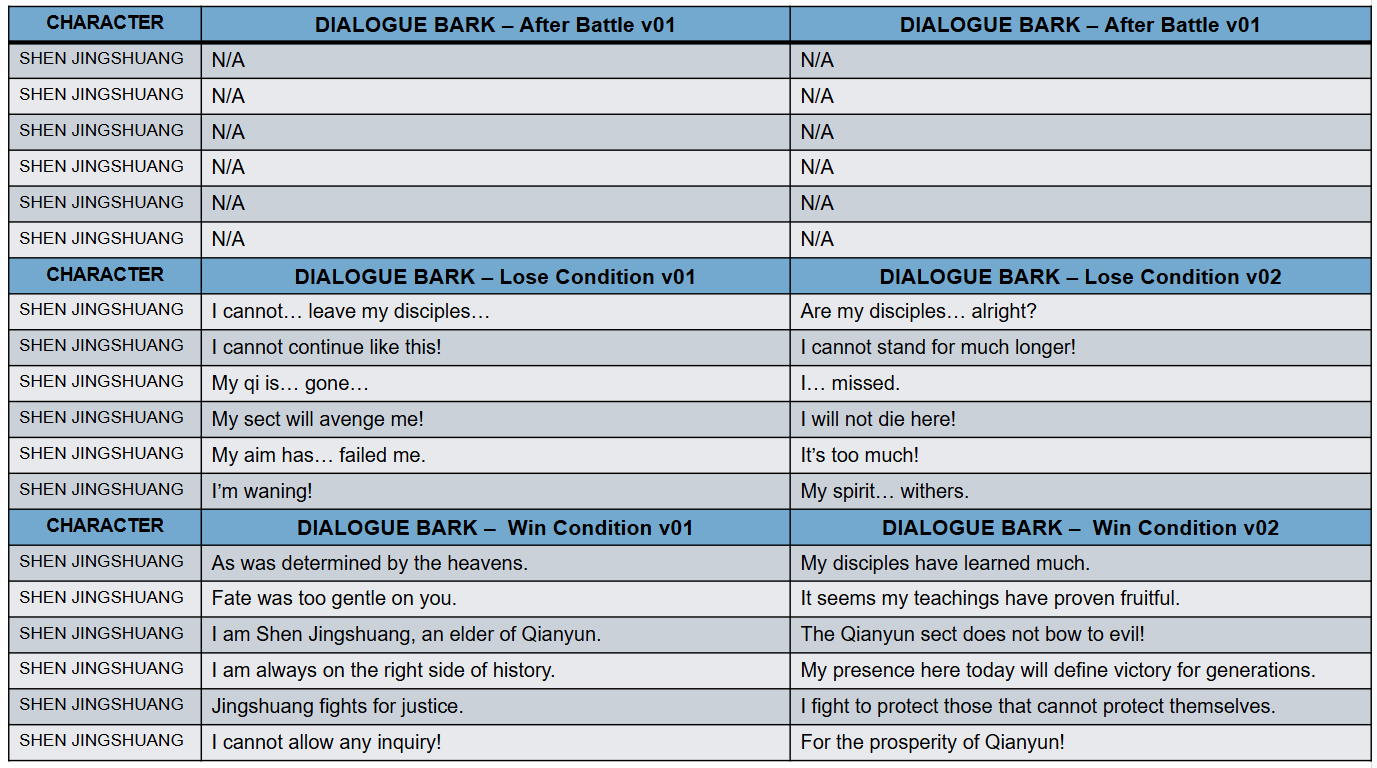
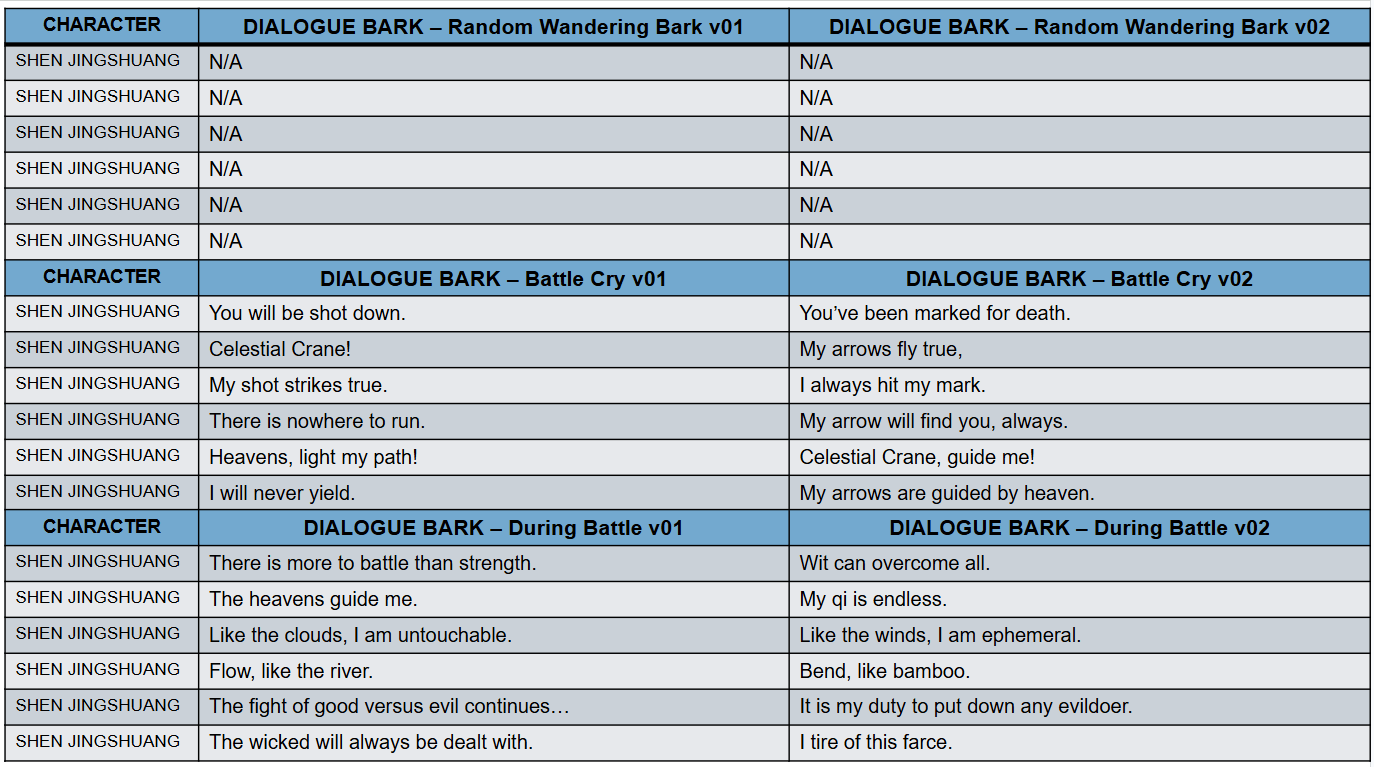
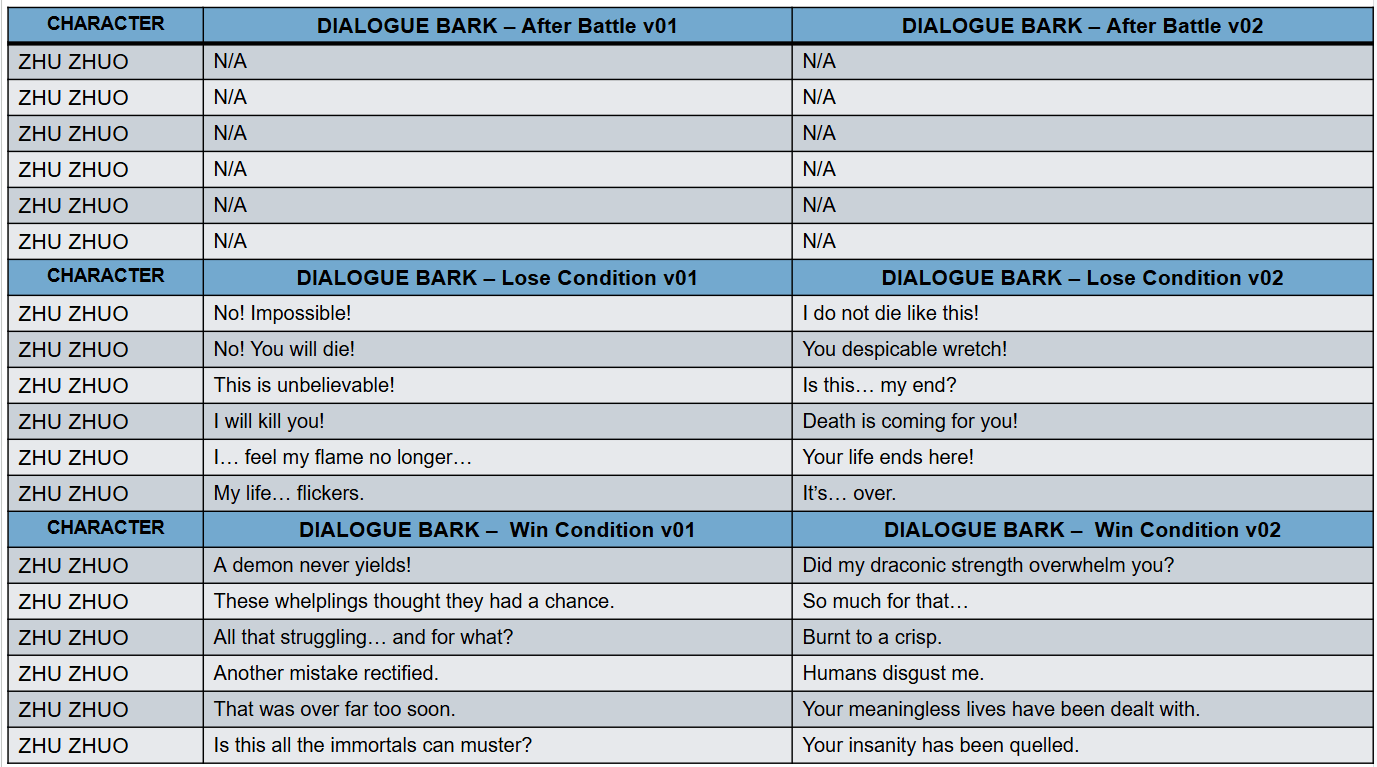
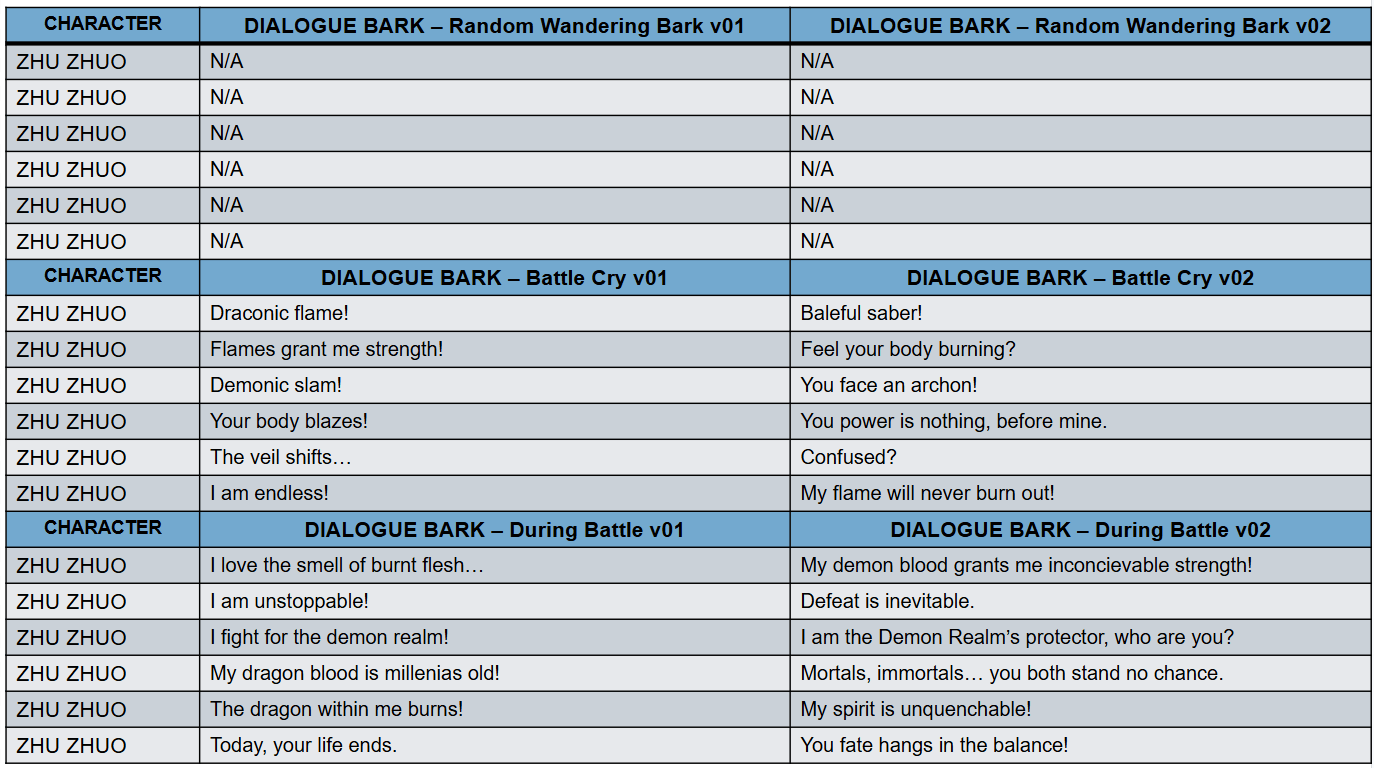
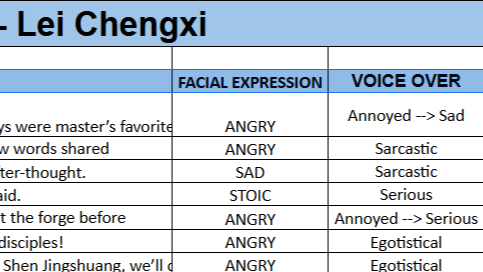
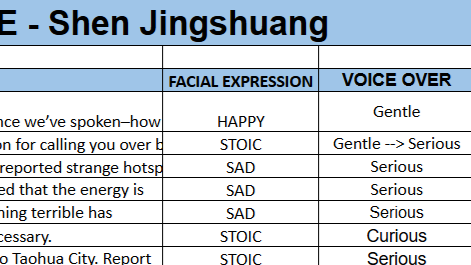
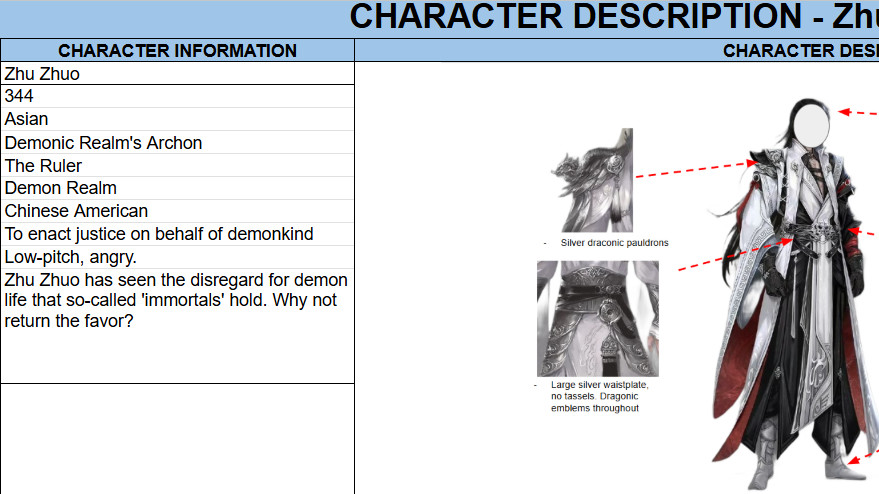
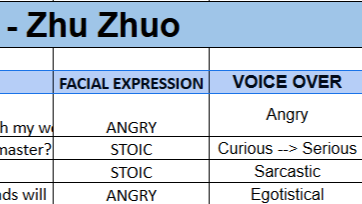
I created 4 voice-over documents for 1 player character, 2 NPC quest characters, and 1 enemy leader to provide thorough and detailed information for voice actors and to also ensure more refined voice recording sessions.
Each document includes:
- Character design images, character backstories, personality notes, motivations, and vocal directions for each character.
- All lines of dialogue for each character, along with scene details, dialogue context, and quest summaries, are provided to give situational and mood context for the voice actor.
Additionally, a Voice-Over Actor Casting Document was designed to specifically assist with casting direction for individual characters based on culture, age, and gender expectations.
Worldbuilding
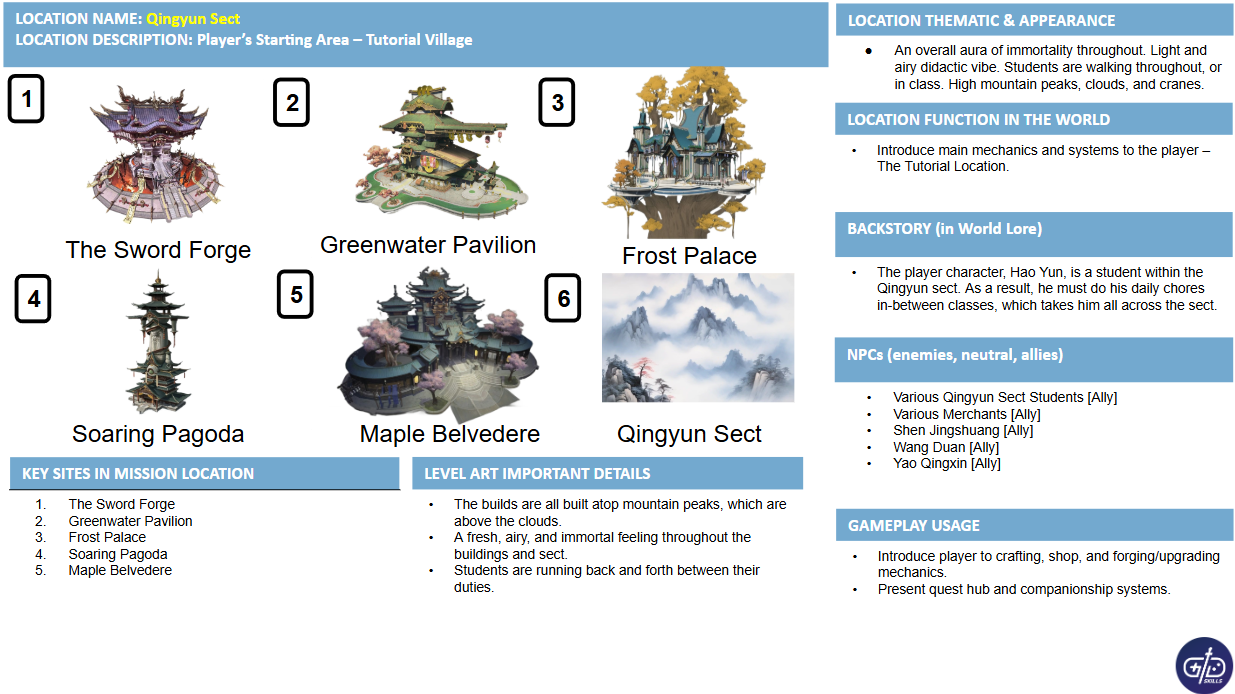
The Qingyun Sect was intentionally designed as the starting area for players.
As such, Qingyun was designed with the following design goals:
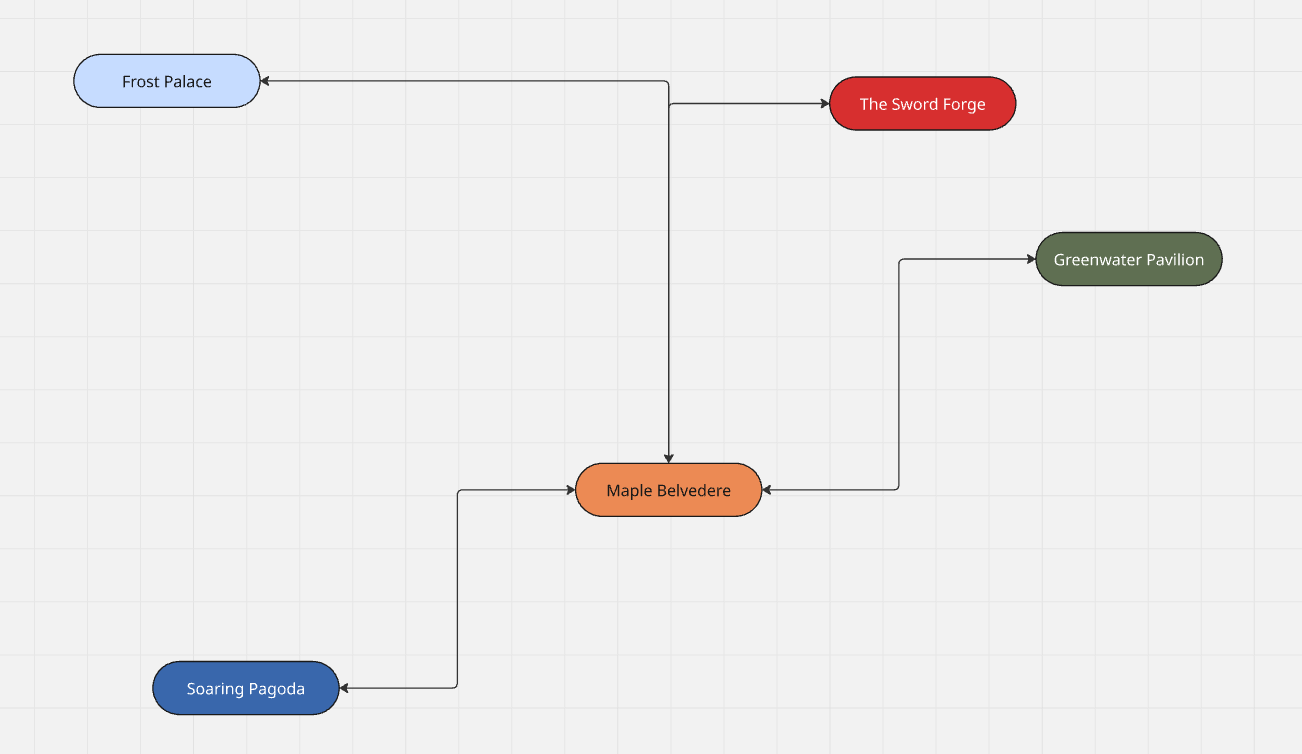
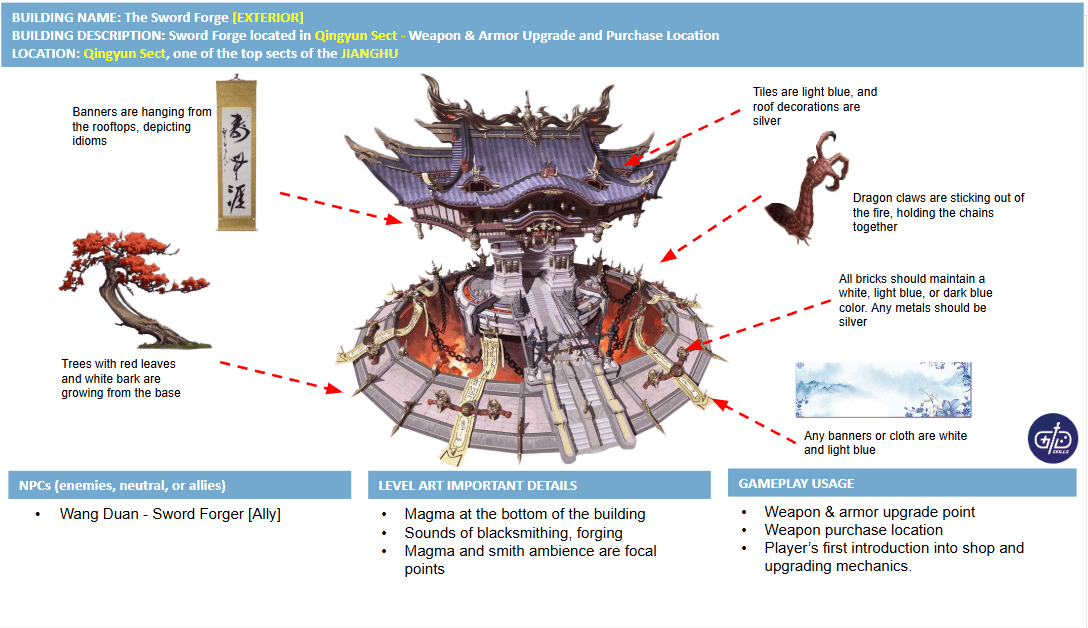
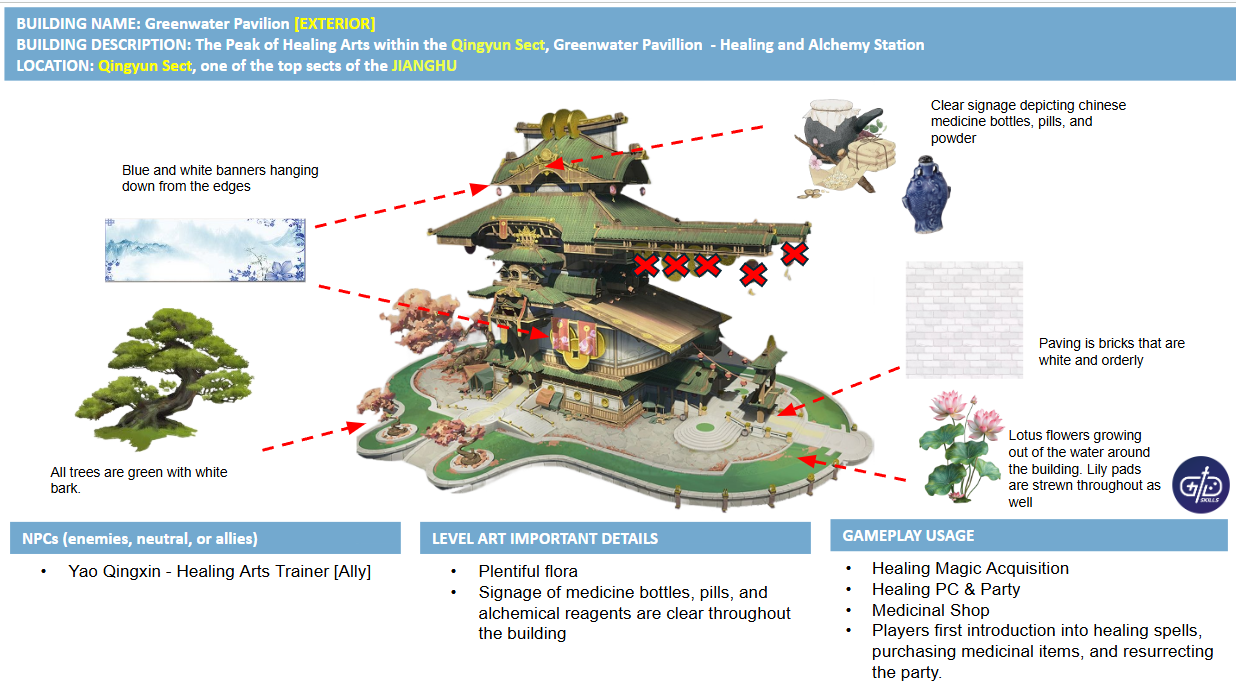
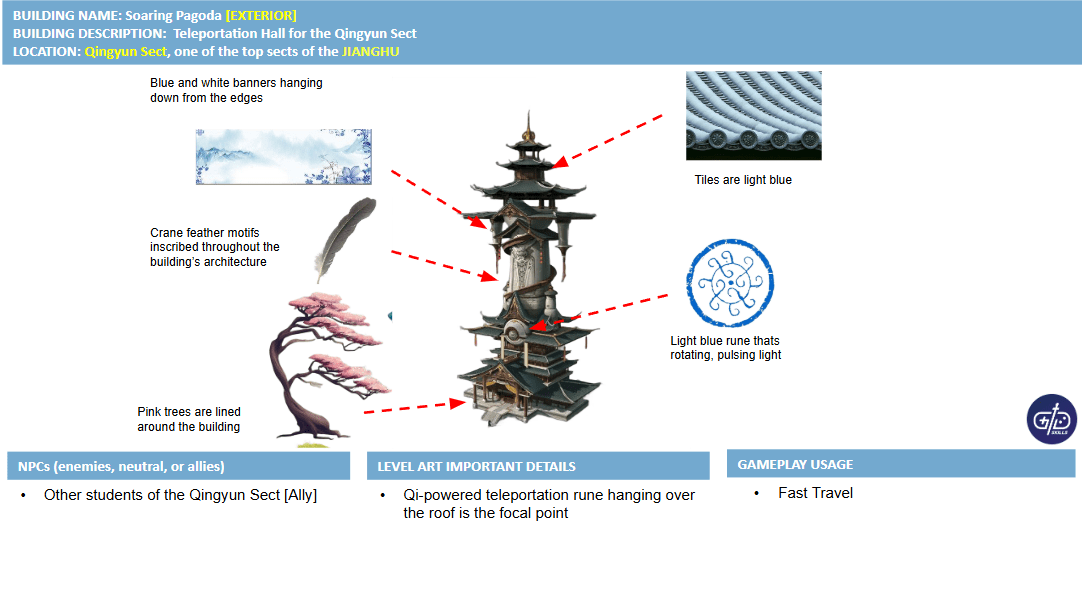
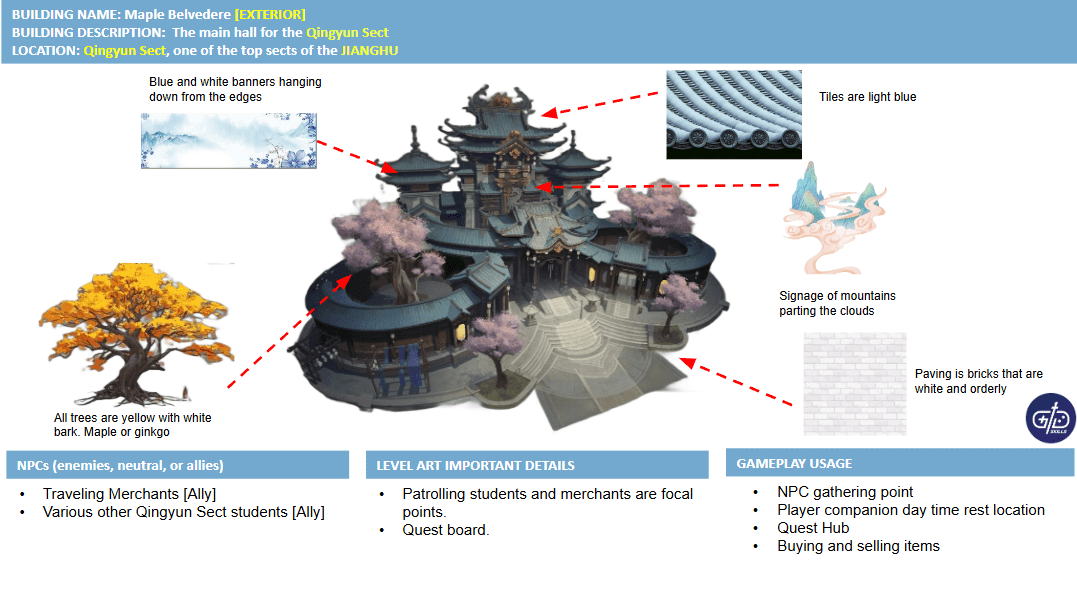
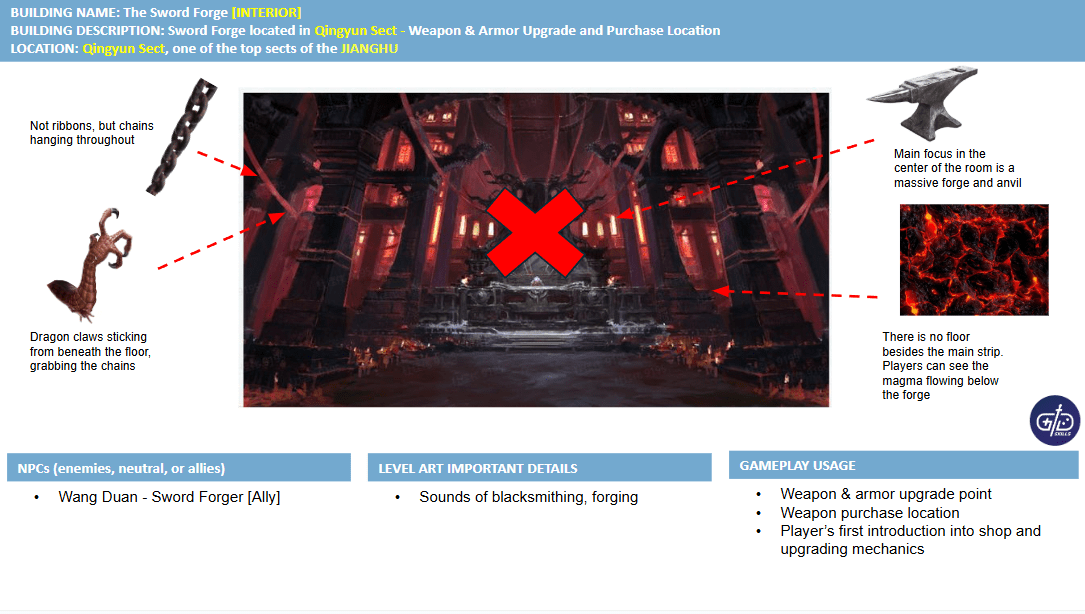
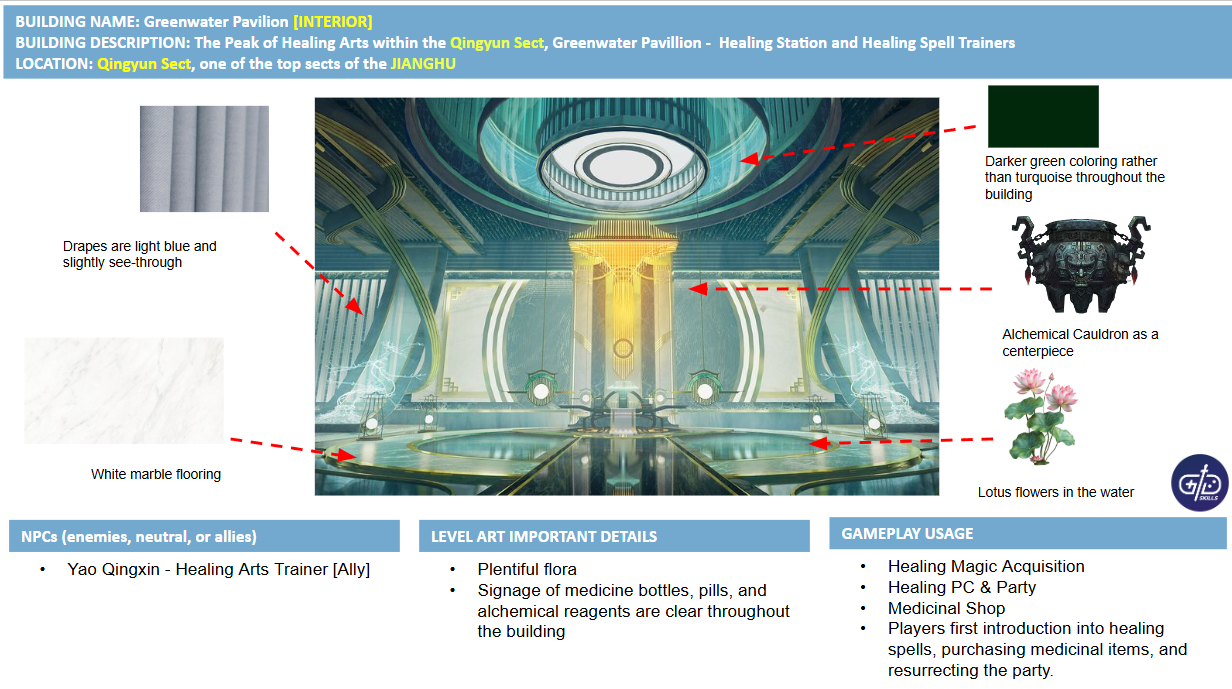
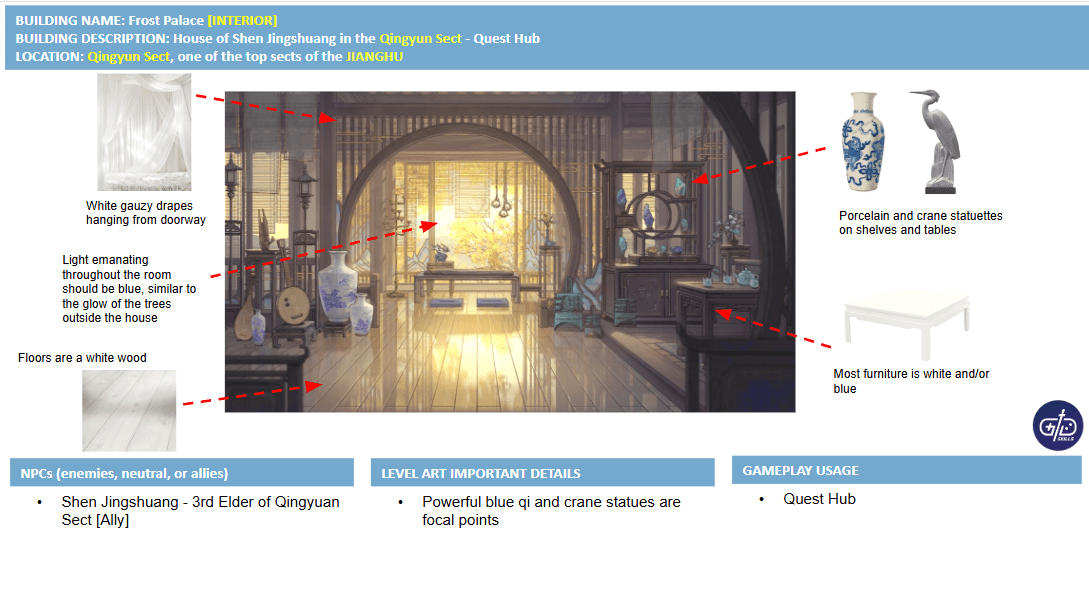
- Highlight key buildings of Qingyun with item placements that resemble the building’s purpose to the player, as well as a connected list of gameplay purposes for the building itself.
- Included notes on points of interest, reference images, and thematic elements for collaboration with the art and level design team.
- Included a reference key with notable NPCs, gameplay mechanics, and a brief backstory for each location.
Fleshed Out The Exterior Locations for The Map
Fleshed Out The Interior Locations for The Map
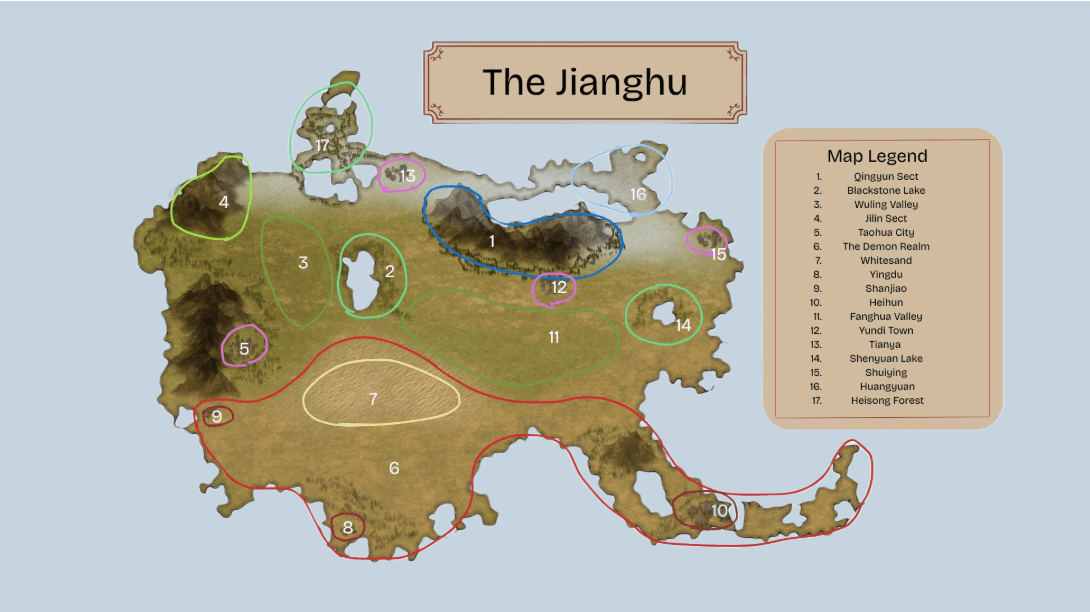
Designed the Jianghu's Cartography
I designed a world map of the Jianghu to exemplify the following design goals:
- Emphasize the different factions at play within the Jianghu.
- Created locations centered on the natural progression of resource needs for gameplay, like forests, mountains, oceans, and caves.
- Divided the key quest locations across the map to encourage exploration, player progression, companion additions, and embark on different narrative arcs as they progress through the story.
- Created a location key to indicate location names, points of interest, and highlight the different factions present within the world.
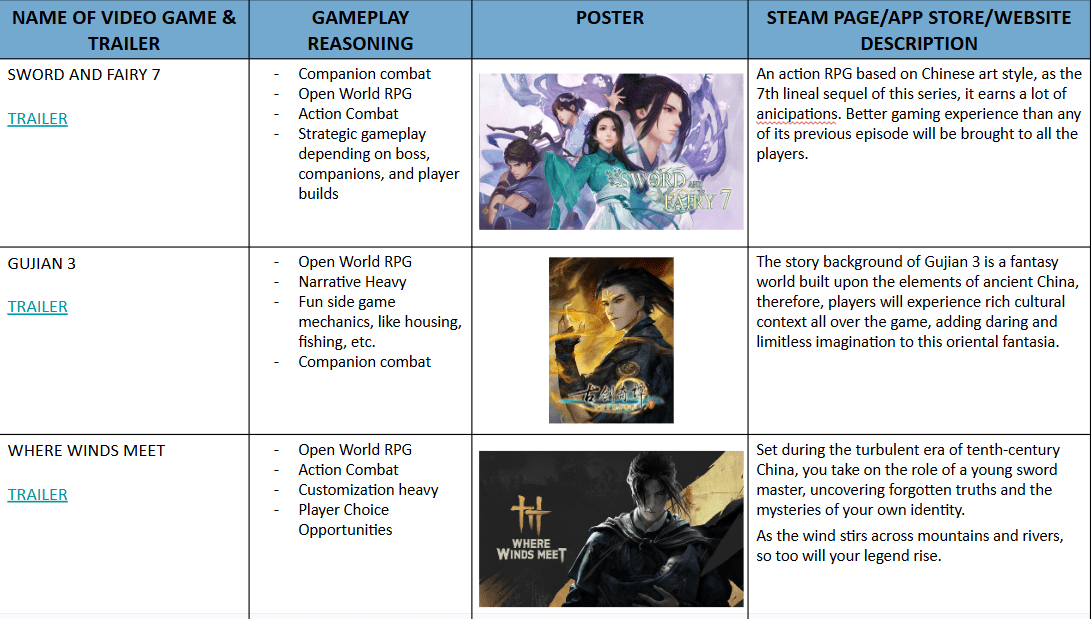
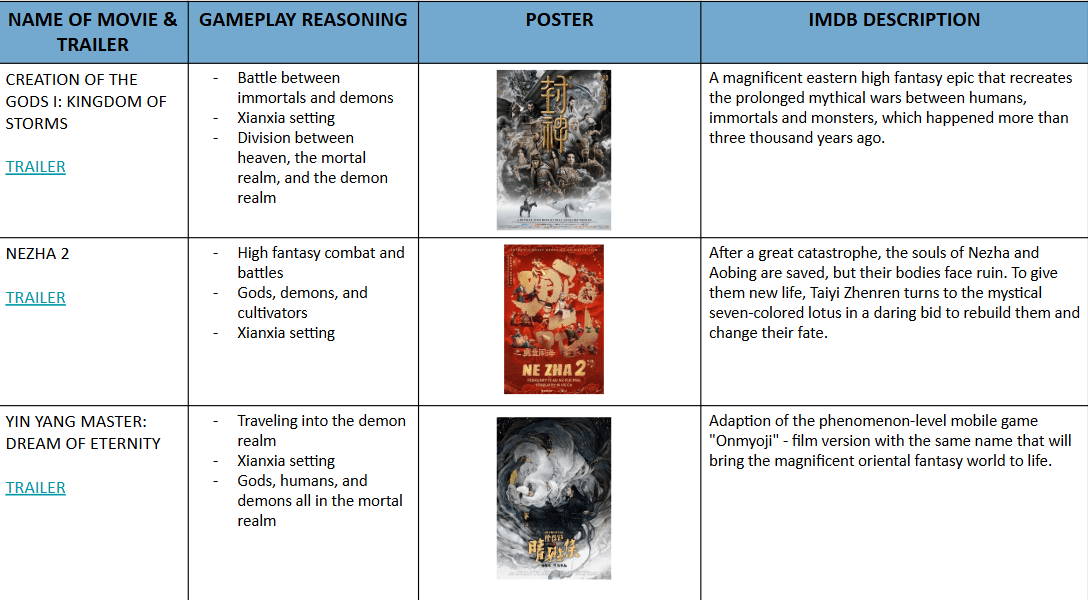
Genre and Content Research
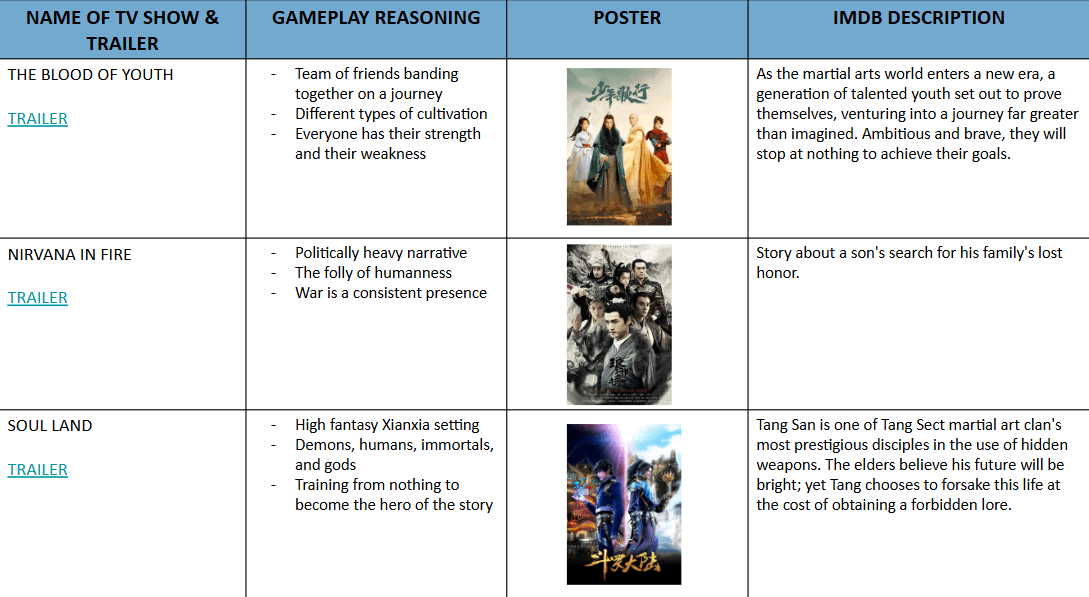
I conducted high-level research documentation to assist with determining the game’s popularity and help the marketing team do preliminary research with the target audience. To do so, I combined movies, shows, and comics that have narrative similarity. The document includes:
- A list of movies, TV shows, and games, including the official synopses of the titles, and links to their trailers.
- Wrote notes on what critical elements to draw inspiration from to prove audiences enjoy similar ideas that vary in media style.
Created lore summaries for both in-game and promotional use.