PARIAH Branching Questline: 'Borders of Barding'
Add a header to begin generating the table of contents
Goal
- Design and write a narrative-focused project, with iterations closely guided by veteran narrative designers.
- Improve interactive narrative design and writing skills, processes, and format within a realistic studio production context.
- Understanding of collaborative processes between game writing, narrative design, and other disciplines.
- Soft skills like productive disagreement, conflict resolution, and stand out in a large team setting.
- Iterative skills like feedback gathering, analysis, and application.
Overview
Linear & Branching Dialogue
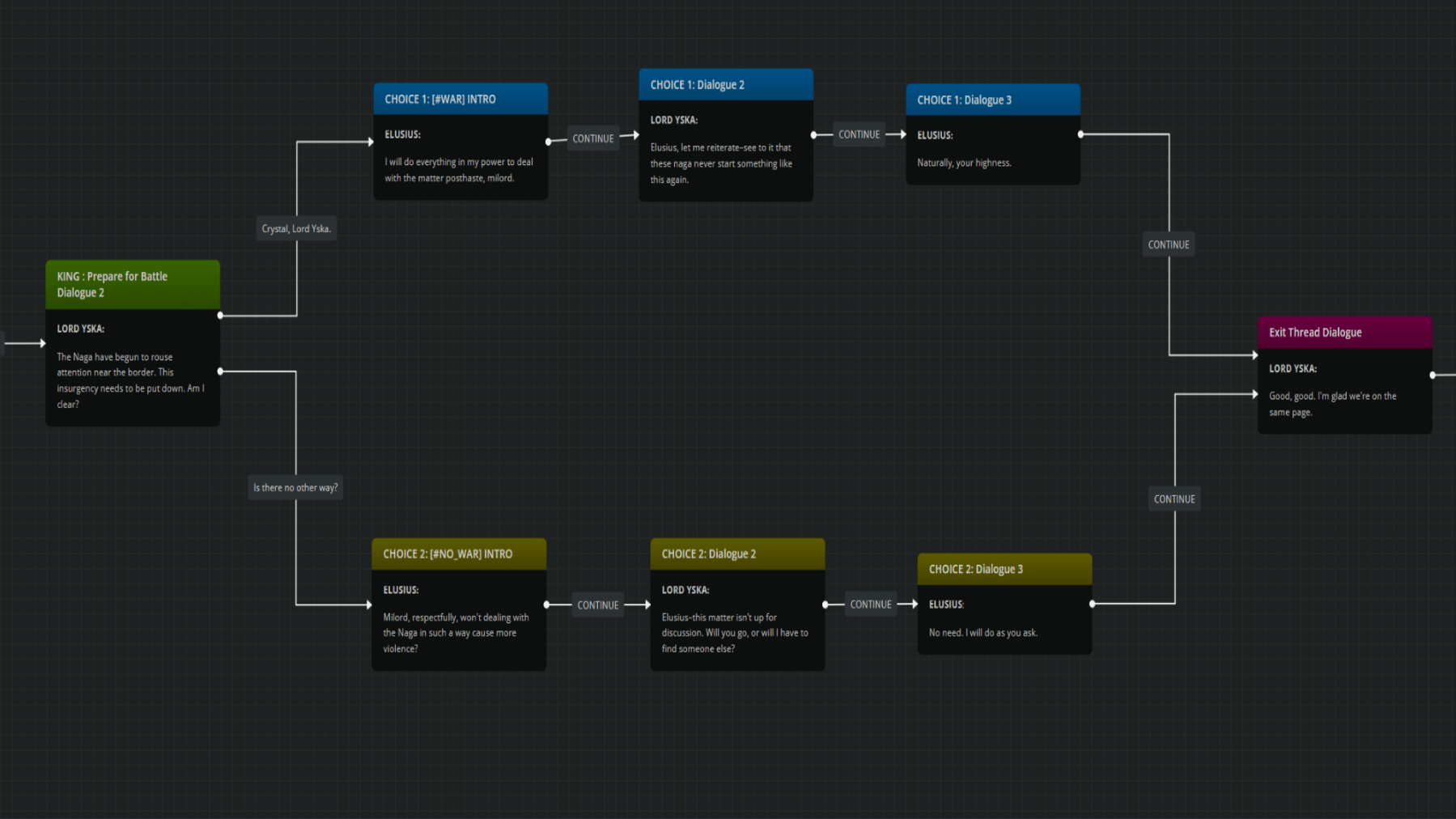
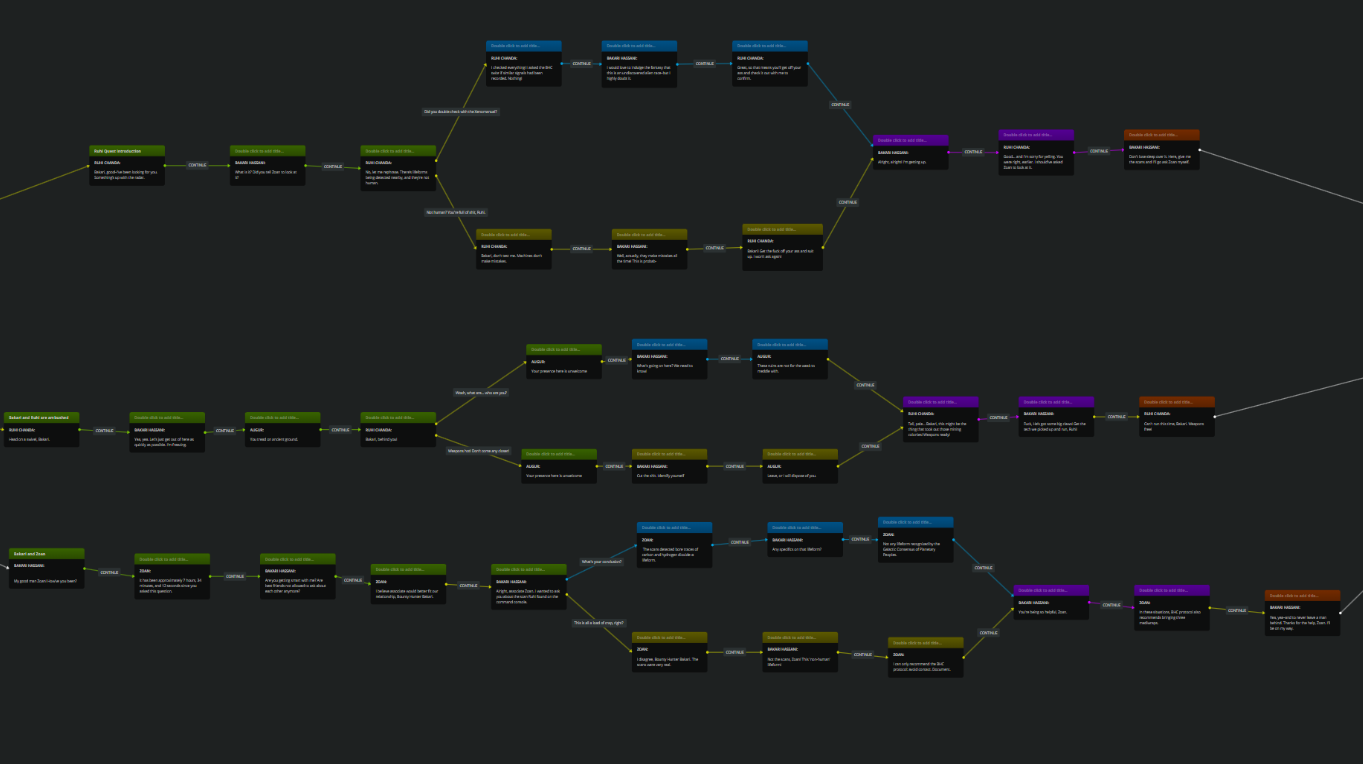
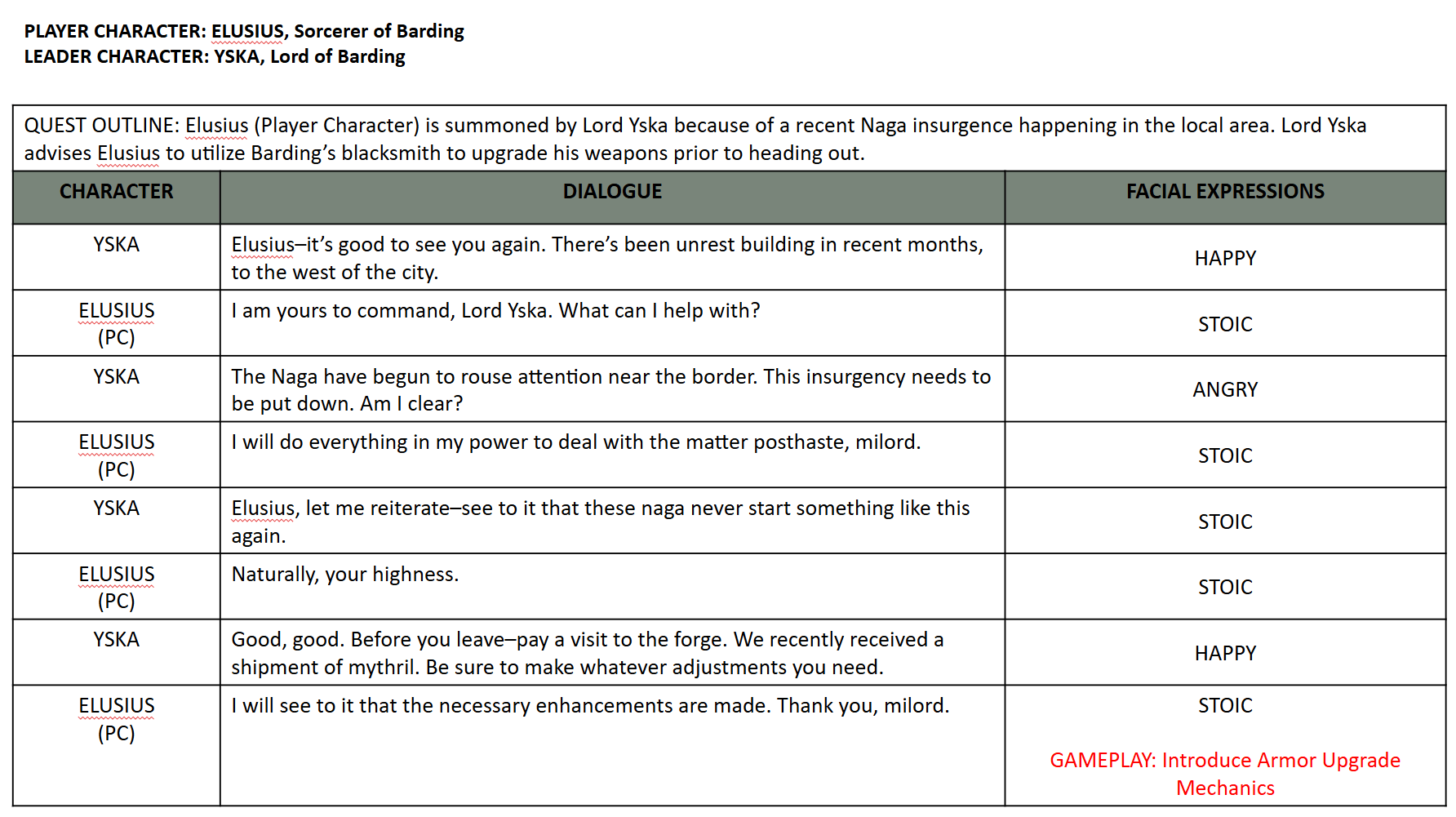
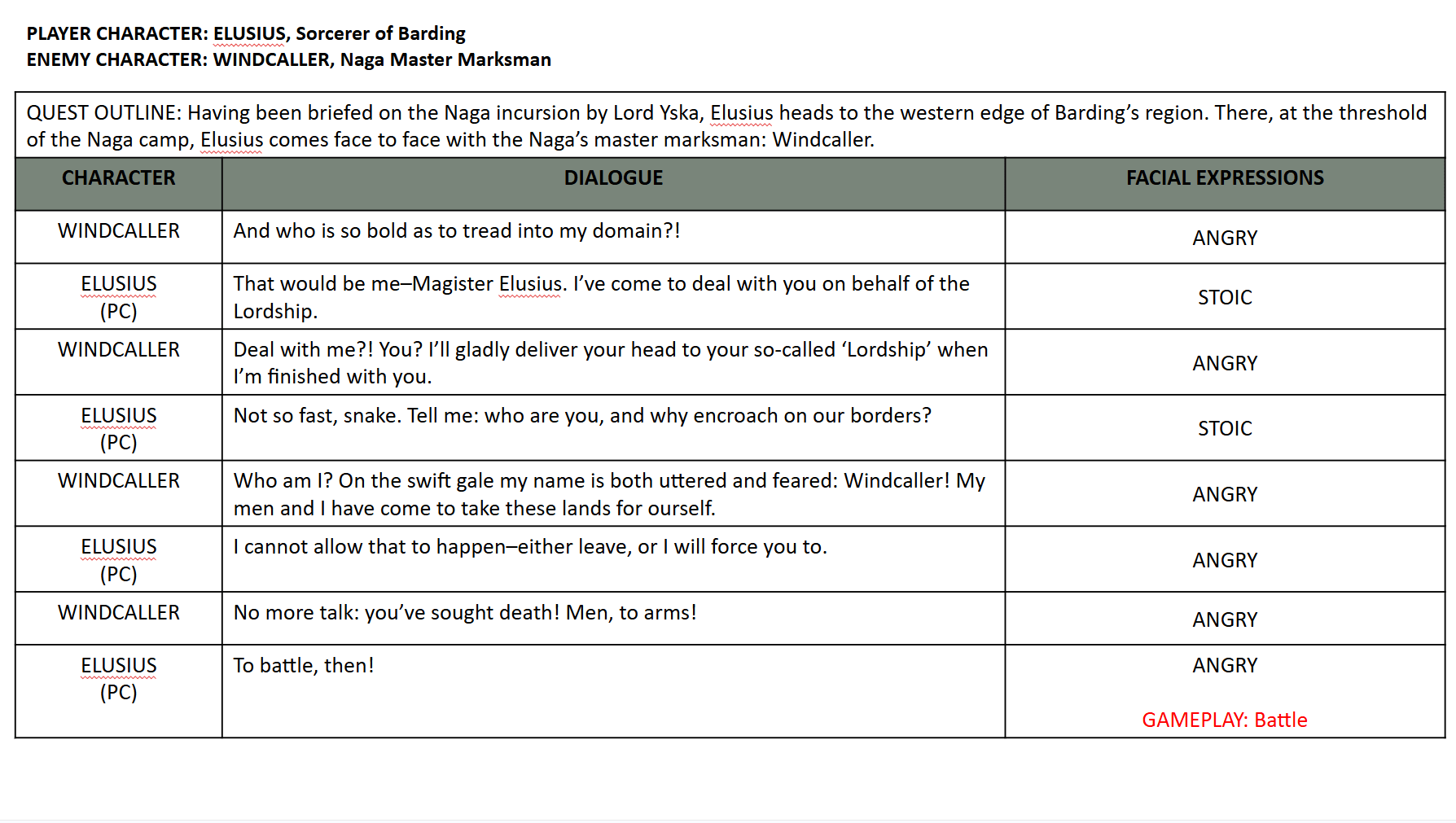
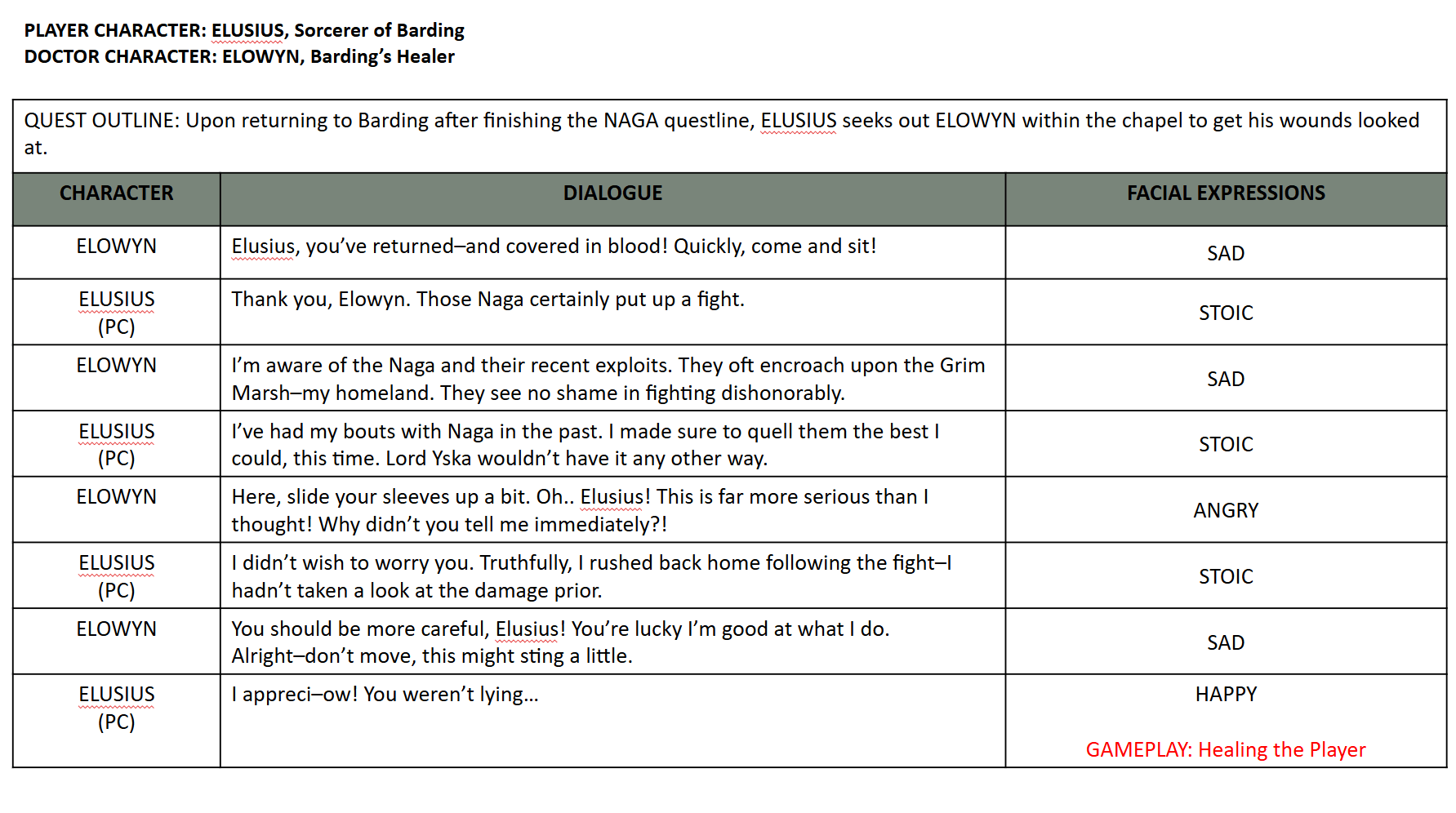
Designed Branching Quest Dialogue
I designed branching dialogue threads that integrated variables and choices smoothly into gameplay. I did so by creating:
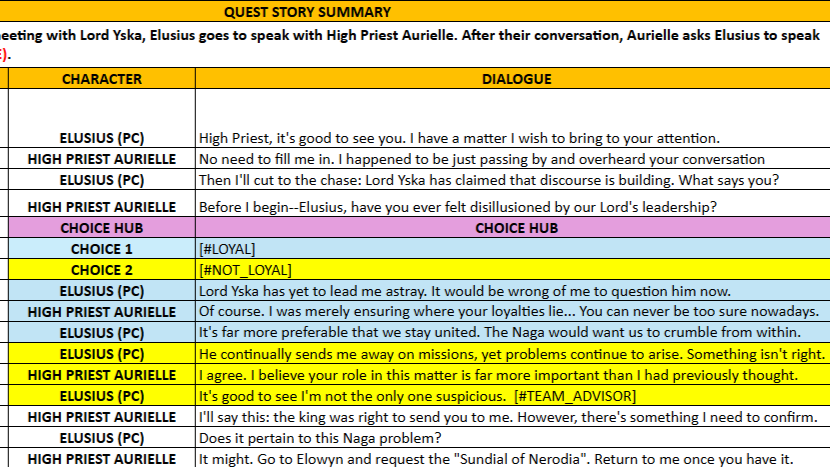
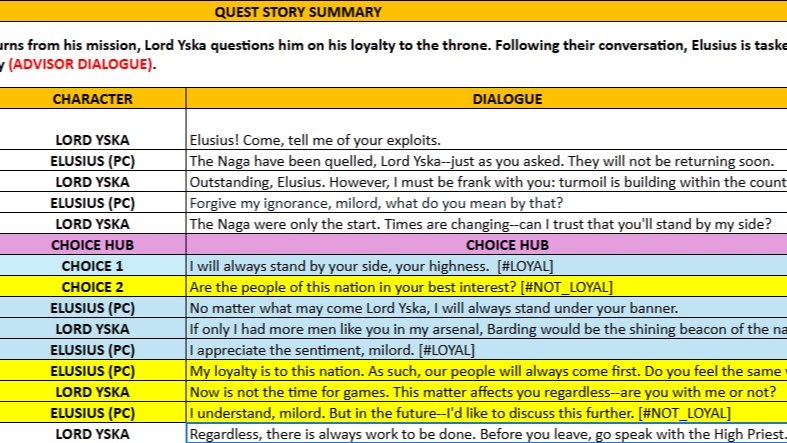
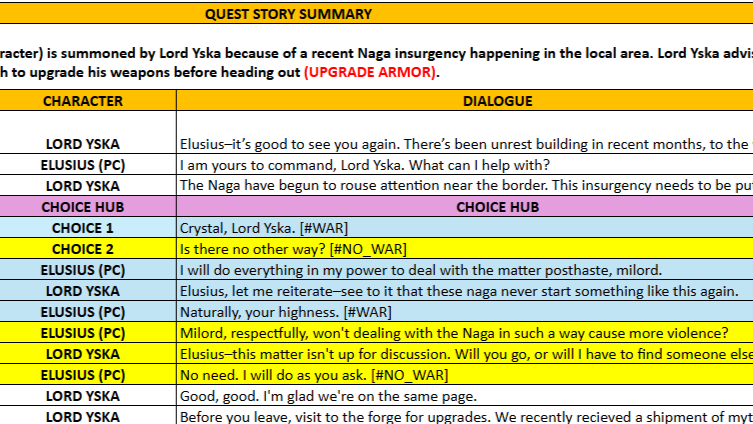
- Role-play Choice Hub: Allows the player to pursue their style of gameplay through polar opposite choice options.
- Tutorial Quest – As this quest is still part of the tutorial, there are no quest acceptance hubs.
I also created thematic choices to increase player immersion:
- Urgent Stakes: Guaranteed clarity on the narrative urgency for the Upgrading Weapons, Healing the Player, and Battle gameplay.
- Respected Player Character: Designed quest dialogue purposefully to ensure that the player’s choice feels impactful.
- Tied to Gameplay – Ensured dialogue was tight, informative, and quickly led to gameplay.
Lastly, I made a prototype with the following goals:
- Optimize Player Tap/Clicks: Through a clickable prototype, the script can be play tested to improve player experience.
- Live Design Space – Arcweave allows for comments and notation, allowing for cross-team collaboration.
Linear Dialog
I included the following linear dialogue design considerations when designing my linear dialogue:
- Gameplay Needs – As part of the tutorial section, this interaction was designed to raise tension and encourage player investment into the narrative, while also introducing key characters.
- Quest Reminders – Remind the player of the quest and narrative expectations.
I also wanted to ensure:
- Clear Goals – Considering that this questline was intended to be introductory, the quests were simple and concise.
Places that were iterated, initially:
- The King NPC was too lenient with the player.
- Did not give reasons for player upgrades.
- The Enemy NPC was not aggressive enough.
- Some dialogue was confusing and didn’t align with certain character designs.
As a result, I revised my linear dialogue with the following considerations:
- Consistent character voice
- Aligning characters’ behavior and dialogue with their roles in the world
- Developing urgency for the player and investment in the world itself.
Character Design & Barks
I crafted a player character with motivations that conflict throughout the story, leading to dynamic choices that shape their growth. I purposefully designed the player character to be controversial within the world, ensuring that the player’s choice of either clashing or aligning with NPCs felt resolute. By designing the player character and multiple NPCs, I ensured I had to:
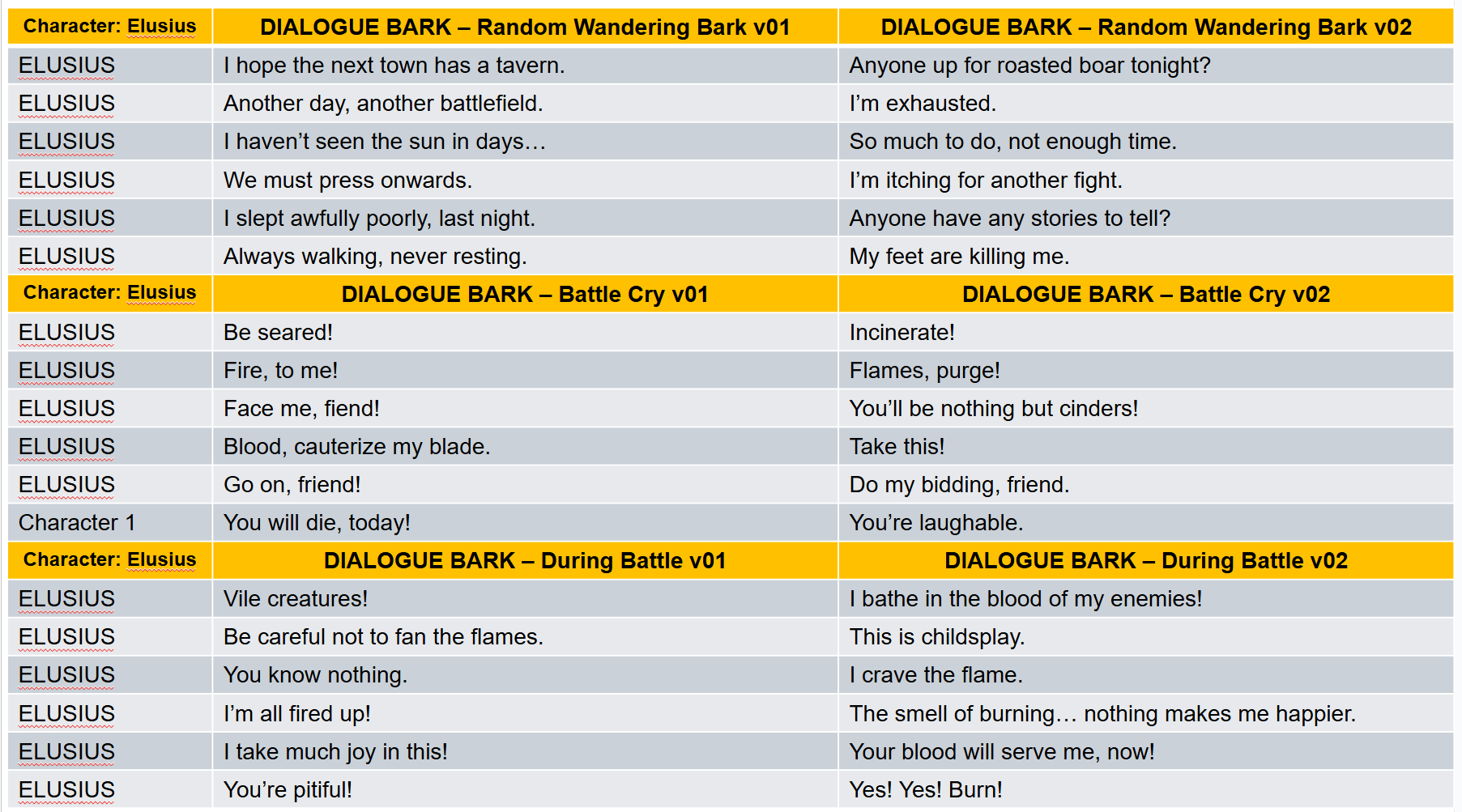
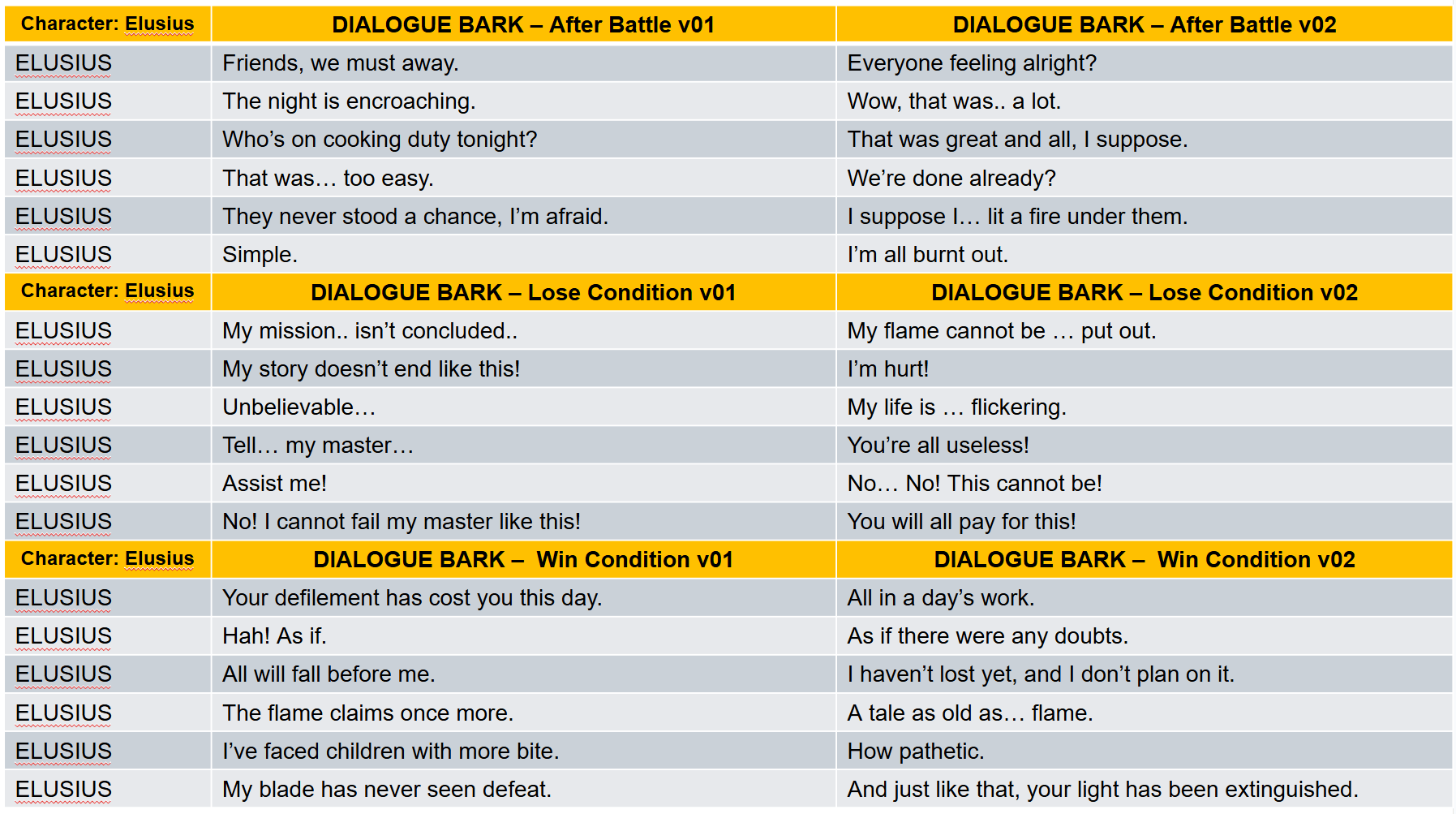
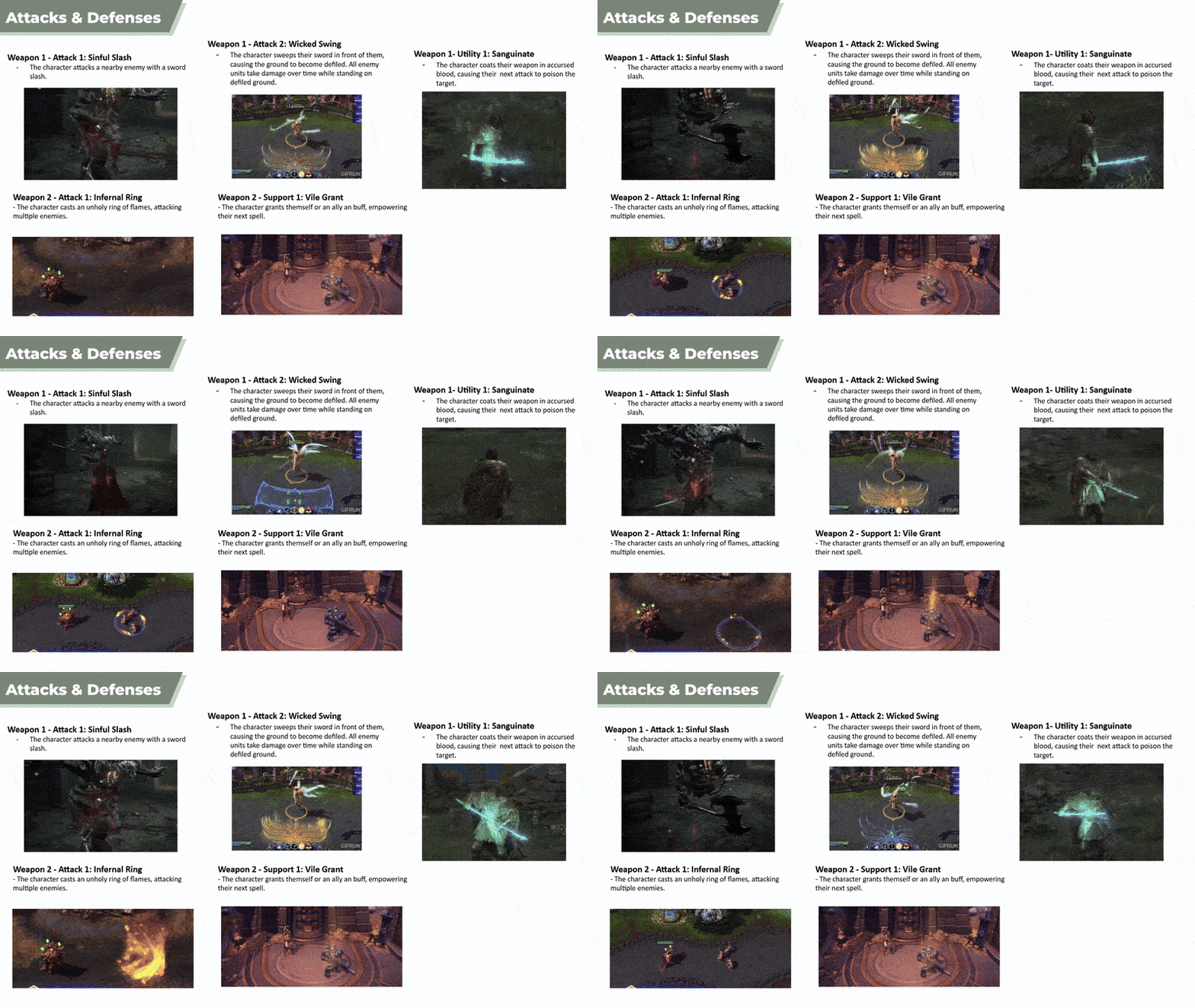
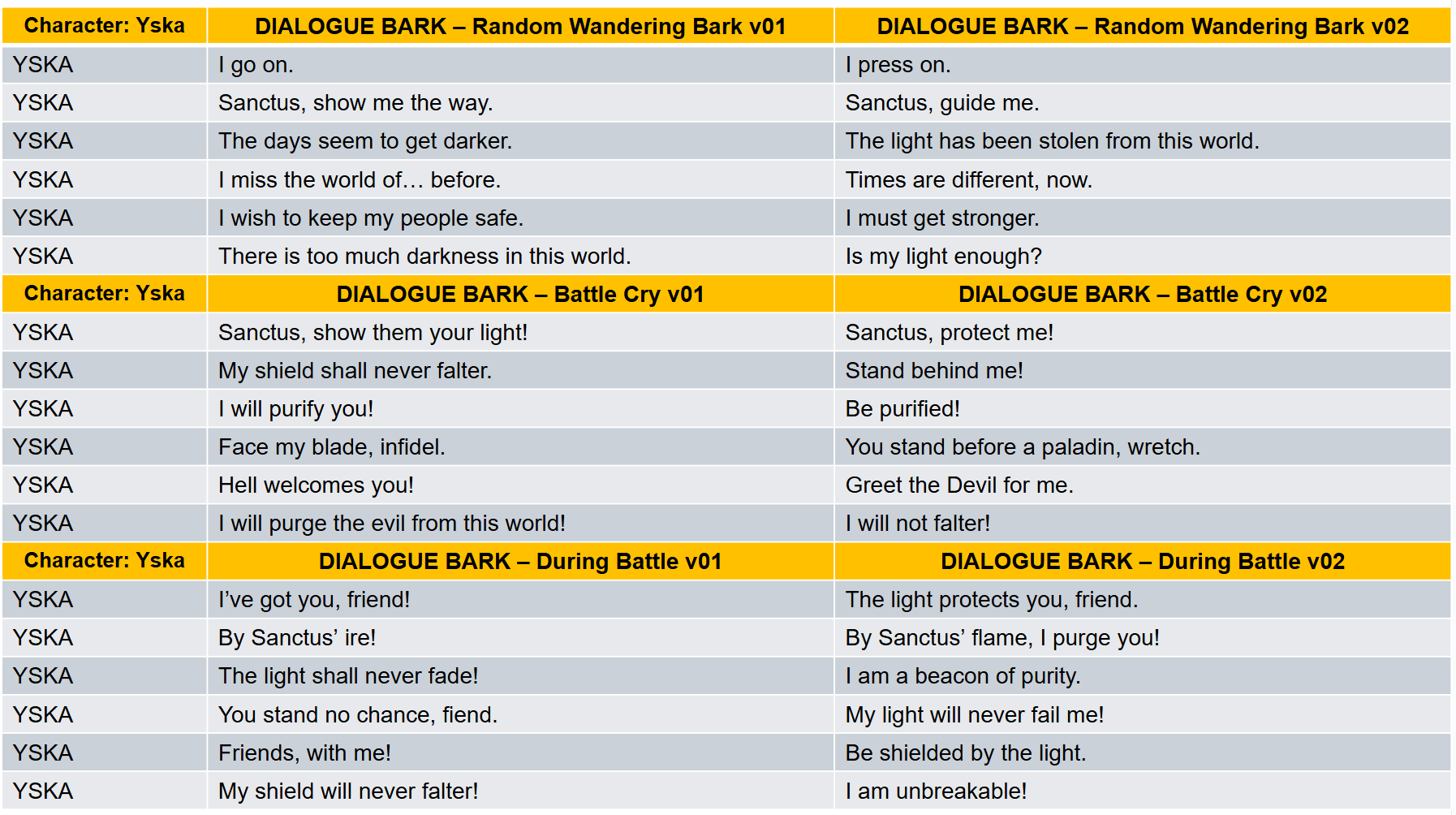
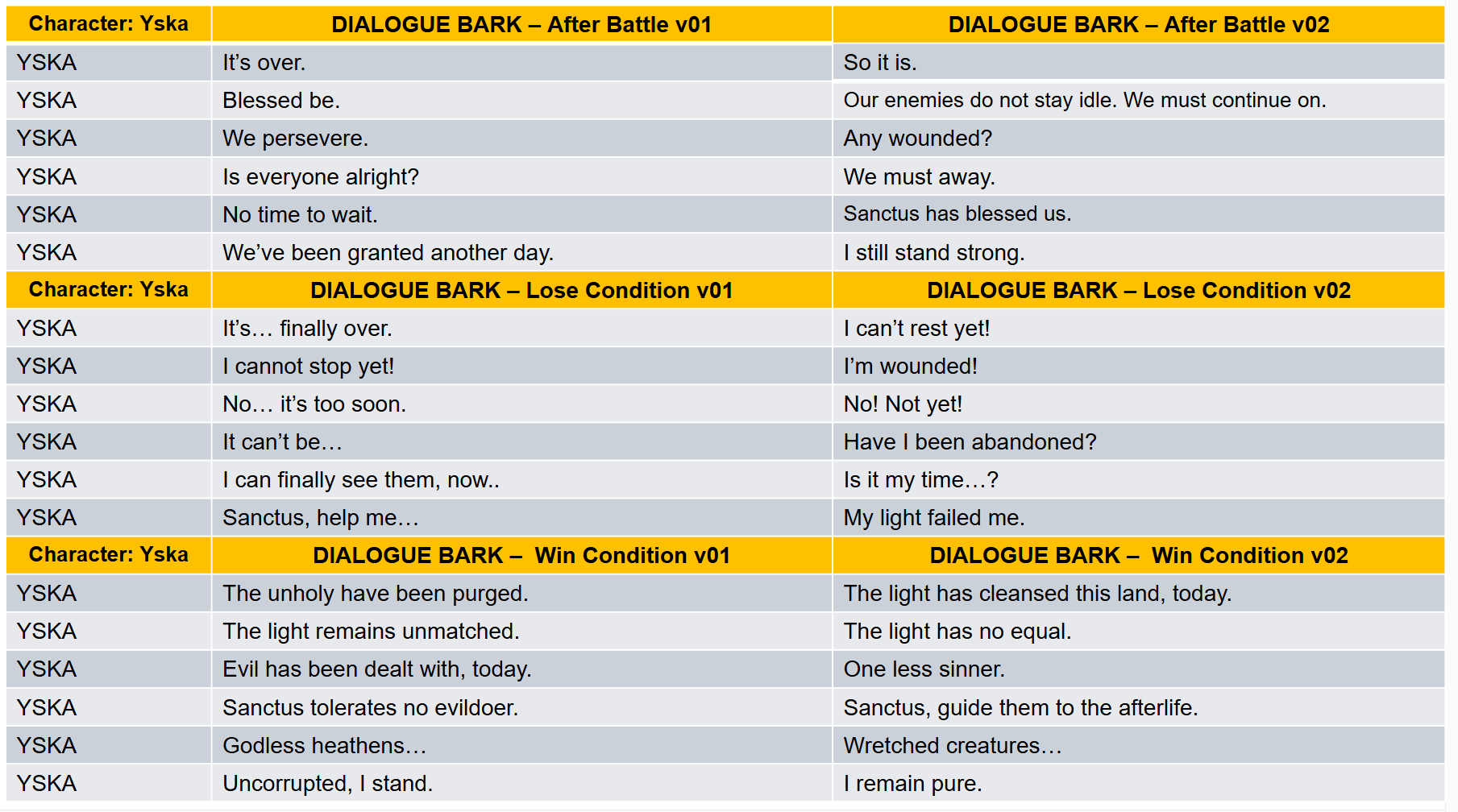
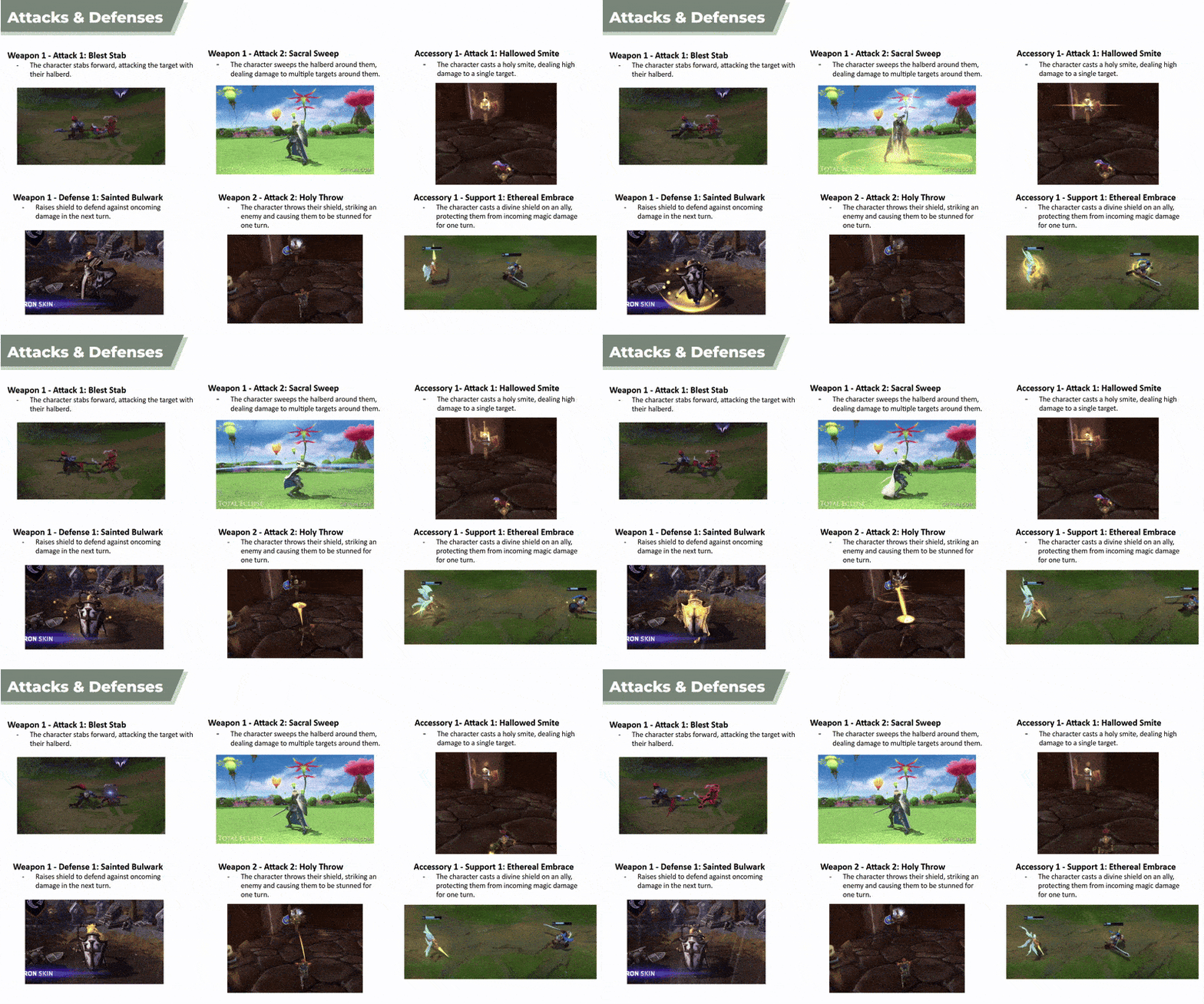
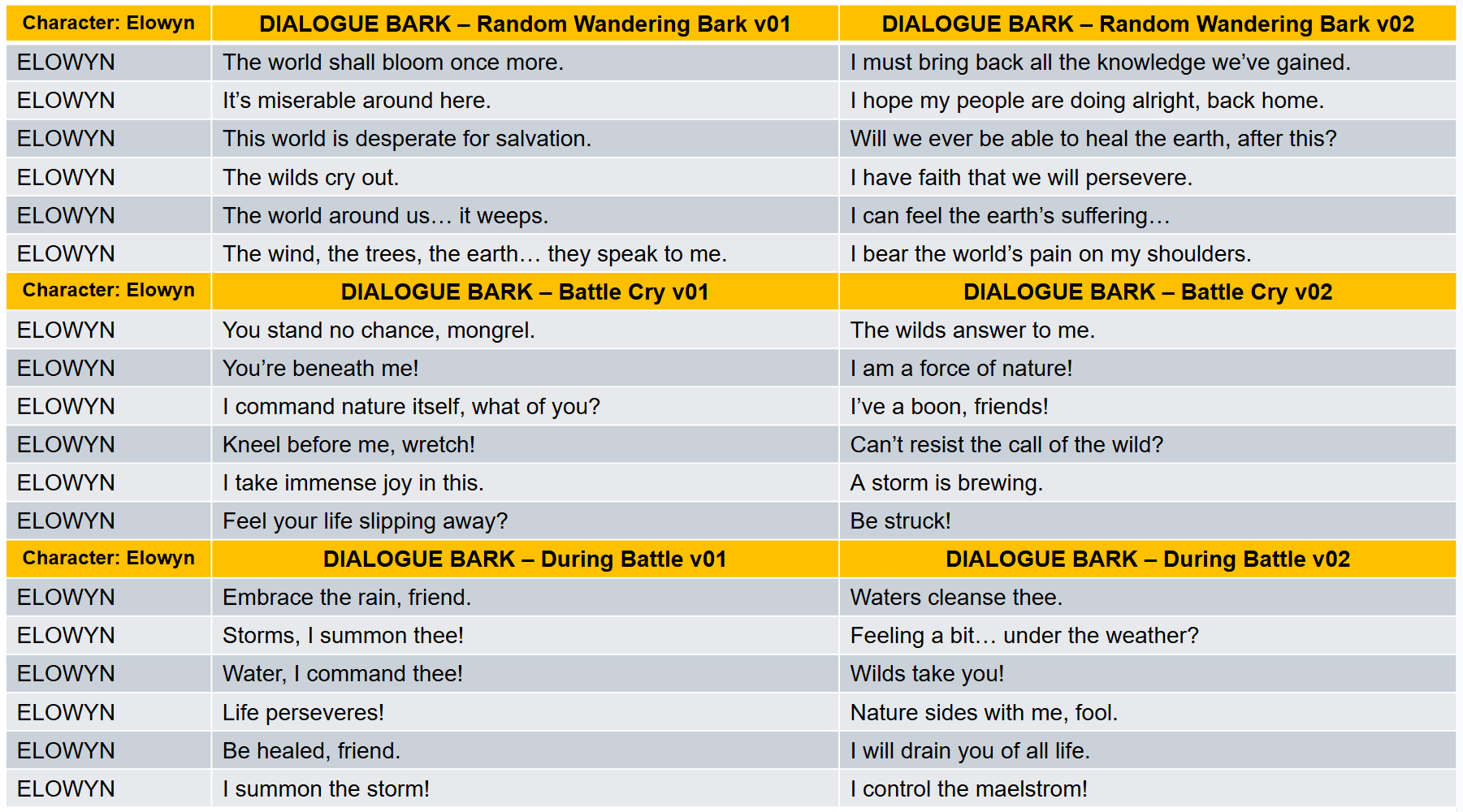
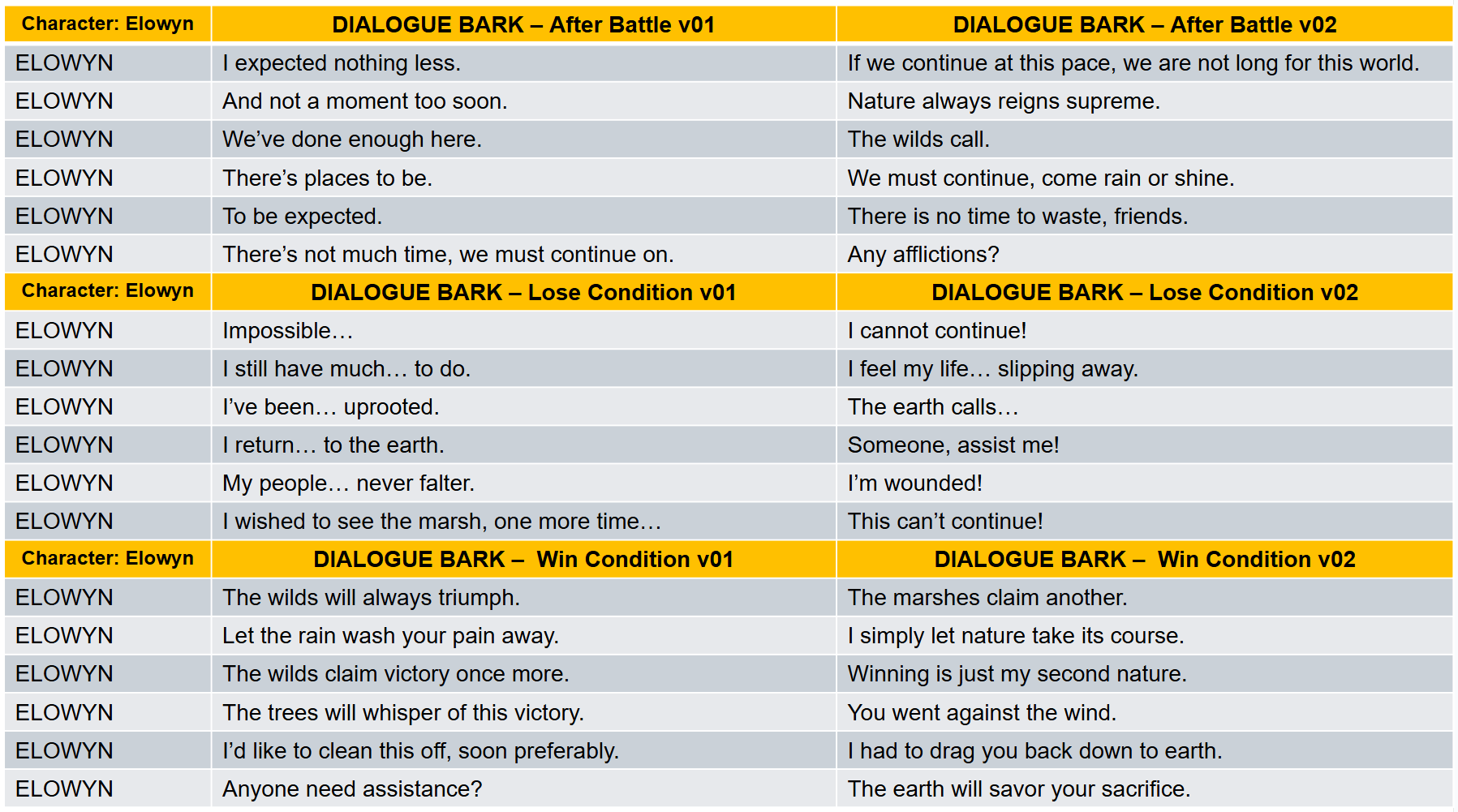
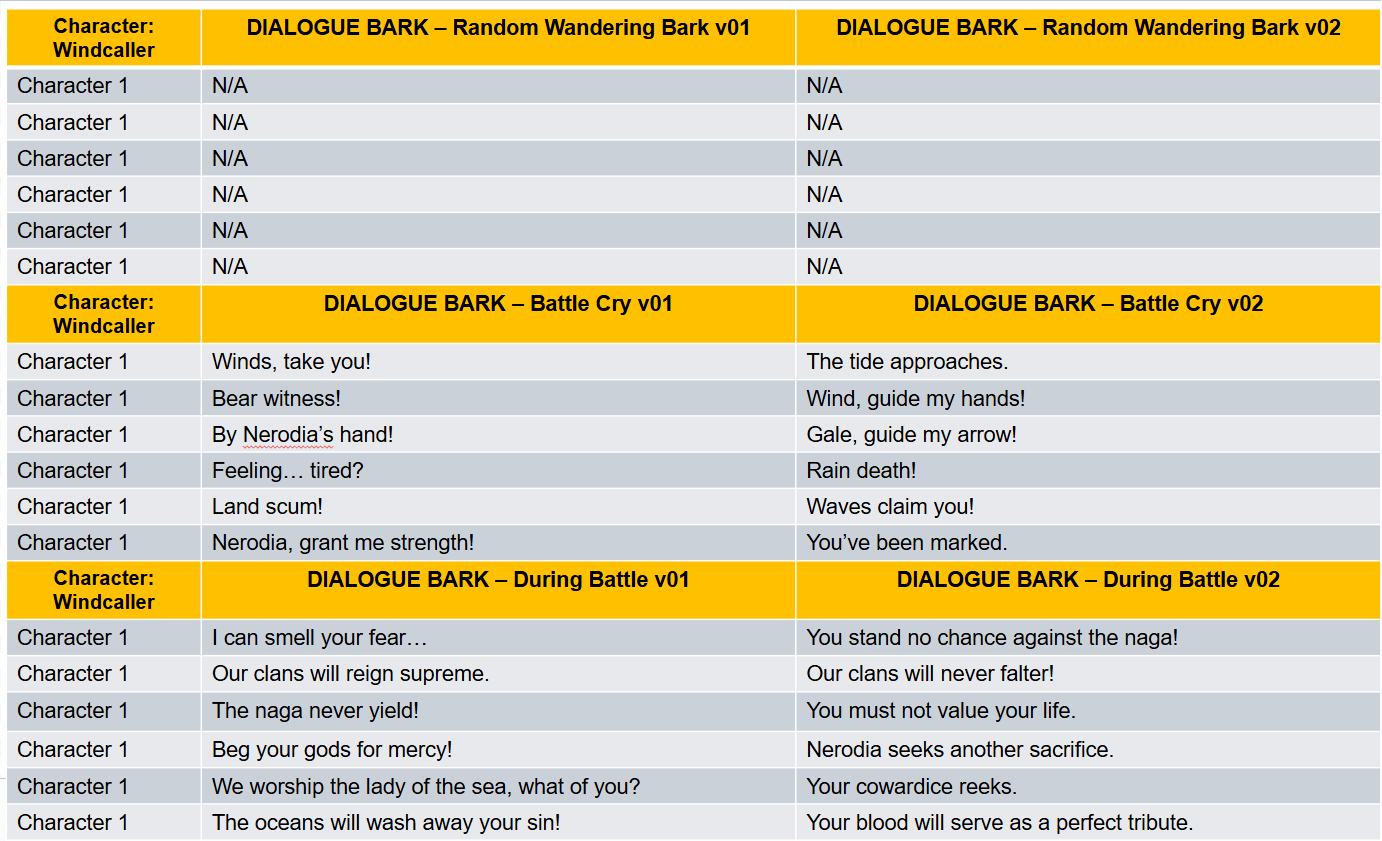
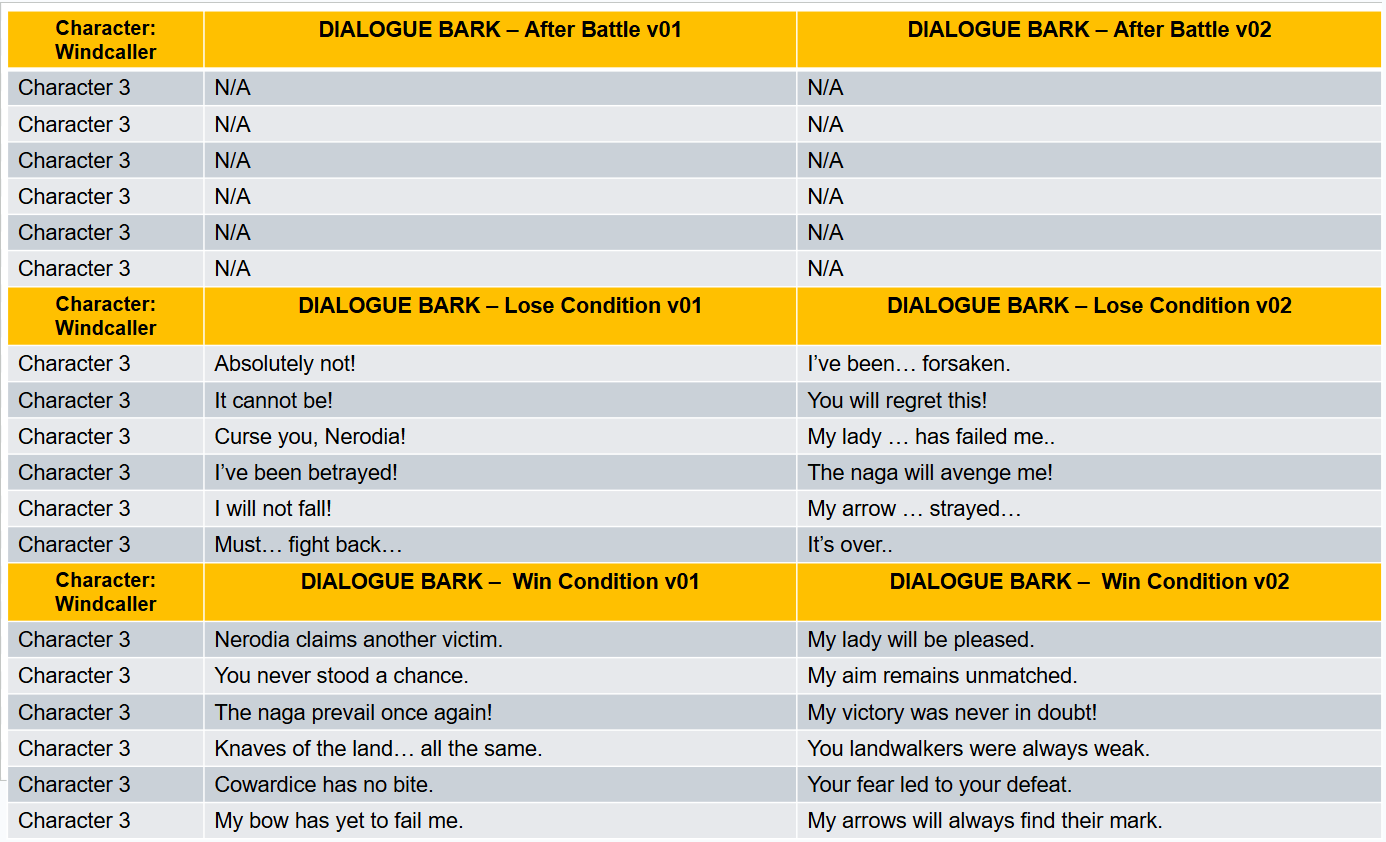
- Write character bios and barks that aligned with weapon attacks, Jungian archetypes, and character alignment.
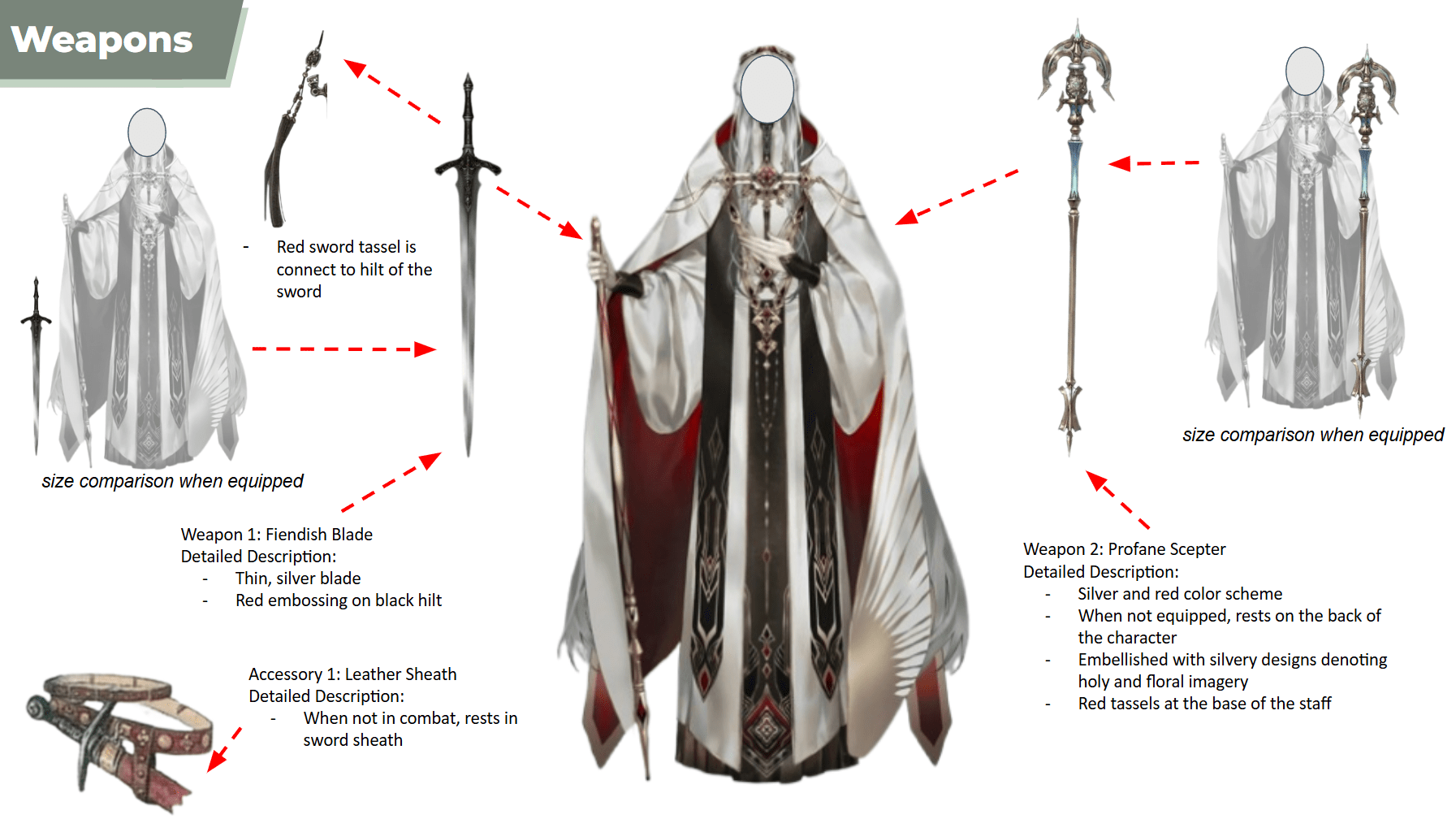
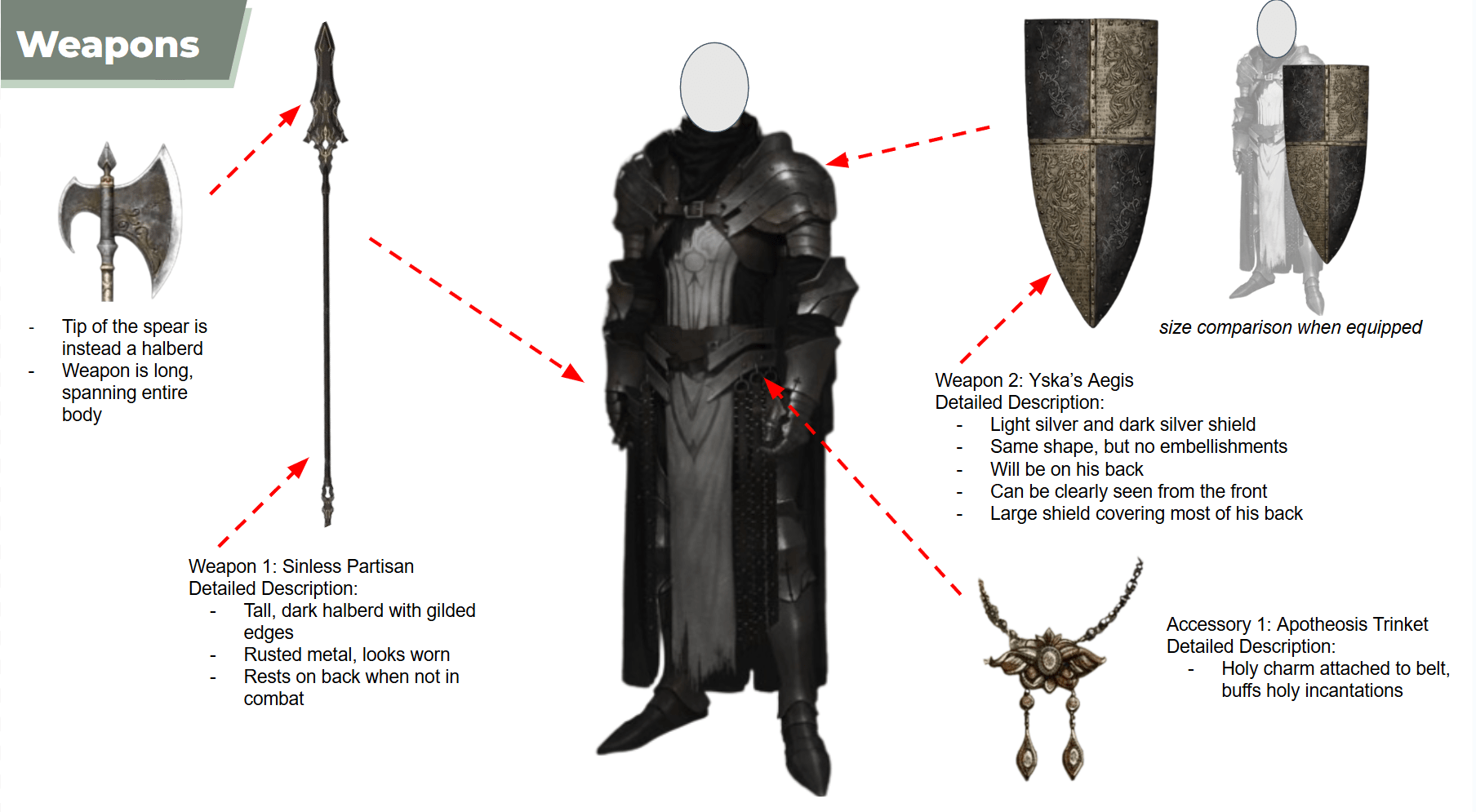
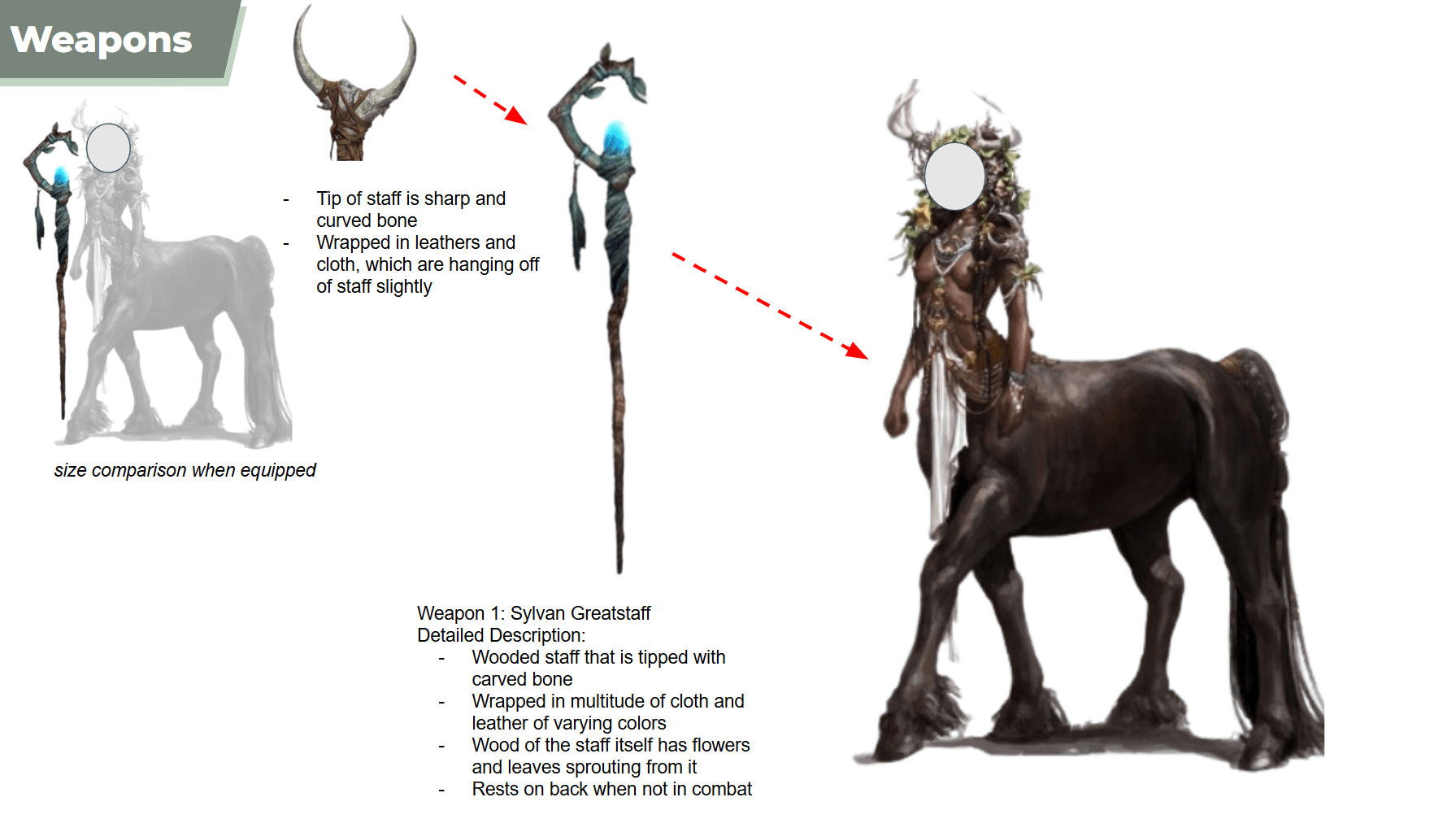
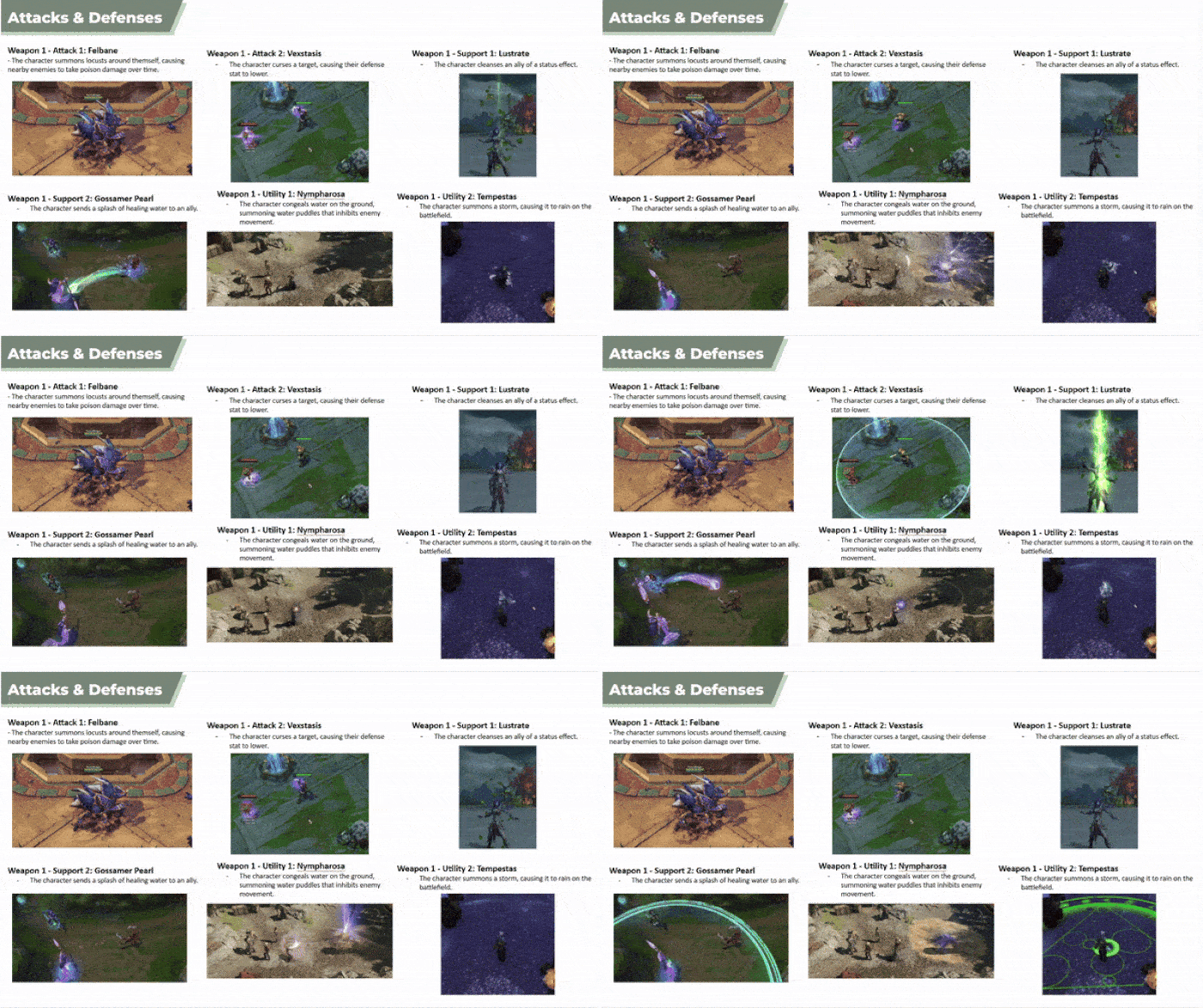
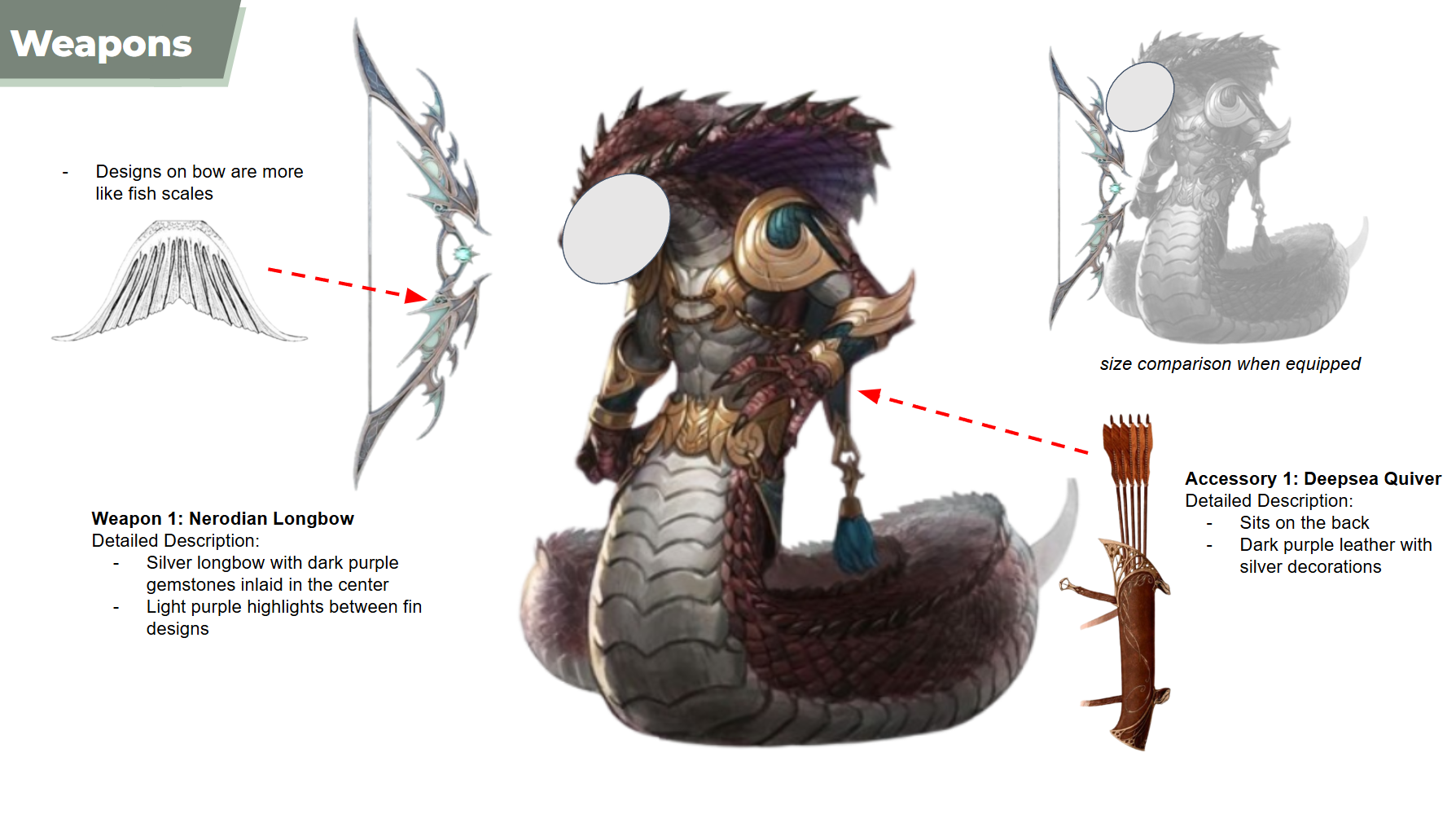
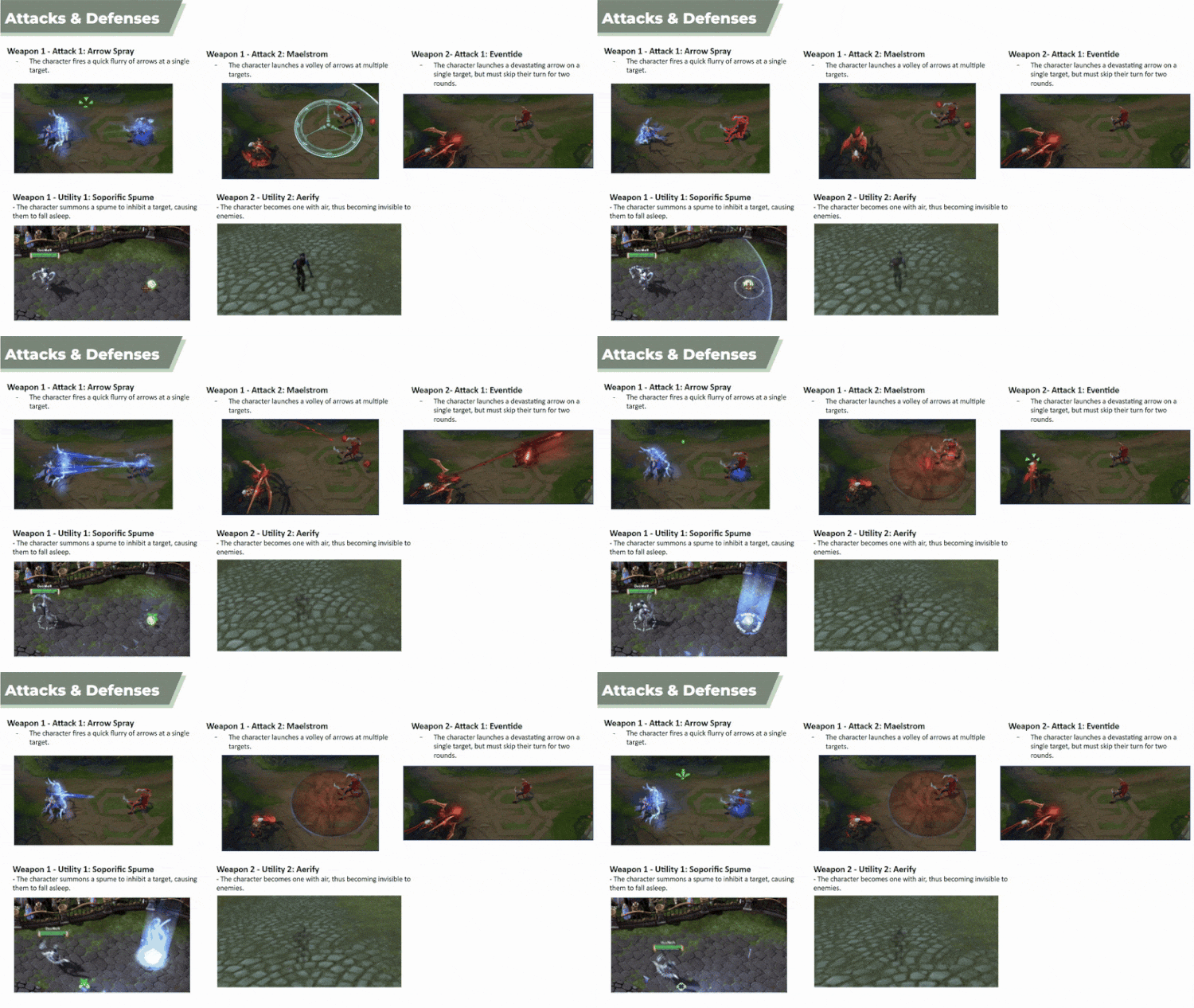
- Design character weapons that provide multiple references for both weapon design and attacks for the combat designers and artists.
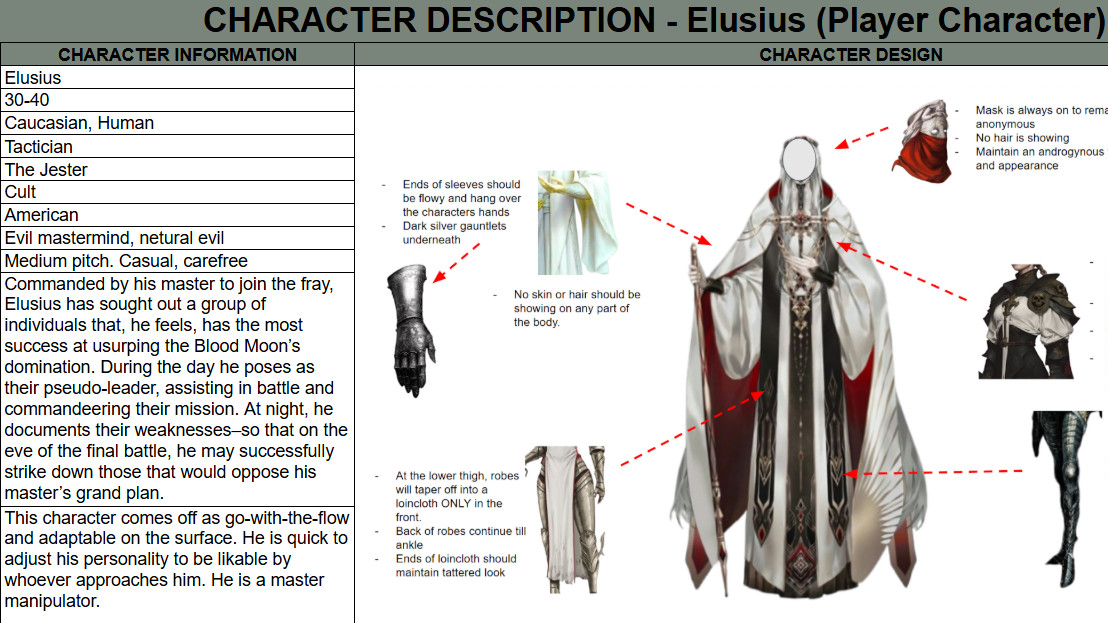
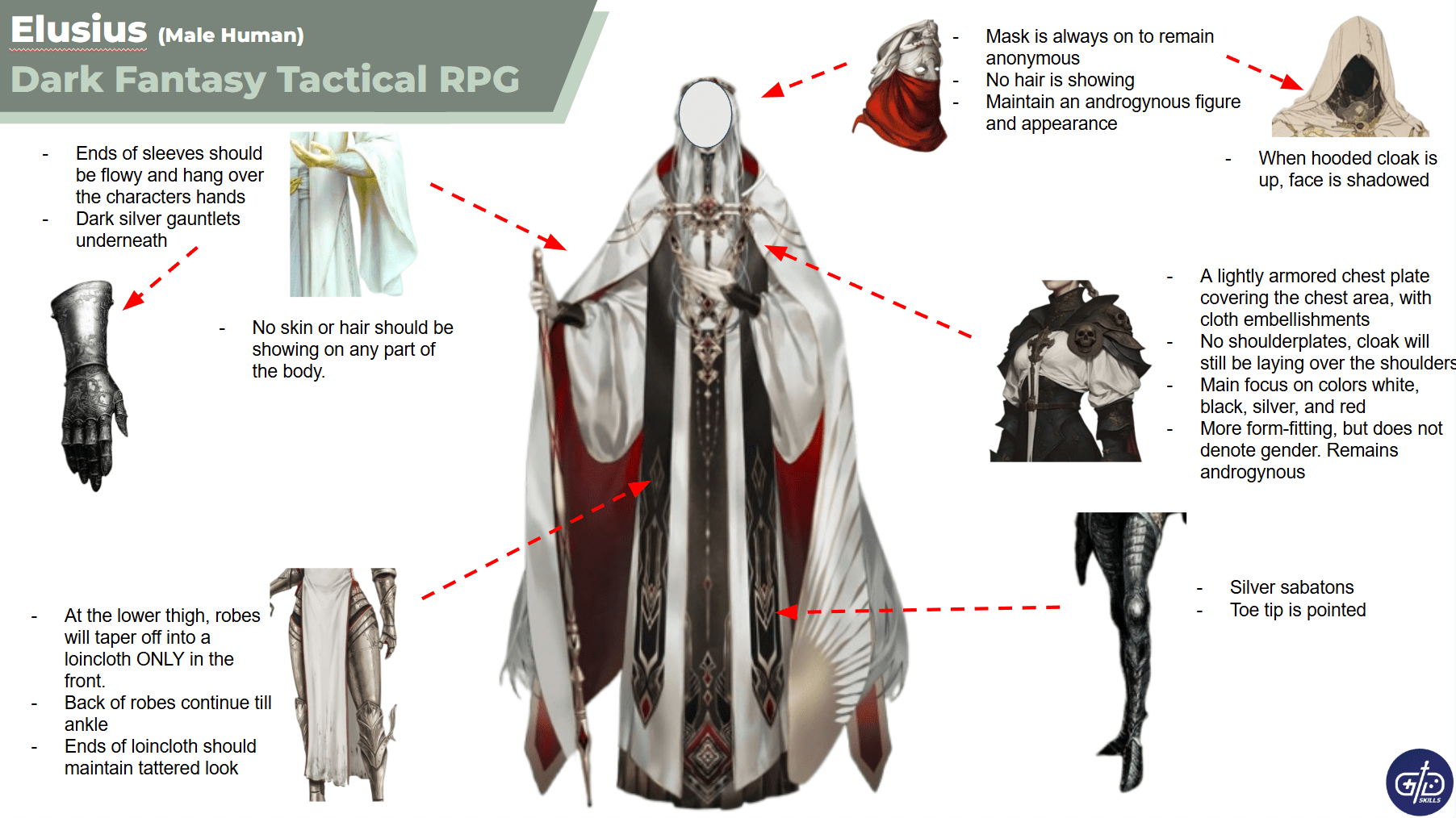
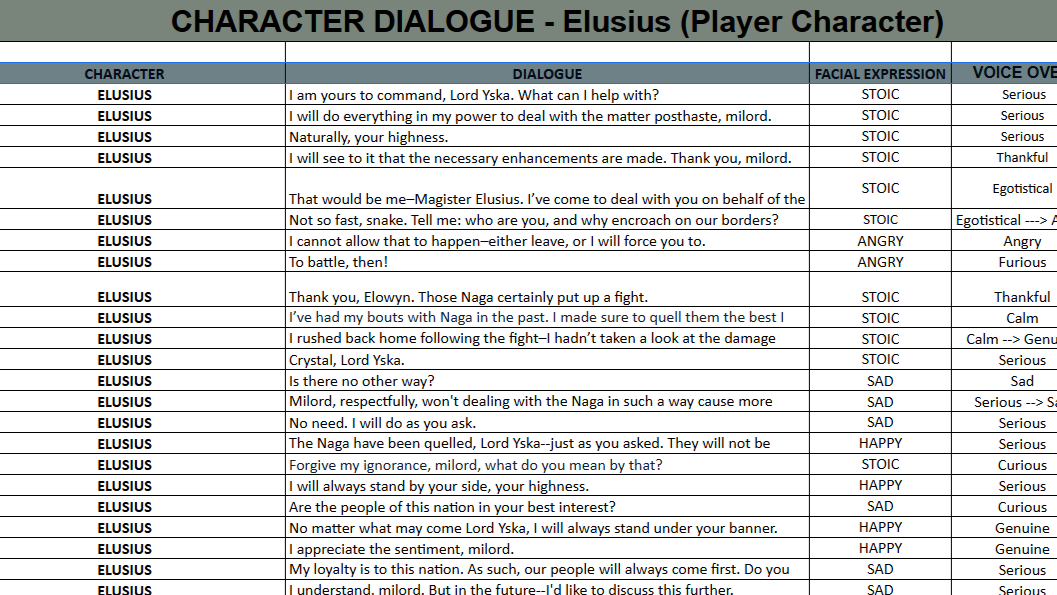
Player Character: Elusius
Elusius is the player character.
They were designed intentionally to be androgynous so that they could be applicable to most players. However, I opted to present male Elusius here to give an example of how he would present himself in-game.
Elusius is a manipulative, authoritative character—though the player is not supposed to know this initially, thus explaining his deferential behavior in the introductory quests. Instead, Elusius’ backstory would slowly be revealed as the player progressed through the story. Eventually, the narrative would culminate to a point where the player had two ultimate choices: betray their allies, or become the most powerful being alive.
I chose this route for Elusius to cultivate narrative investment in the player and to ensure that the ending of the game was, eventually, controlled by the player.
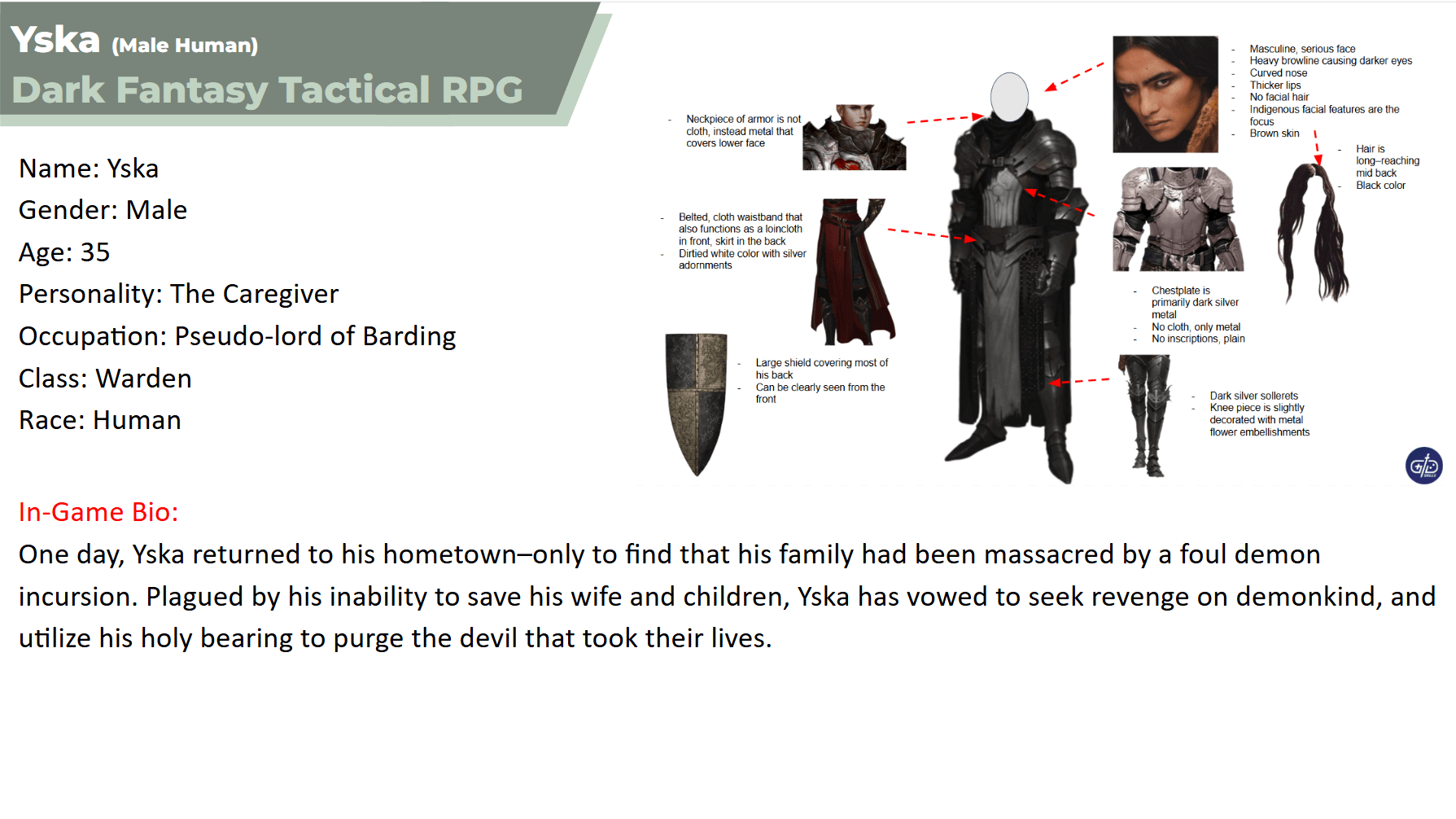
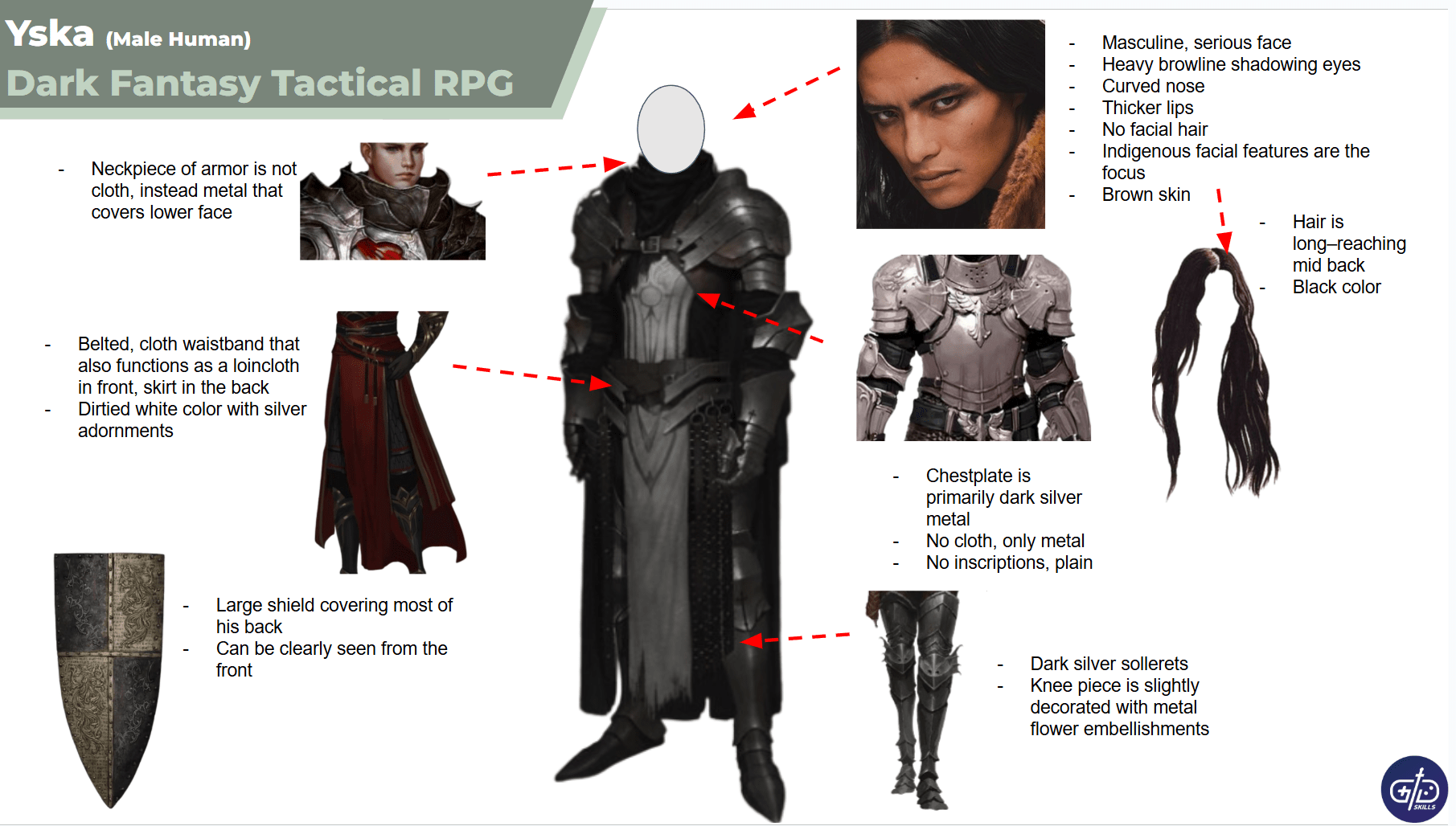
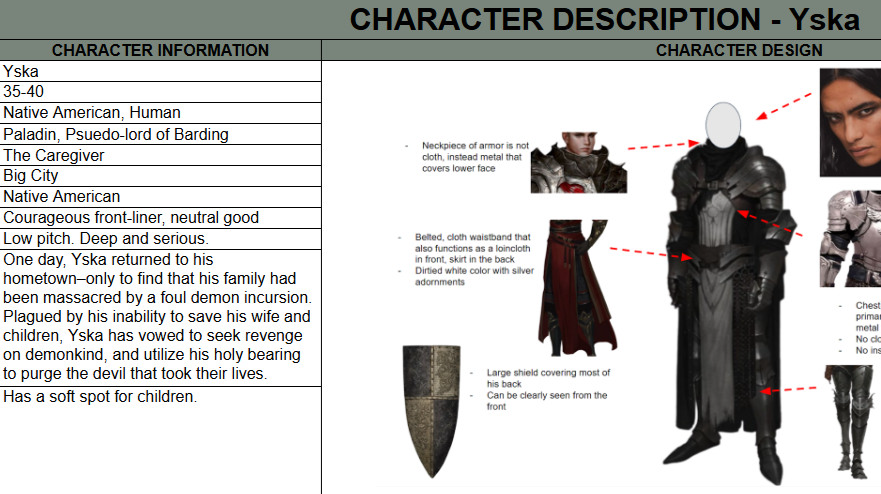
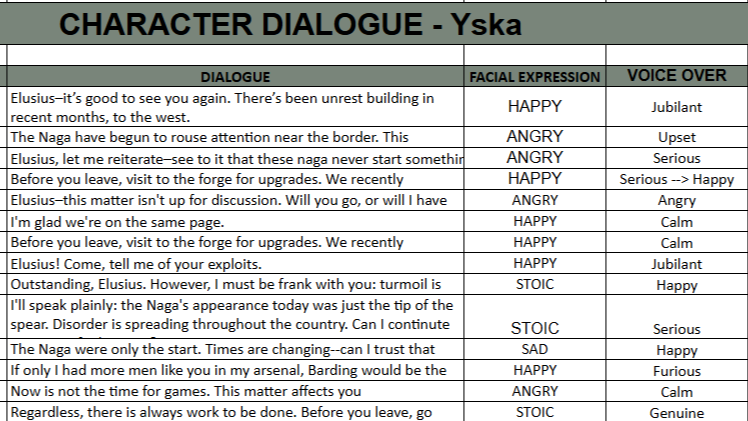
Lord NPC: Yska
Yska is the pseudo-lord of Barding, bearing the burden of leadership during times of turmoil when no one else would.
When it comes to designing characters, I want to create people that players can resonate with and see themselves in. With regard to fantasy, non-white characters are still often underrepresented.
Yska’s design was something I had always wanted to see in games: a native american paladin.
Beyond Yska’s design—his backstory features his fatherhood, and how his mistakes lead to the loss of his family. As a result, Yska is hardened and, sometimes, emotionally unstable. Though this may lead some to conclude that Yska is unfit for leadership, it is clear to anyone that Yska’s dedication towards Barding’s safety is unquestionable.
Additionally, Yska’s unshakable faith in Sanctus allows him to wield powers of light and conviction to protect his allies and thwart any enemy.
Yska can serve as a guide and companion on Elusius’ quest.
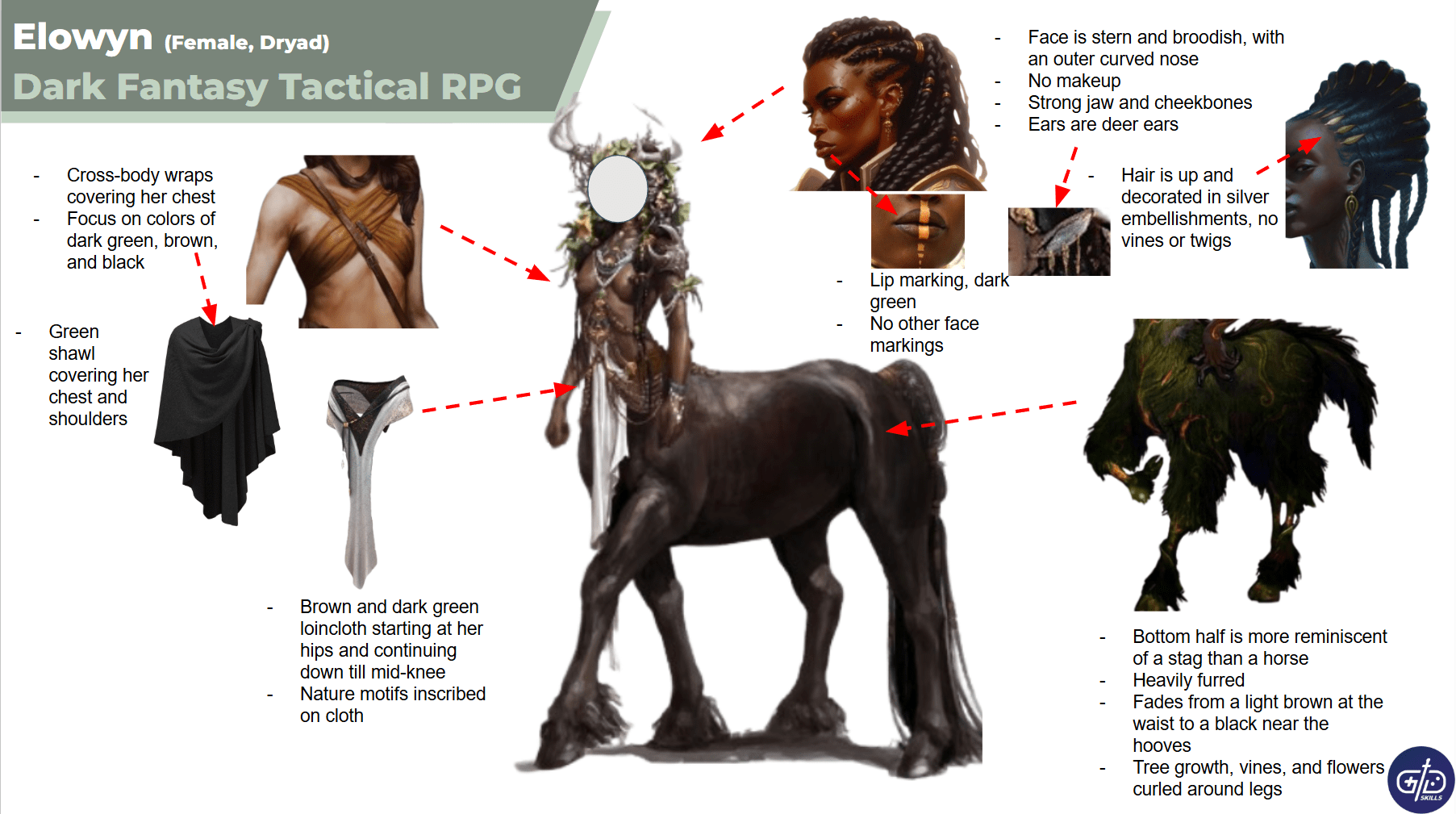
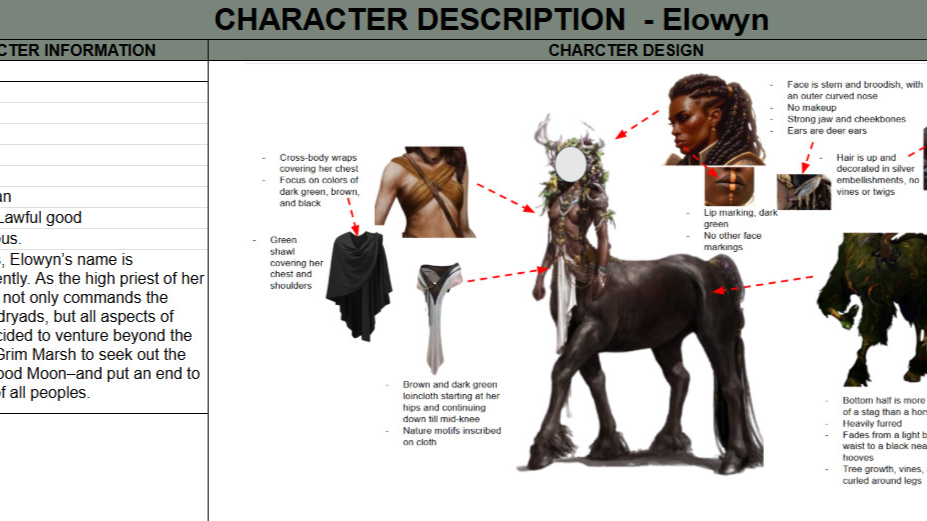
Healer NPC: Elowyn
Elowyn’s design philosophy follows closely behind Yska’s. With Elowyn in particular, I wanted to take her design to the next level and make her a centaur to further portray her elegance and wisdom.
Elowyn is the High Priest of her people within the Grim Marsh. Due to her close friendship with Yska, she has decided to come to Barding temporarily to lend her aid. She has worked with Elusius in the past and is thus familiar with him.
As the high priestess of her people, Elowyn has a unique inclination towards shamanic powers. She can bolster her companions through her control of the elements, or disable her foes by allying with the creatures of the wilds.
Elowyn can serve as a companion on Elusius’ quest.
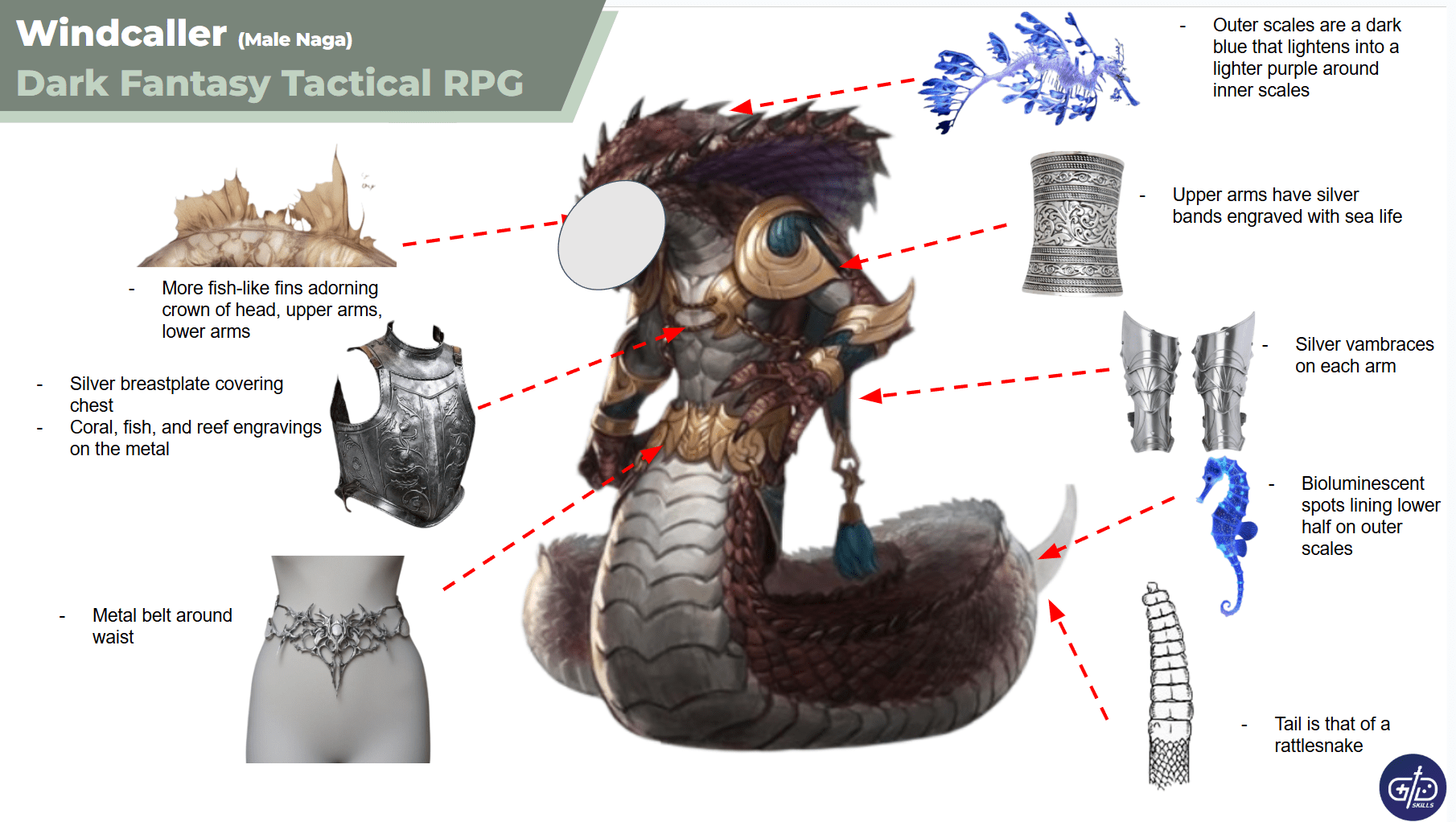
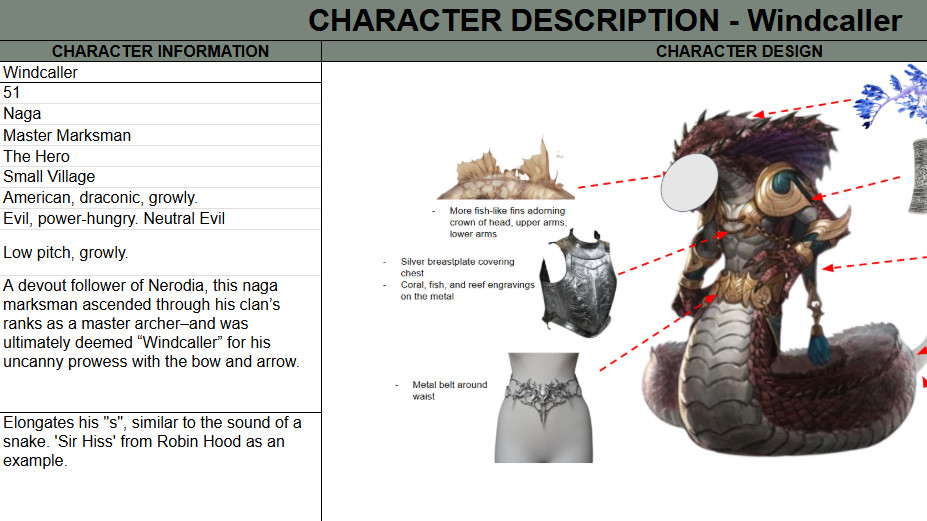
Enemy NPC: Windcaller
I love Naga, so I knew I had to make a Naga enemy. Though PARIAH features many Naga of different beliefs, Windcaller in particular has no soft spot for humans and desires to see the Naga take over the lands of Verahem.
Windcaller is power-hungry and cunning, which on one hand makes him a formidable enemy, but on the other, can lead him to making irrational decisions.
Windcaller’s attacks using the bow. I felt that Naga archers aren’t something often seen, and it makes sense: arrows don’t travel far in water. However, I felt Windcaller’s unique disposition towards archery could make him a refreshing and fun opponent. Additionally, just because Windcaller is on land doesn’t mean Nerodia’s blessing cannot reach him—his control over the winds and waters is still very much tangible.
Storyboarding & Trailer Script Writing
Storyboarding
Storyboard Overview
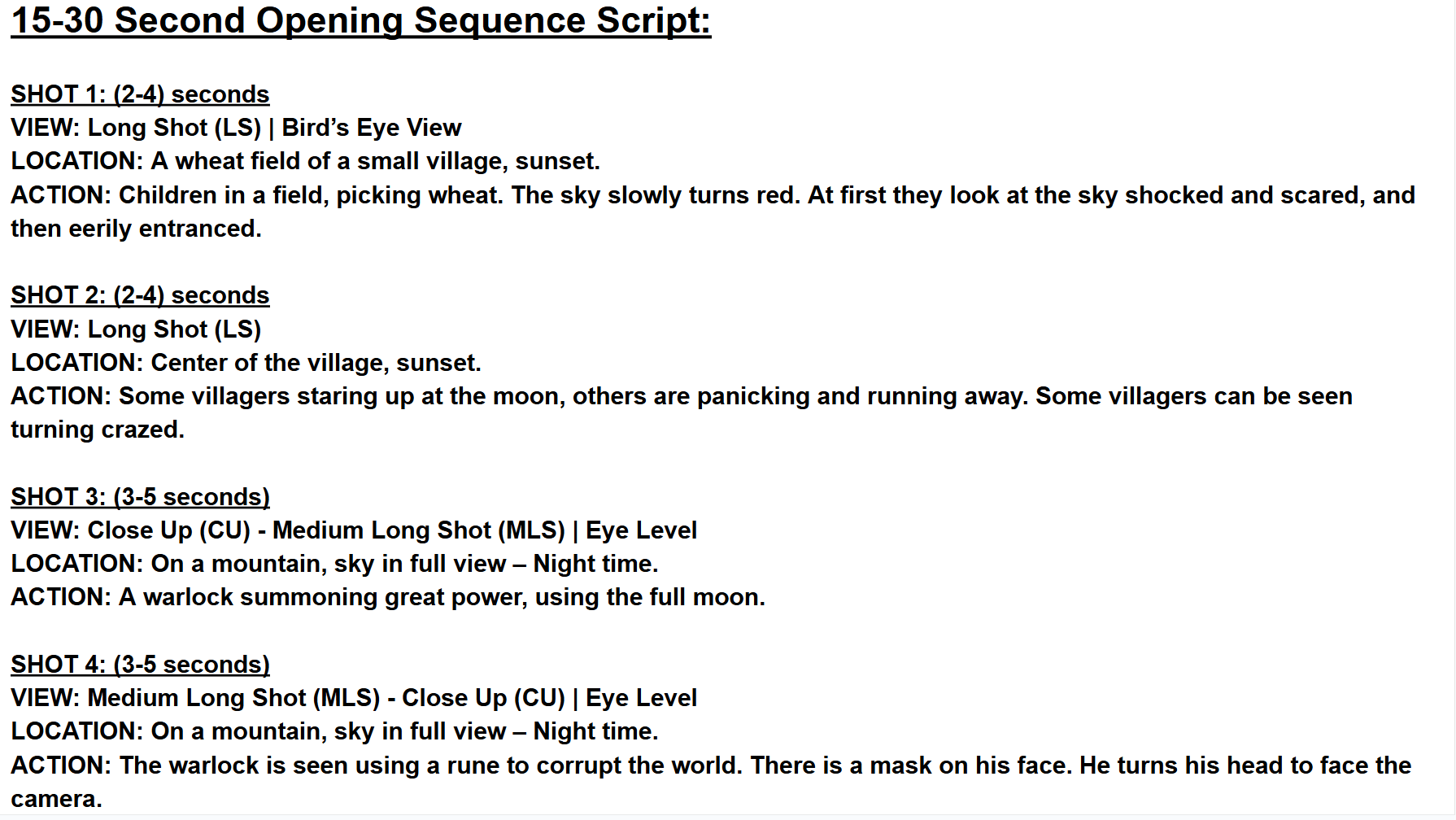
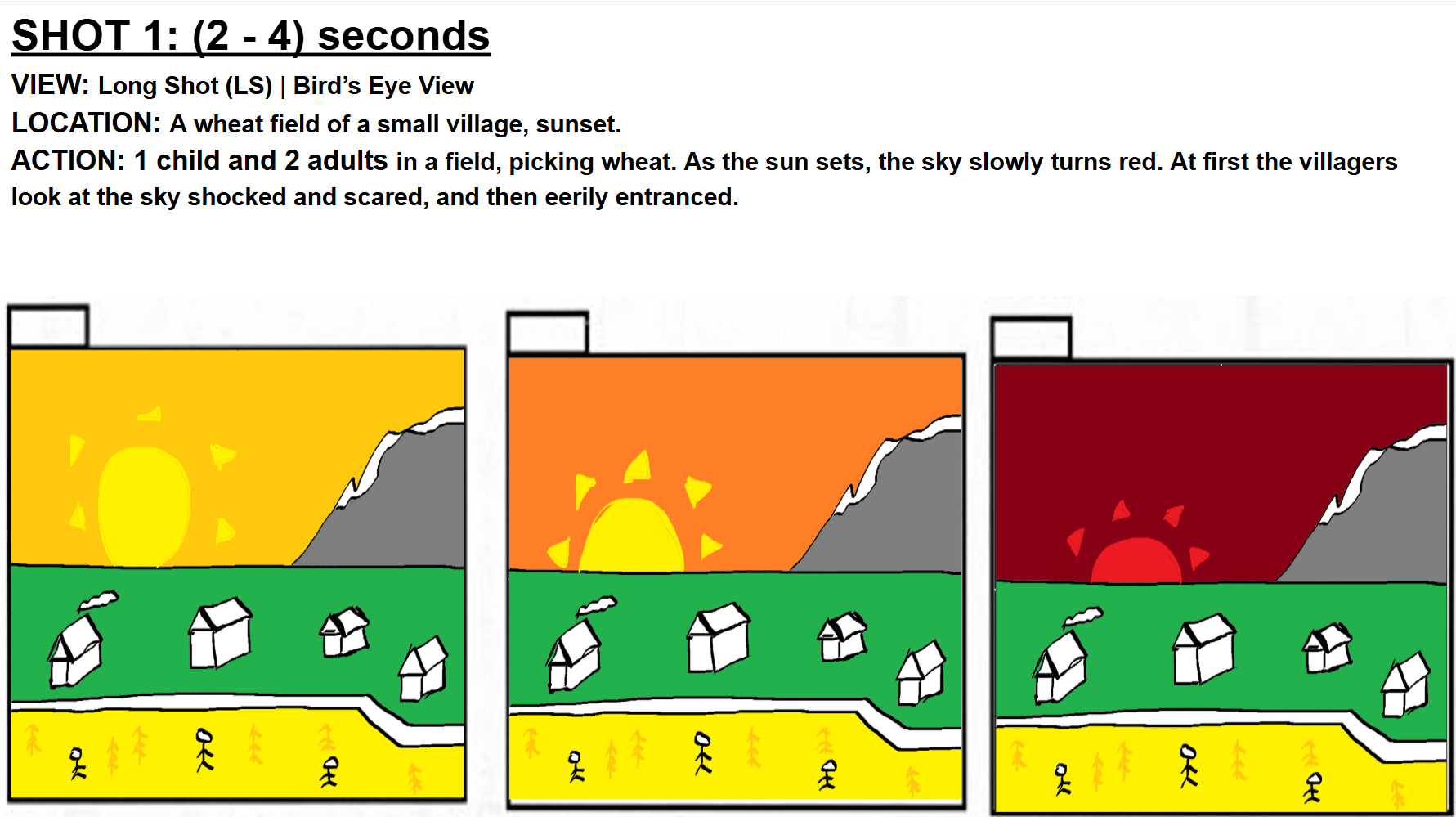
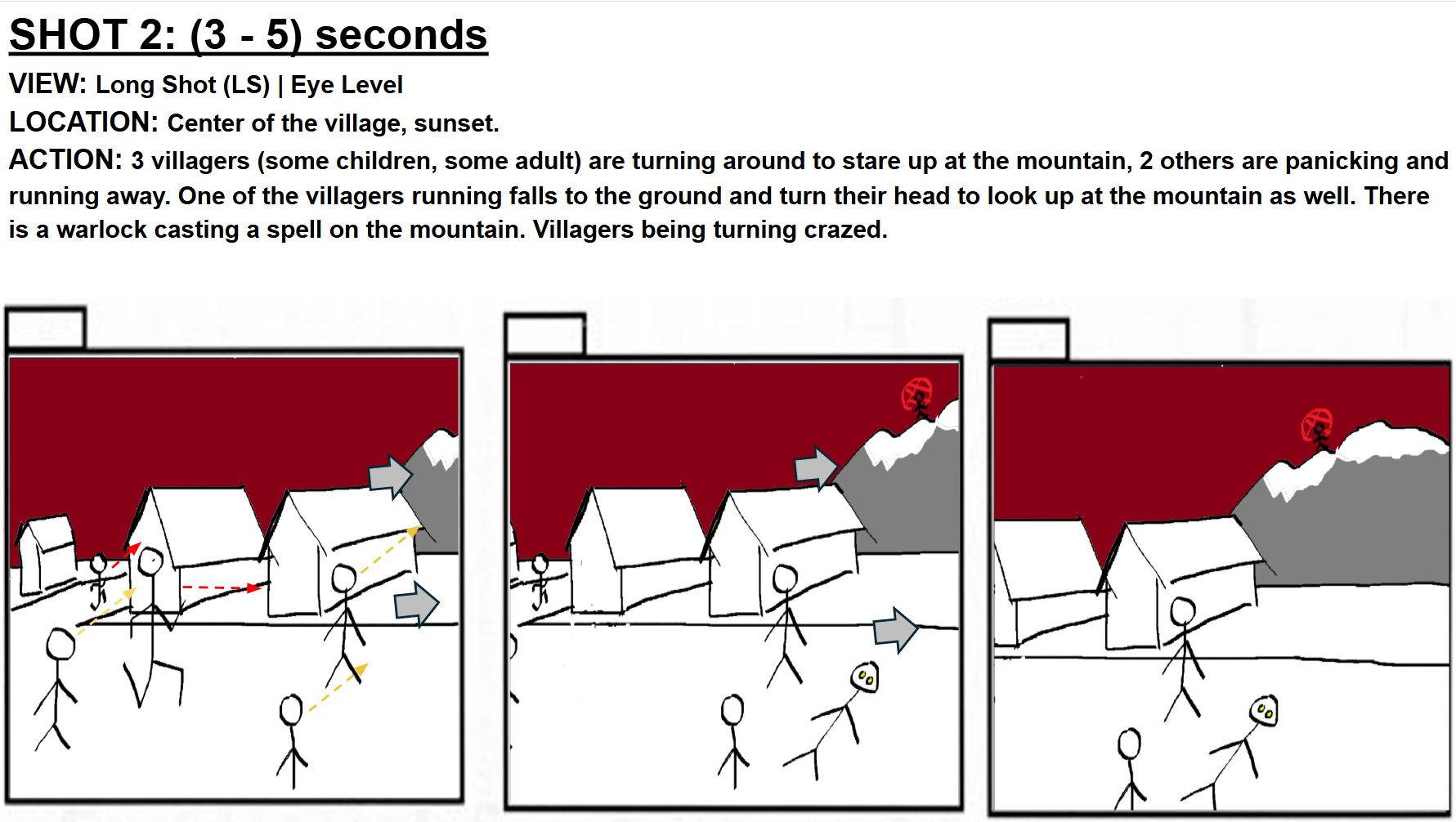
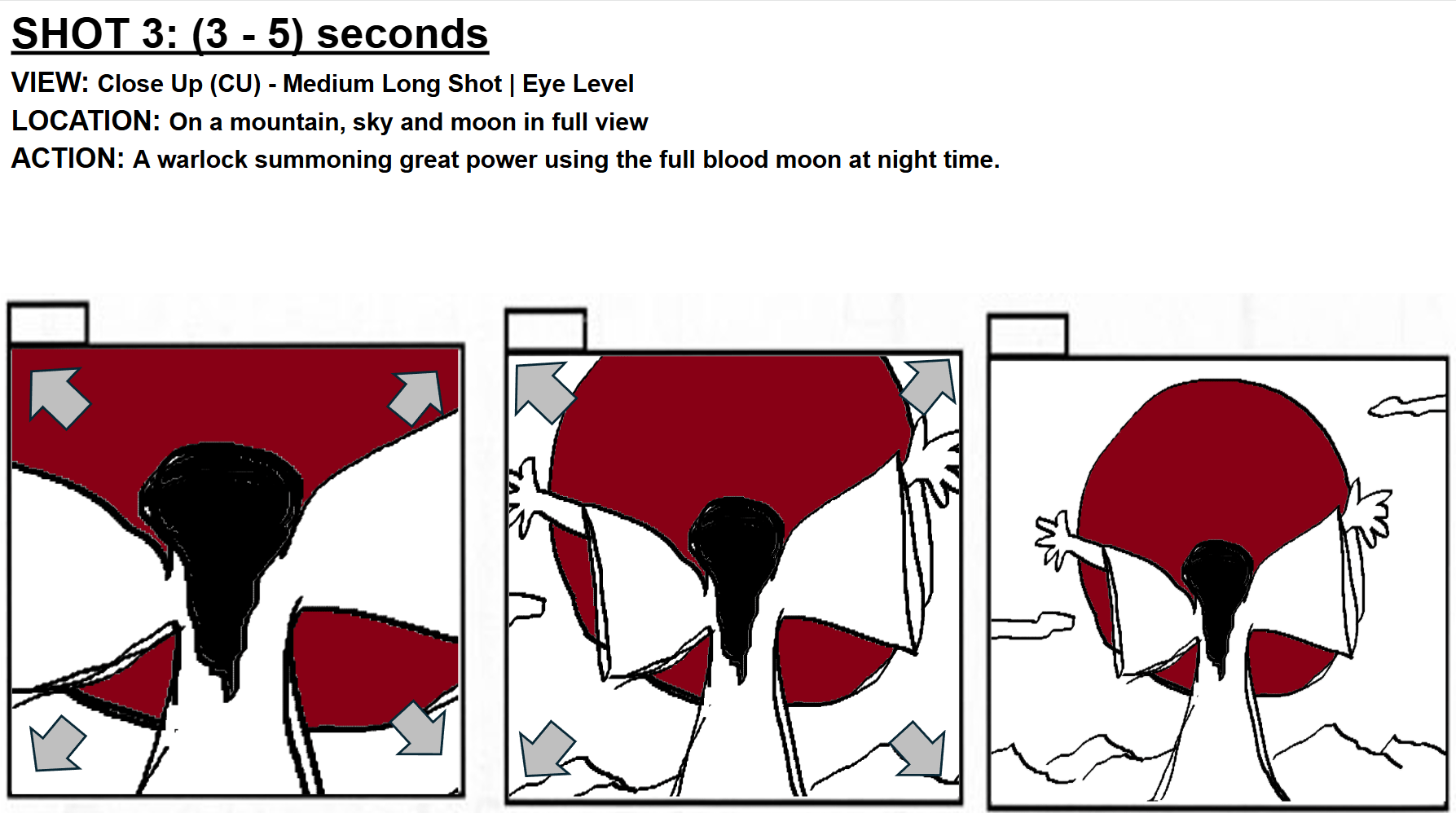
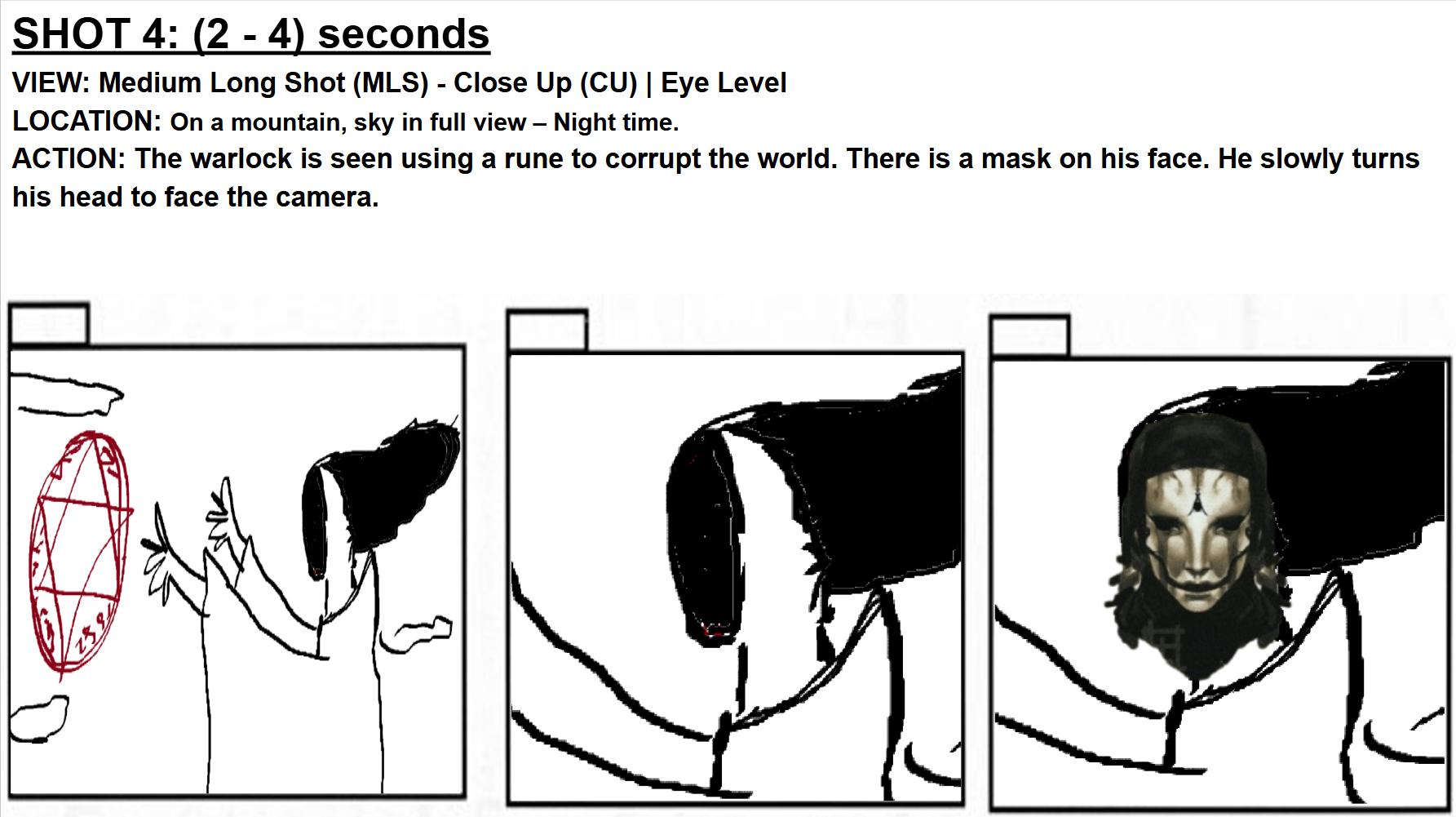
I wrote a storyboard script to describe the opening sequence of the game and also designed a preliminary storyboard for collaboration with potential art and marketing teams for internal approvals:
- Designed shots with worldbuilding in mind by creating a sequence that can serve as both a trailer for the game and the introductory cinematic before the tutorial.
- Specified location, camera view, and action for reference by the art team.
- Considered any potential narrations done by NPCs or main characters when designing specific storyboard beats.
- Drafted a storyboard prototype with simple assets and simplistic design to maintain quick and efficient communication between different internal teams.
Voice Over Documentation
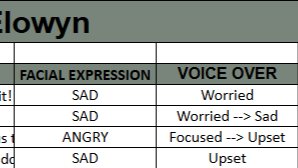
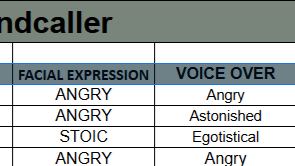
I created 4 voice-over documents for 1 player character, 2 NPC quest characters, and 1 enemy leader to provide thorough and detailed information for voice actors and to also ensure more refined voice recording sessions.
Each document includes:
- Character design images, character backstories, personality notes, motivations, and vocal directions for each character.
- All lines of dialogue for each character, along with scene details, dialogue context, and quest summaries, are provided to give situational and mood context for the voice actor.
Additionally, a Voice-Over Actor Casting Document was designed to specifically assist with casting direction for individual characters based on culture, age, and gender expectations.
Worldbuilding
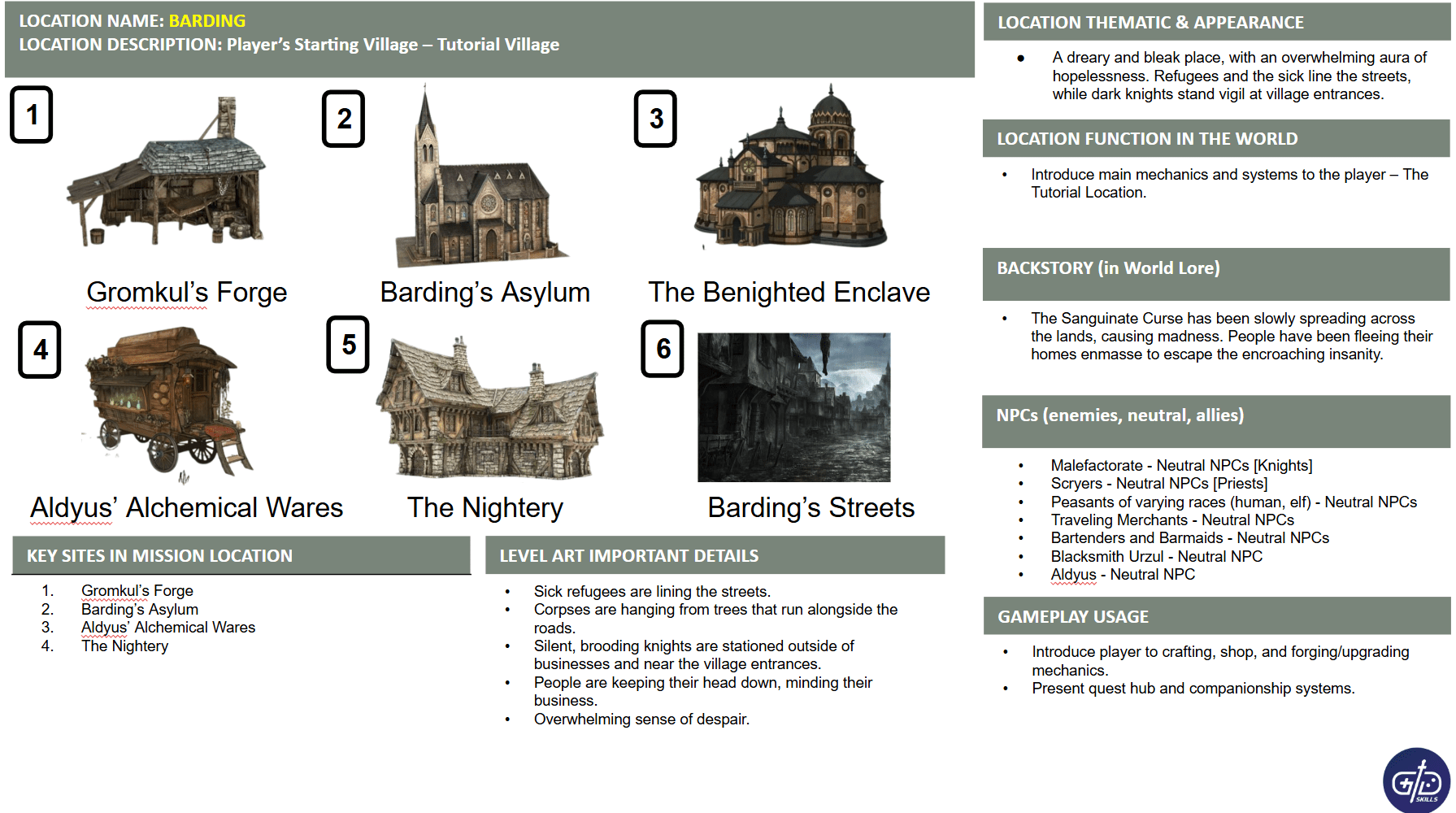
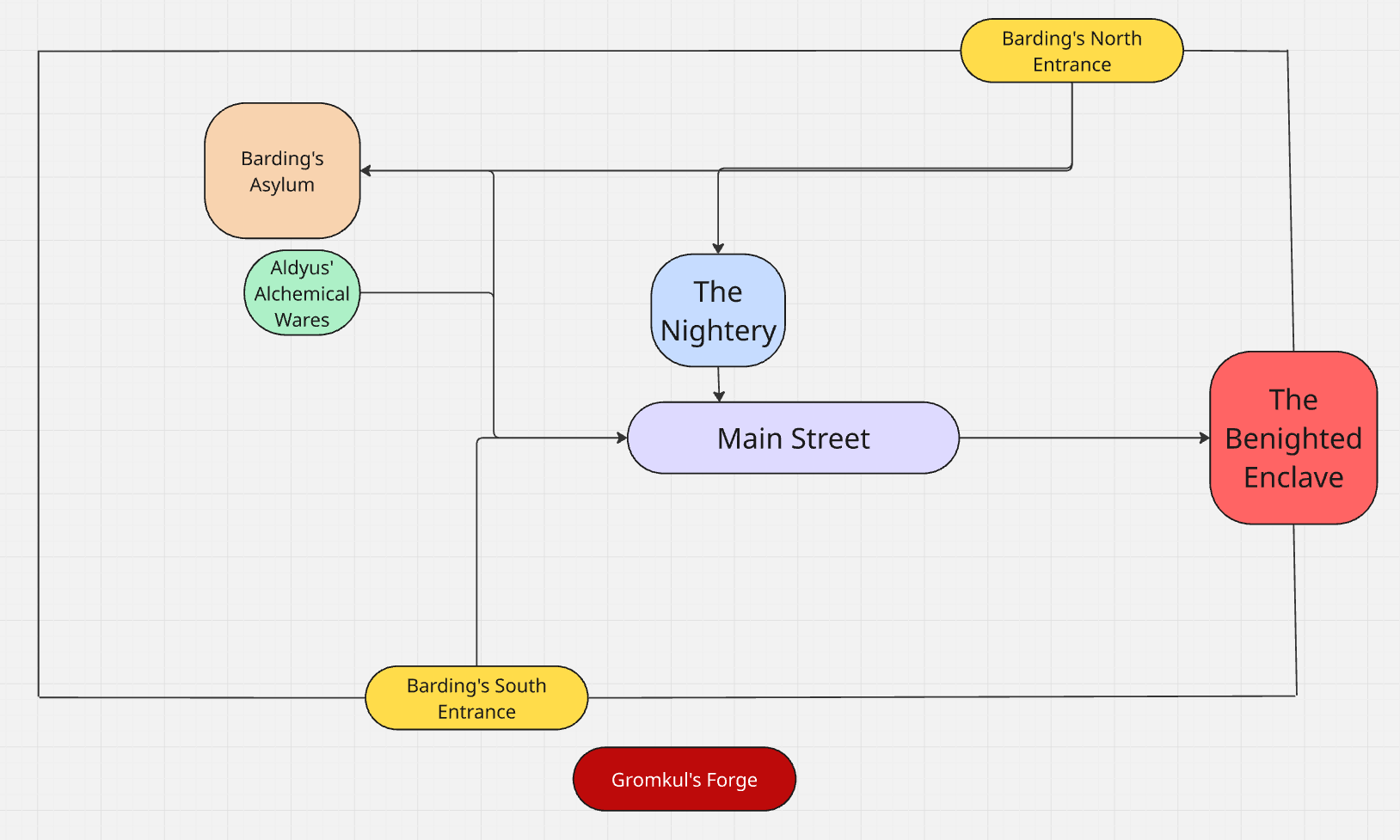
Barding was intentionally designed as the starting town for players.
As such, Barding was designed with the following design goals:
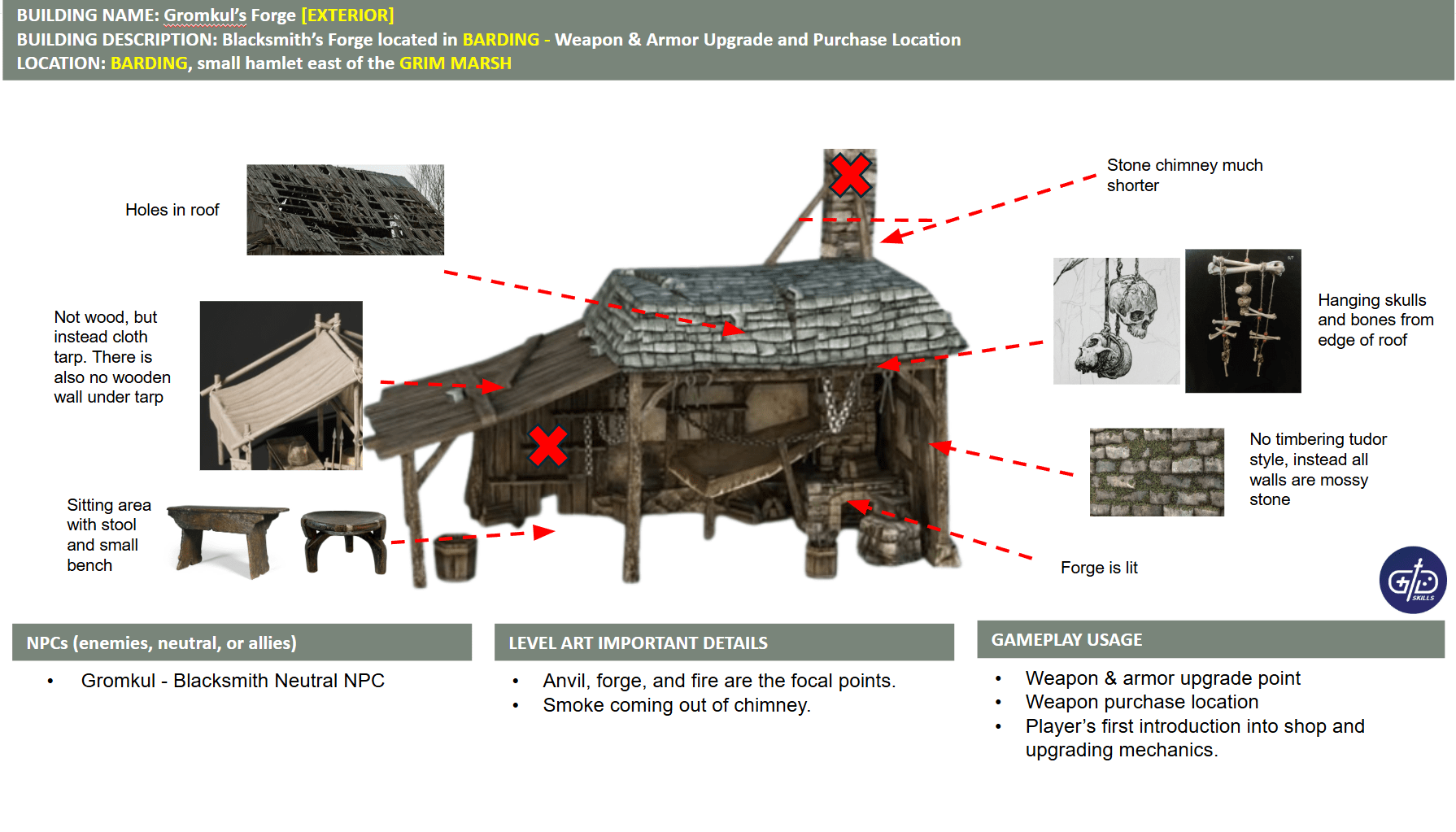
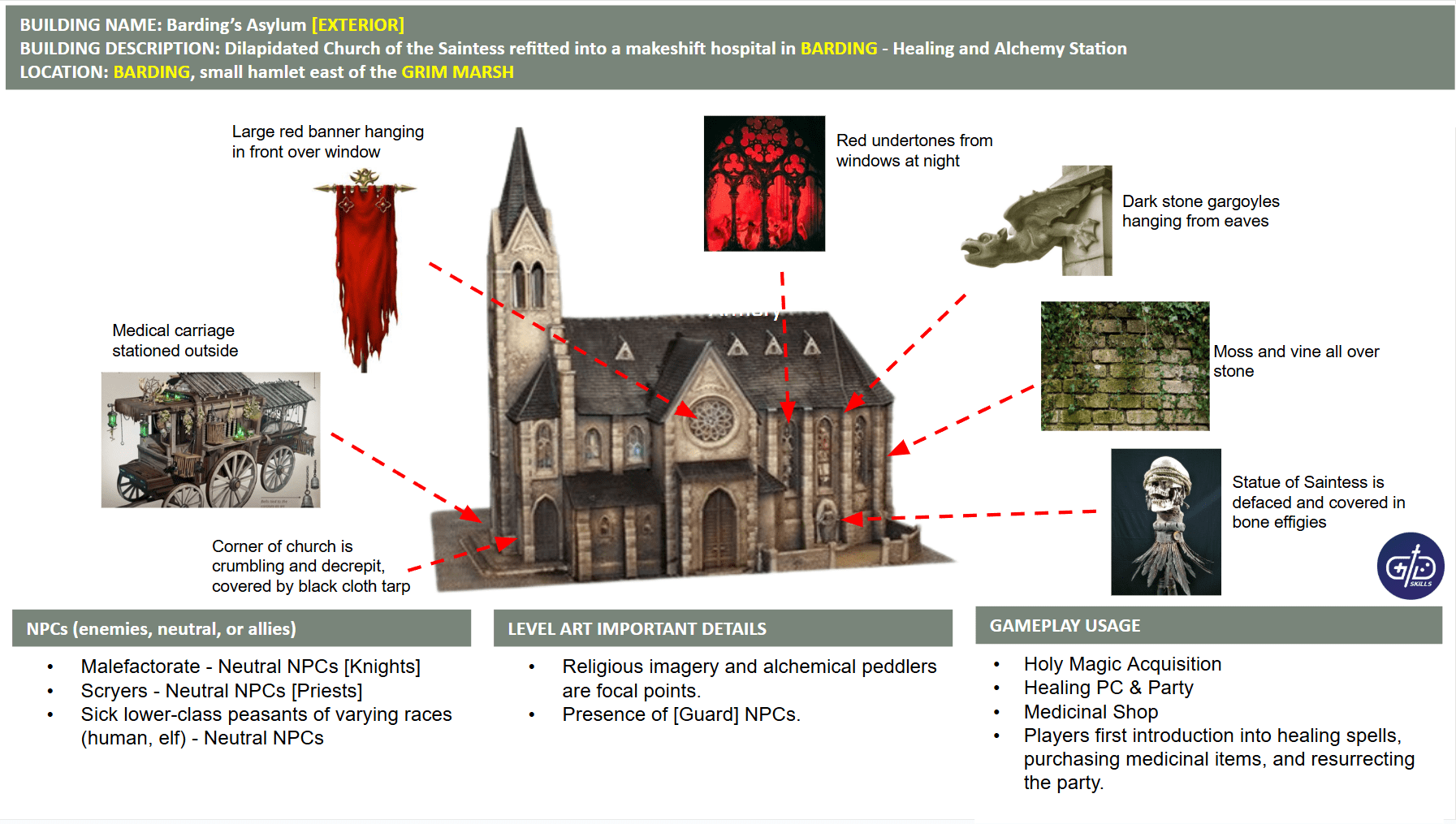
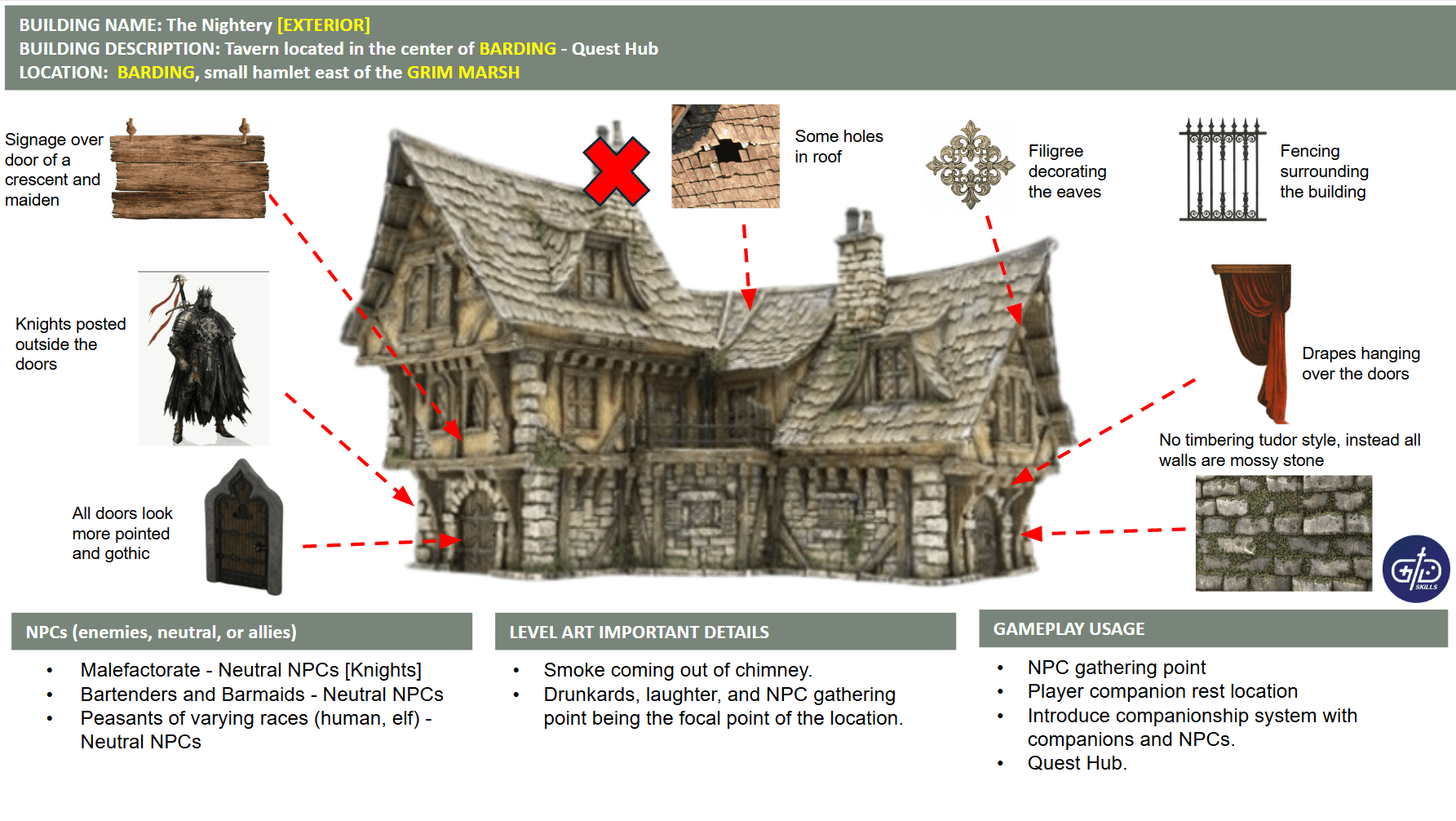
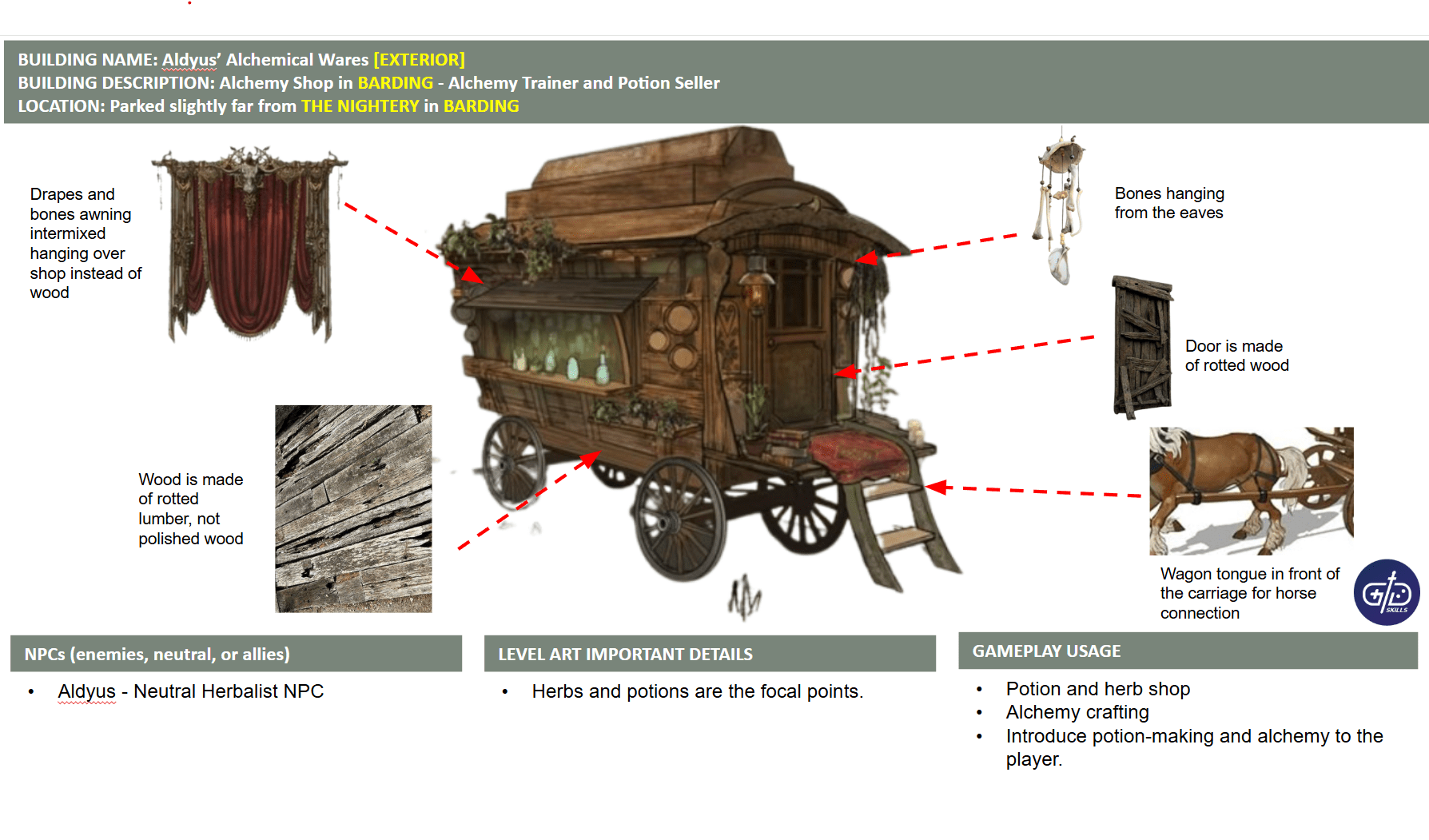
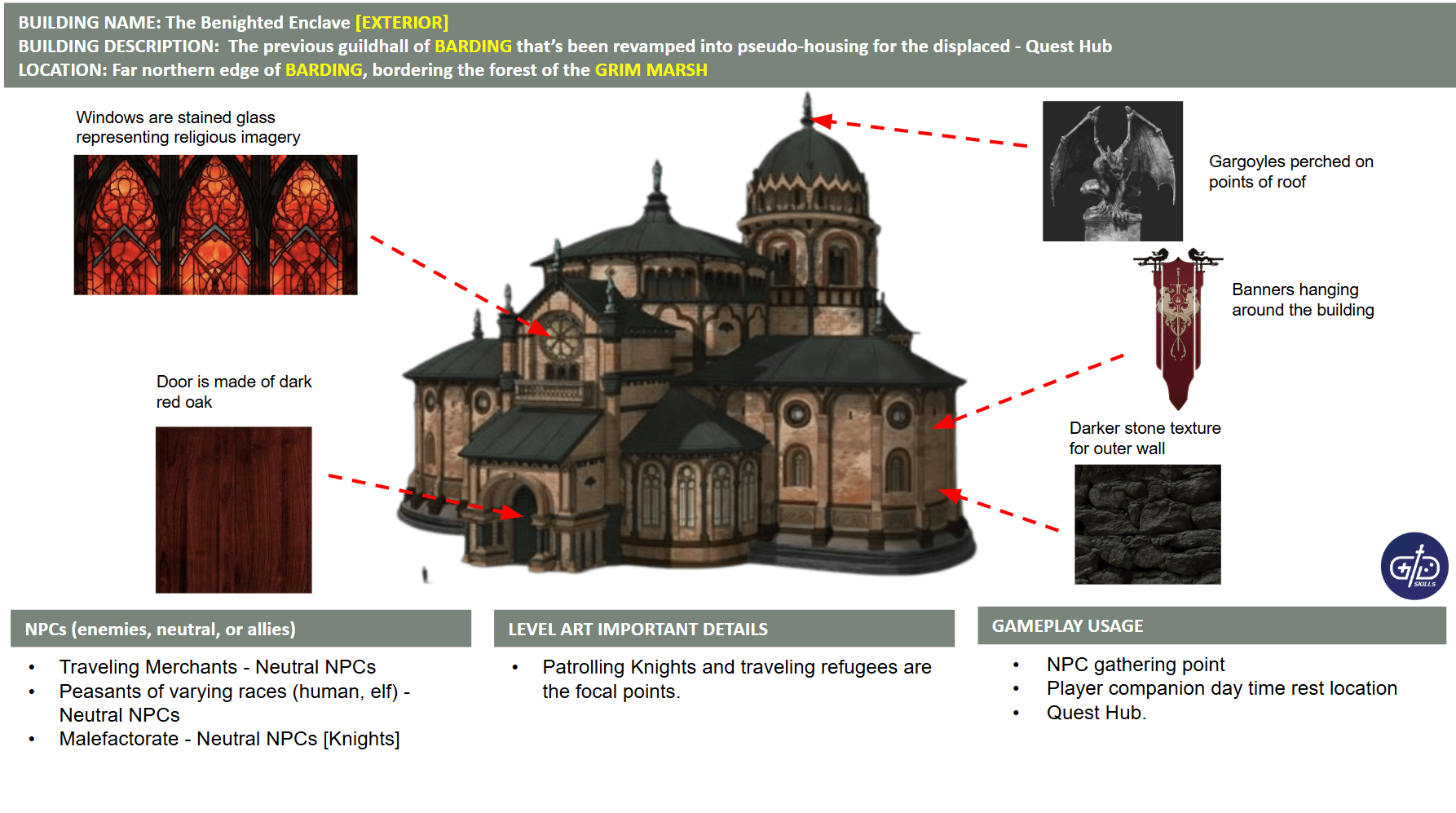
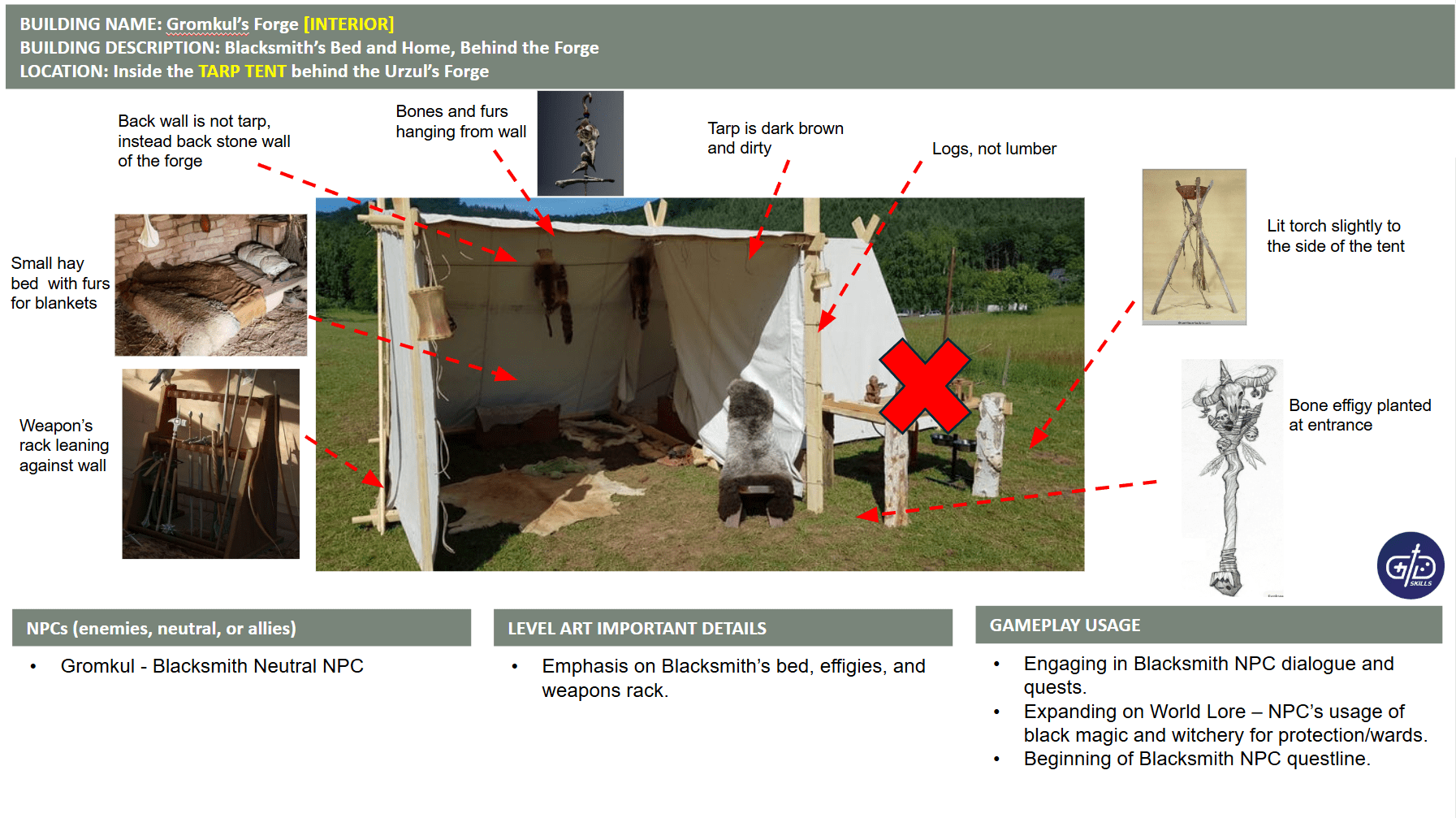
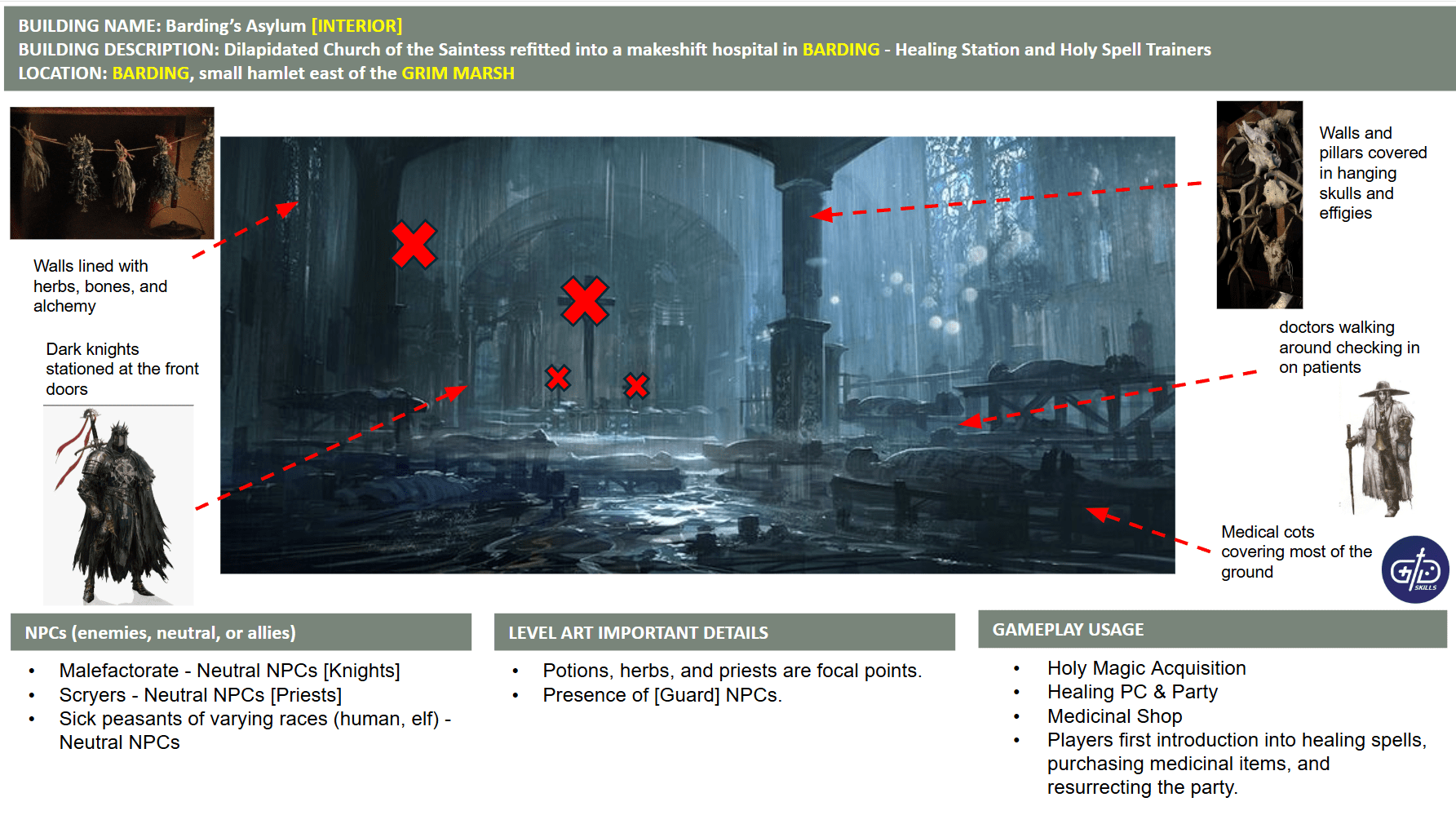
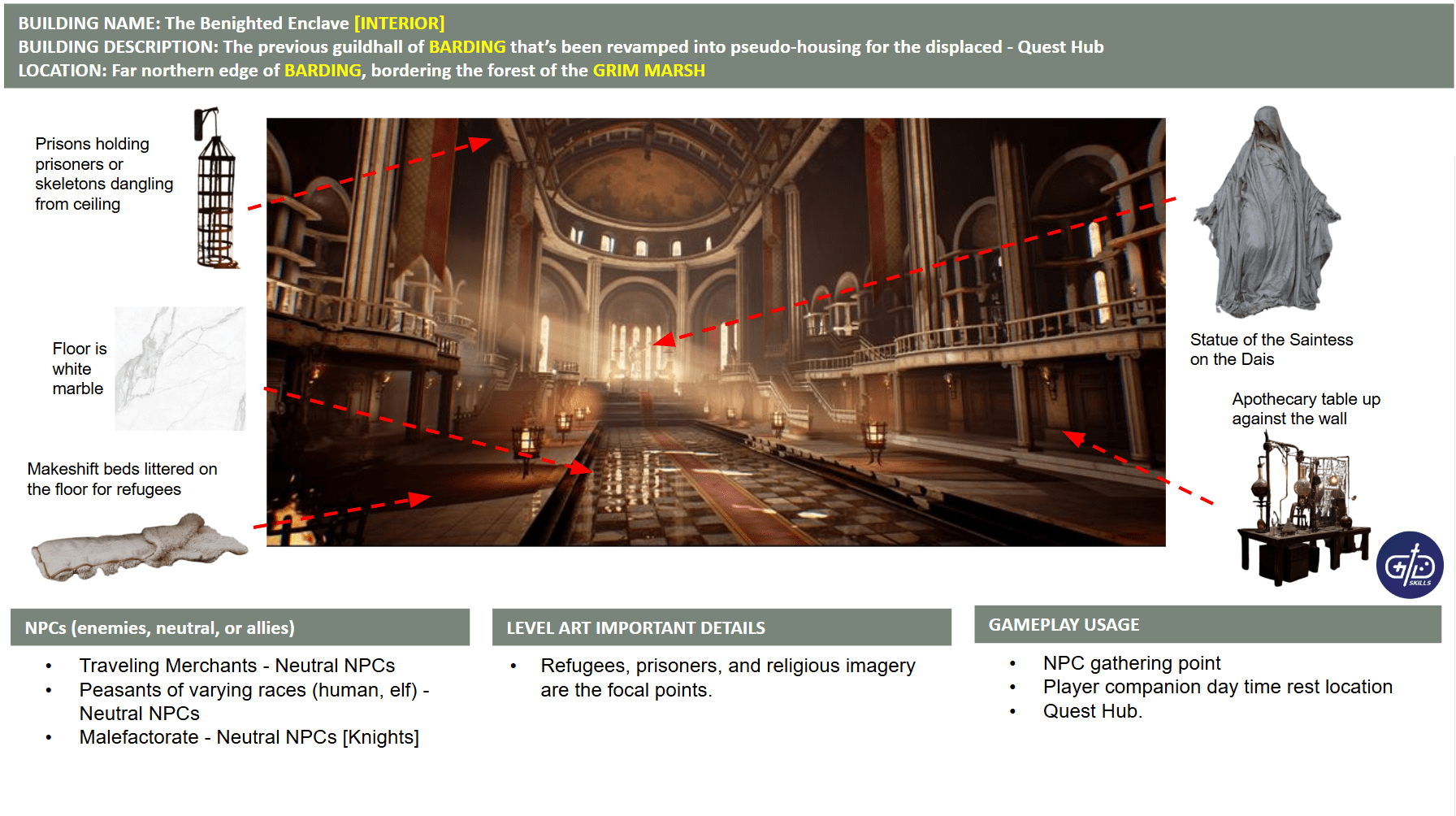
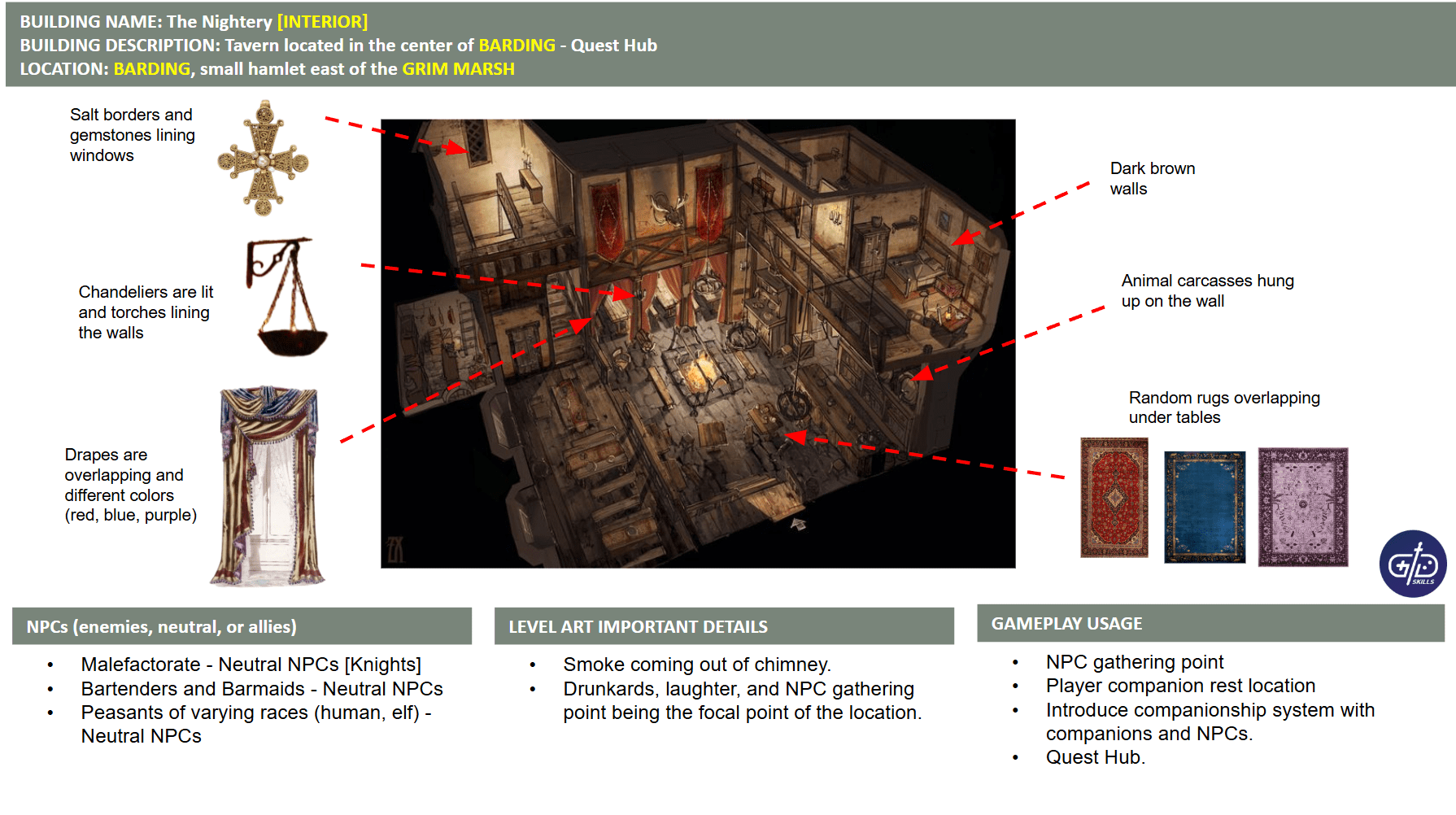
- Highlight key buildings of Barding with item placements that resemble the building’s purpose to the player, as well as a connected list of gameplay purposes for the building itself.
- Included notes on points of interest, reference images, and thematic elements for collaboration with the art and level design team.
- Included a reference key with notable NPCs, gameplay mechanics, and a brief backstory for each location.
Fleshed Out Building Design Document for Barding
Fleshed out Interiors for Locations in Barding
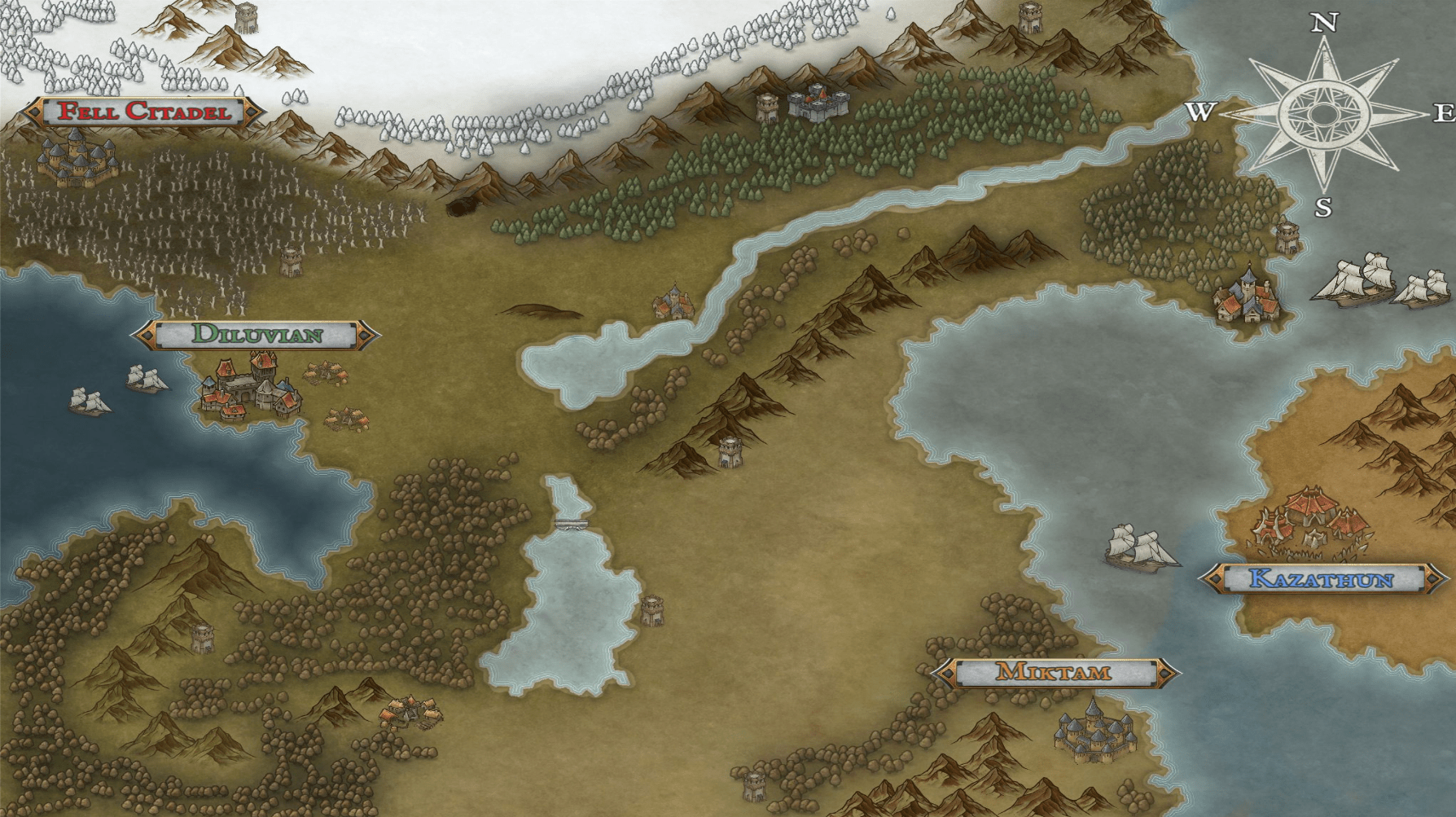
Designed Verahem's Cartography
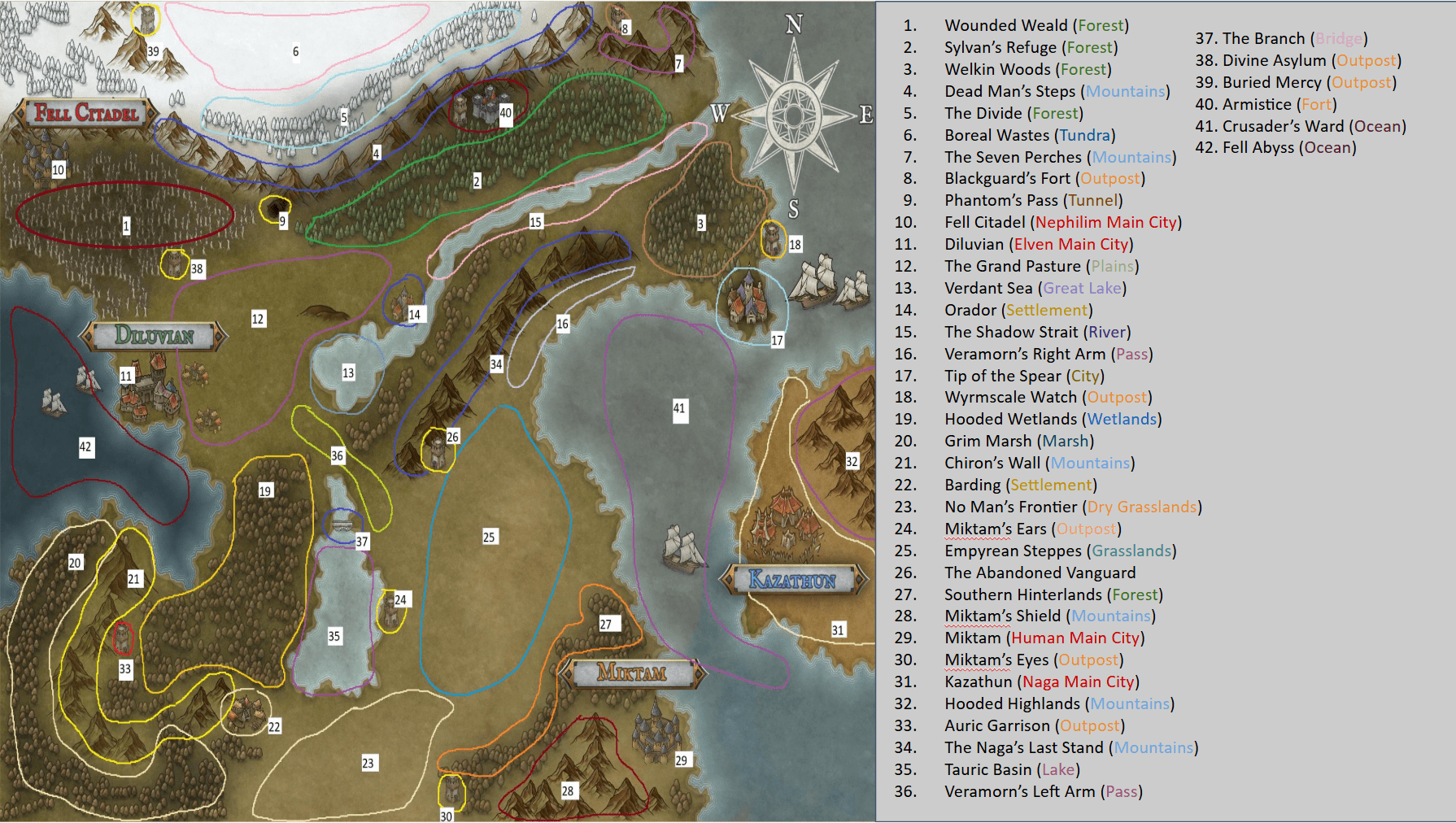
I designed a world map of Verahem to exemplify the following design goals:
- Emphasize the different factions at play within PARIAH.
- Created locations centered on the natural progression of resource needs for gameplay, like forests, mountains, oceans, and caves.
- Divided the key quest locations across the map to encourage exploration, player progression, companion additions, and embark on different narrative arcs as they progress through the story.
- Created a location key to indicate location names, points of interest, and highlight the different factions present within the world.
Genre and Content Research
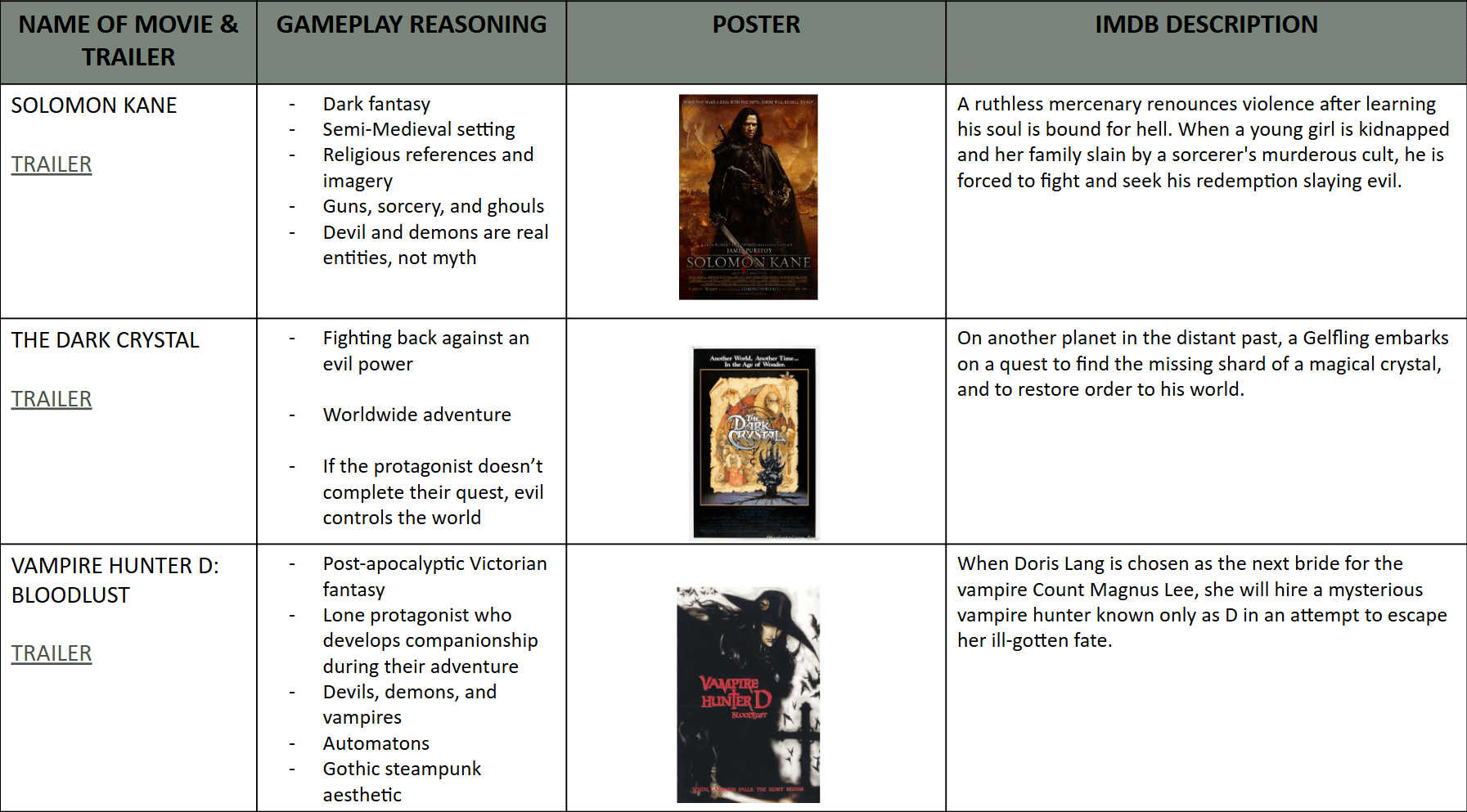
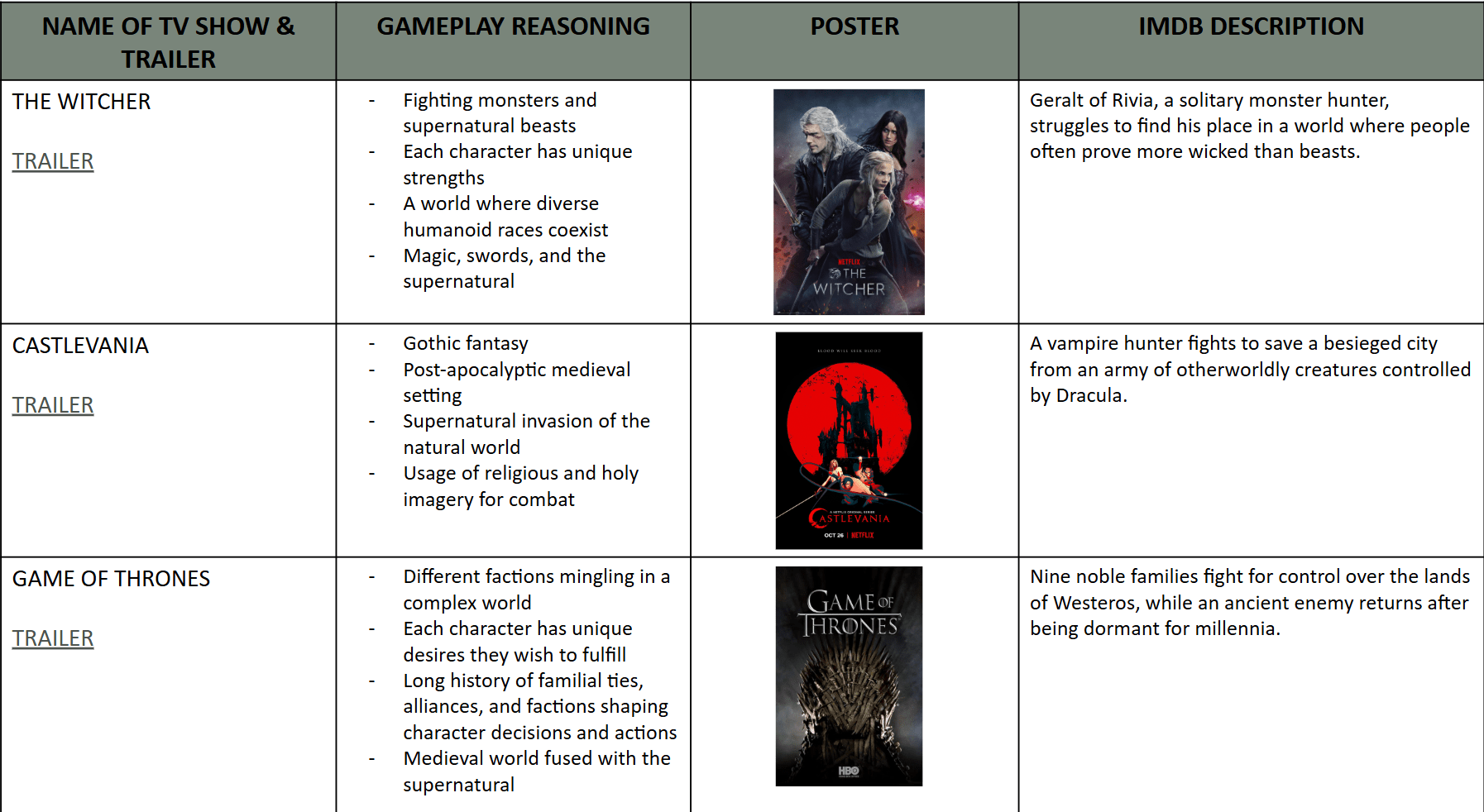
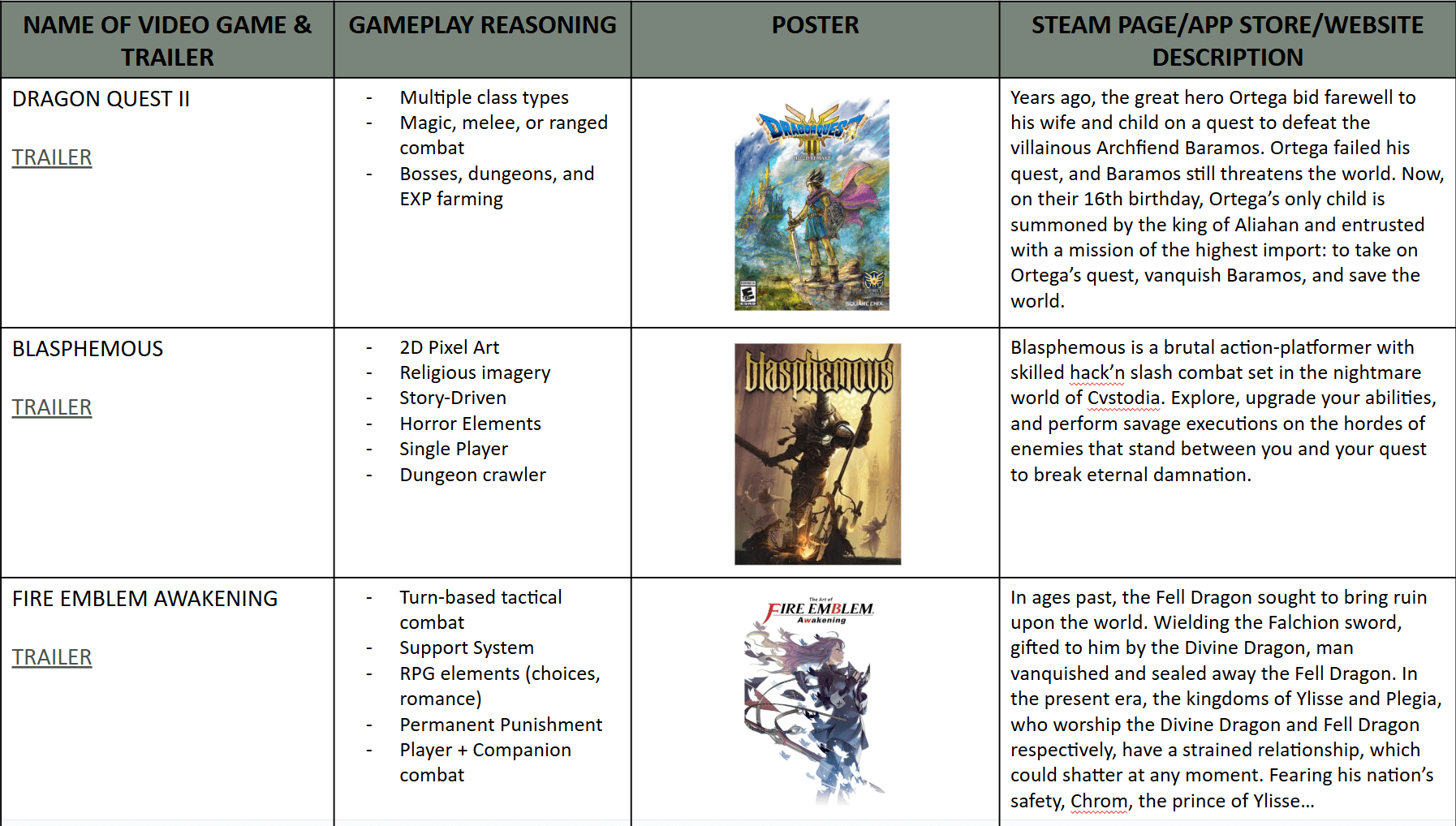
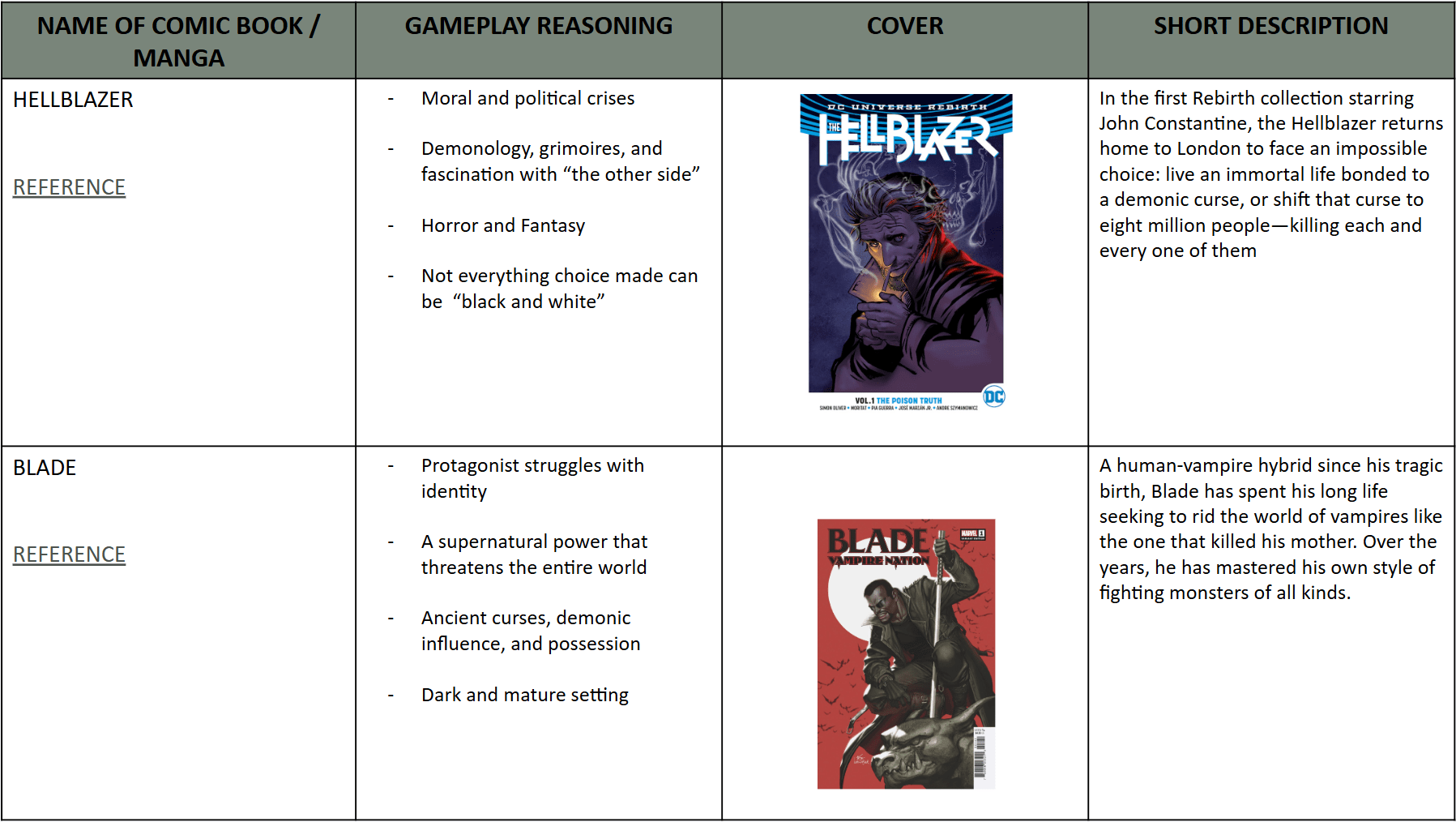
I conducted high-level research documentation to assist with determining the game’s popularity and help the marketing team do preliminary research with the target audience. To do so, I combined movies, shows, and comics that have narrative similarity. The document includes:
- A list of movies, TV shows, and games, including the official synopses of the titles, and links to their trailers.
- Wrote notes on what critical elements to draw inspiration from to prove audiences enjoy similar ideas that vary in media style.
Created lore summaries for both in-game and promotional use.