It is recommended to play this visual novel in full screen on a computer. This game is not recommended for mobile devices.
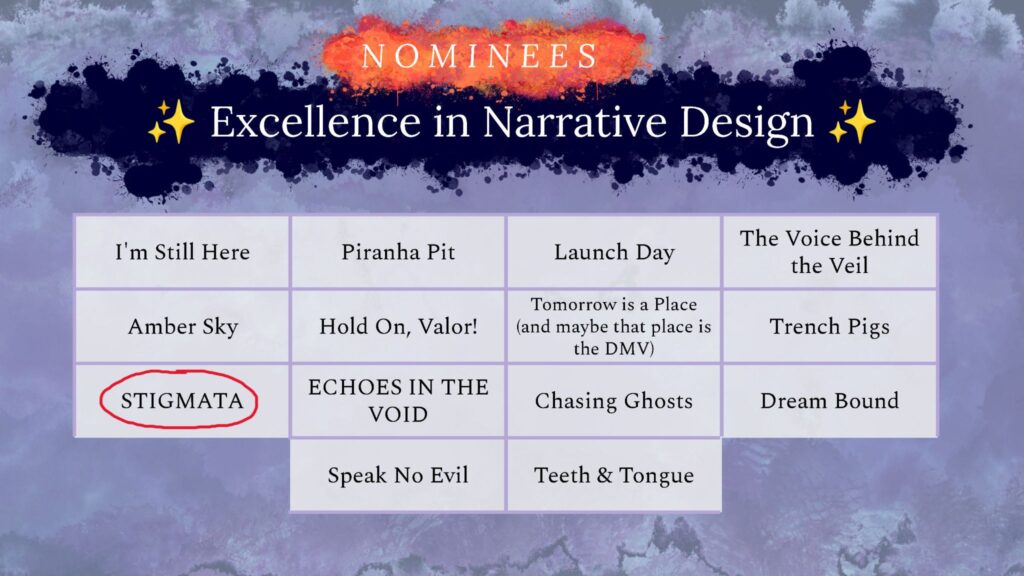
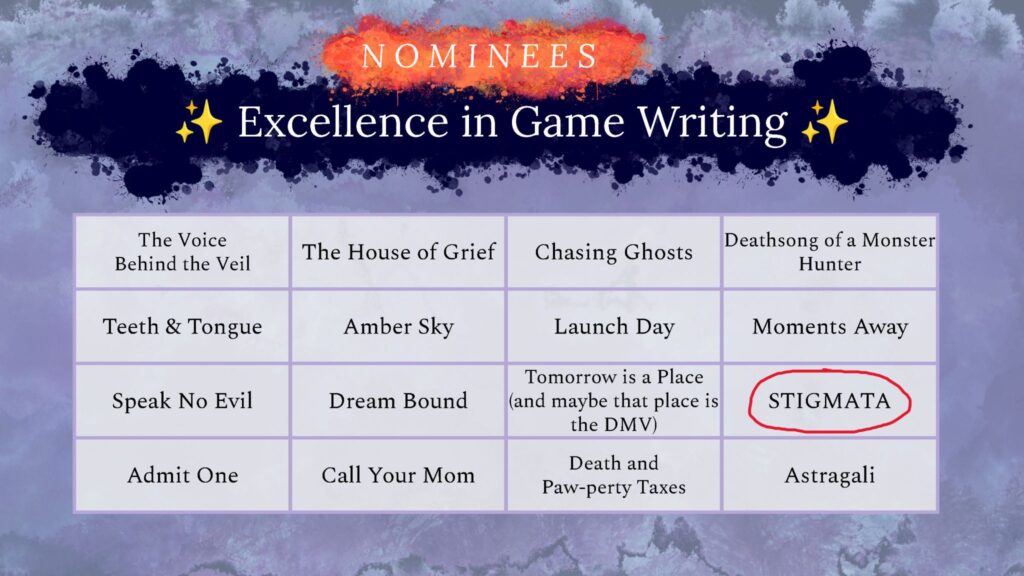
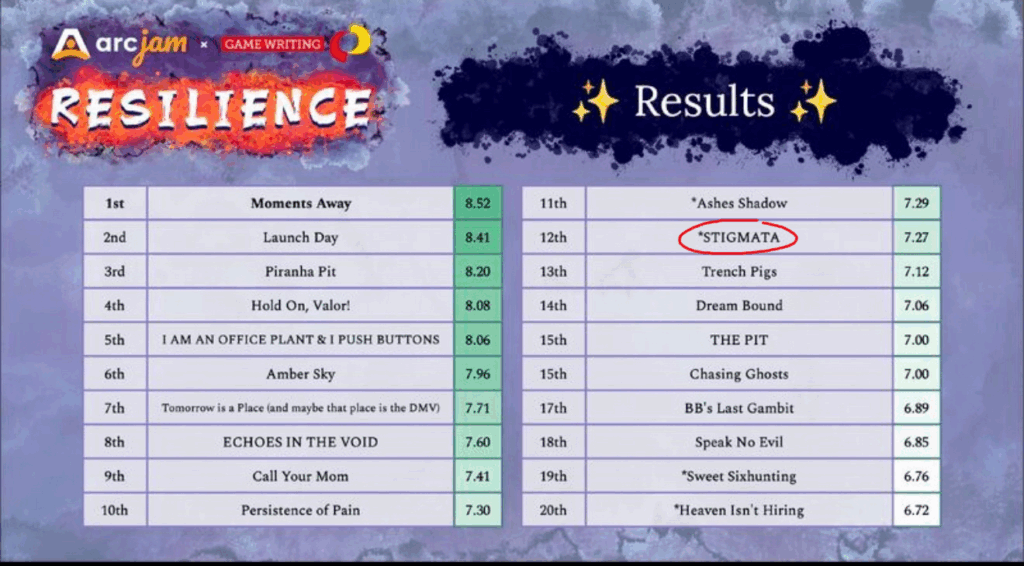
Nominations & Game Jam Results
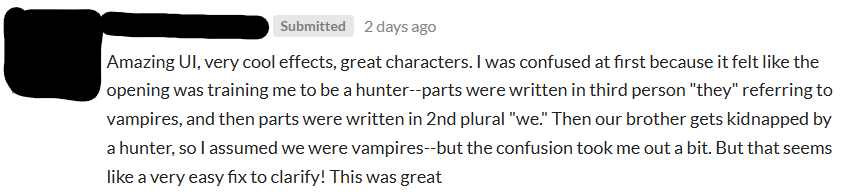
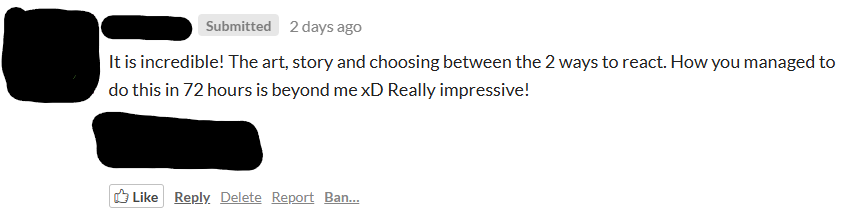
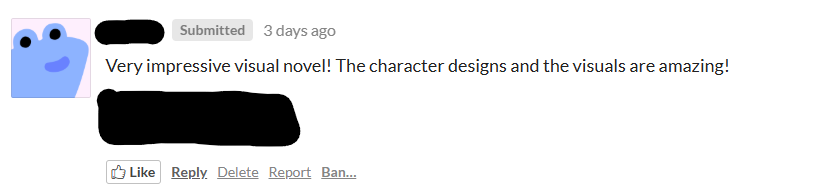
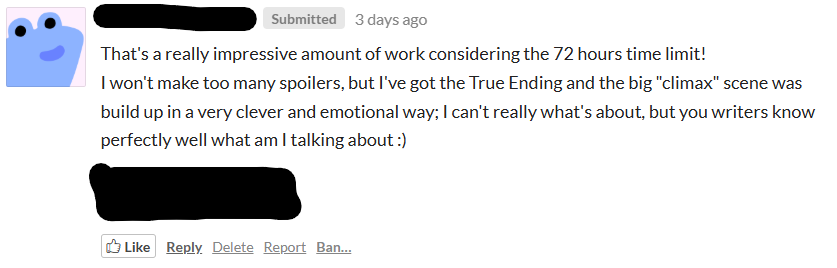
Feedback
Add a header to begin generating the table of contents
Goal
- Gain real-world experience by working on a video game with a strict deadline.
- Ship a tangible product that can receive feedback and be play tested.
- Learn valuable collaboration skills by working alongside 2 other team members with different skillsets and focuses.
- Improve cross-collaborative documentation.
- Iterative skills like feedback gathering, analysis, and application from external play testers.
Overview
Branching Dialogue & Iteration
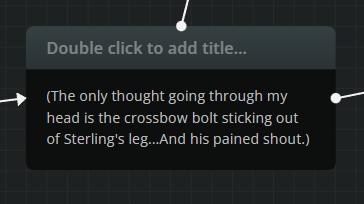
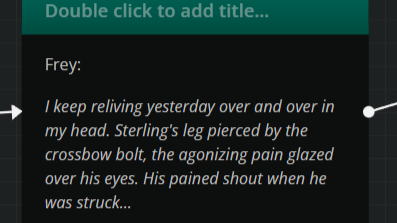
Branching Dialogue Examples
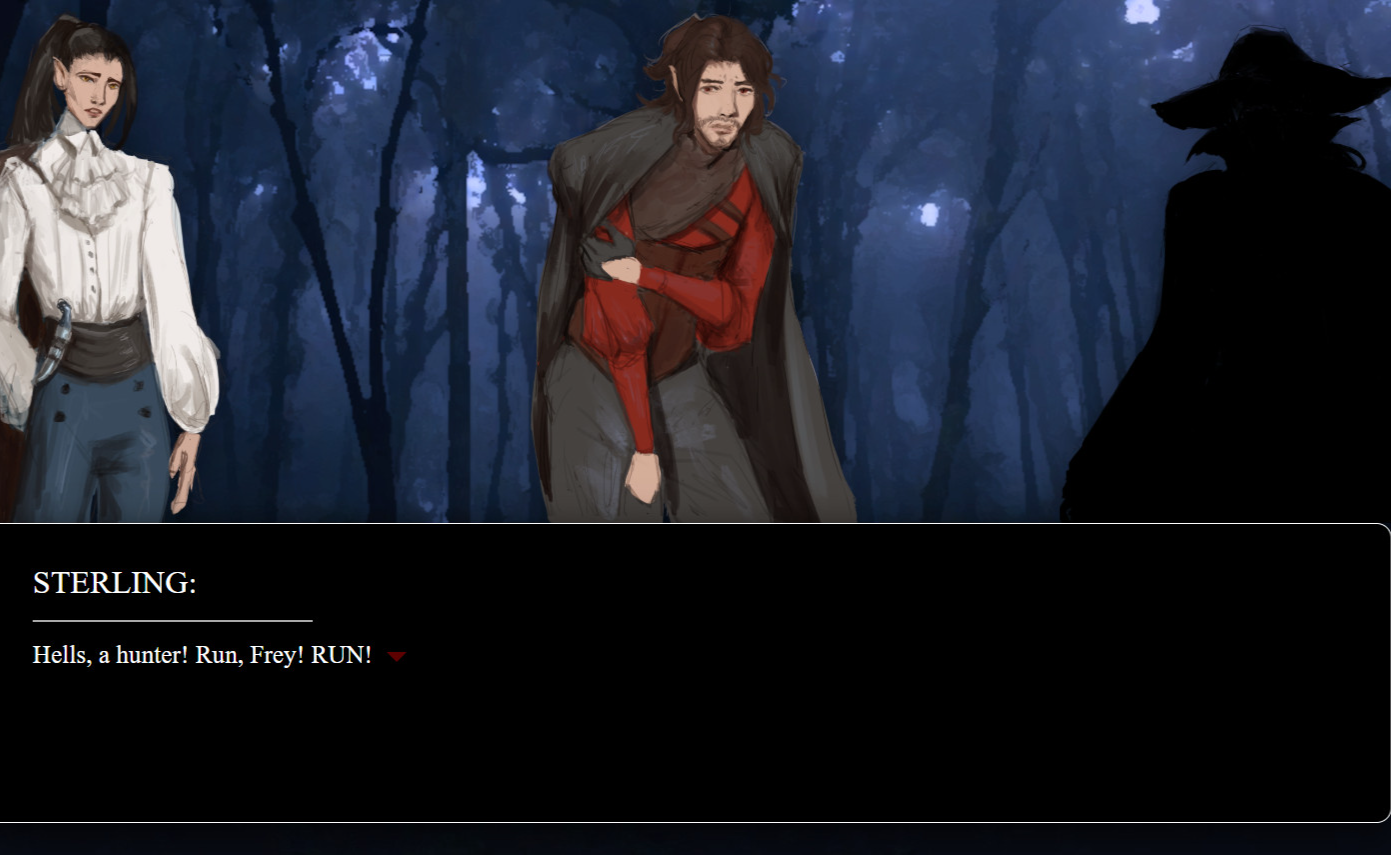
The goal of STIGMATA was to simulate the vampire’s struggle between their savage nature and their higher self: their humanity.
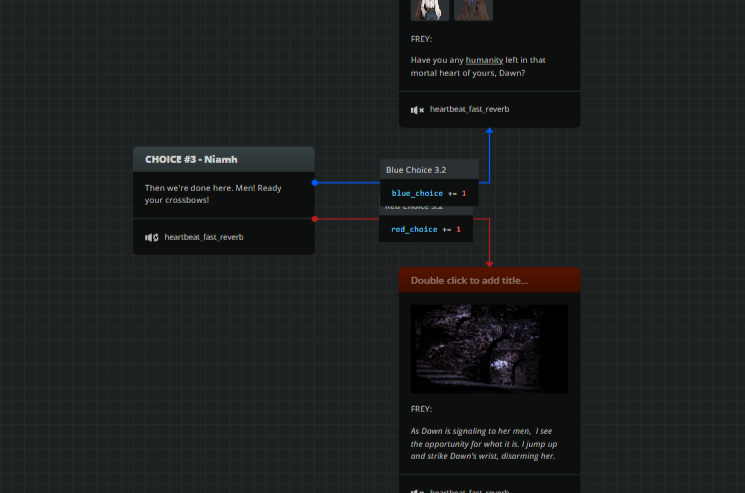
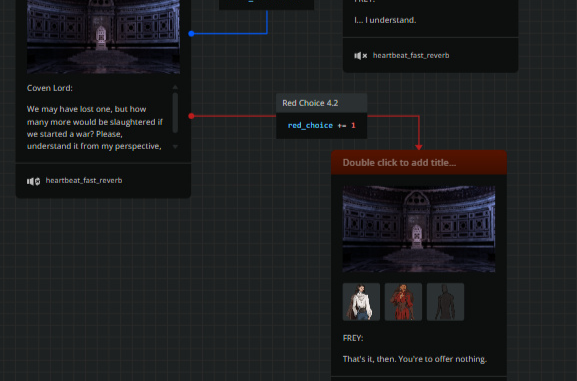
All of the branching dialogue has two paths: red or blue. In the prologue of the story, it’s established what the red and blue choice supposedly means, but at the end of the day, it’s up to the player’s instinct to guide them on what choice they wish to make.
Additionally, words will be highlighted throughout the game by different characters to continually establish the meaning of the choices.
When making the choice, there is no indicator of what the outcome will be, similar to most other visual novels.
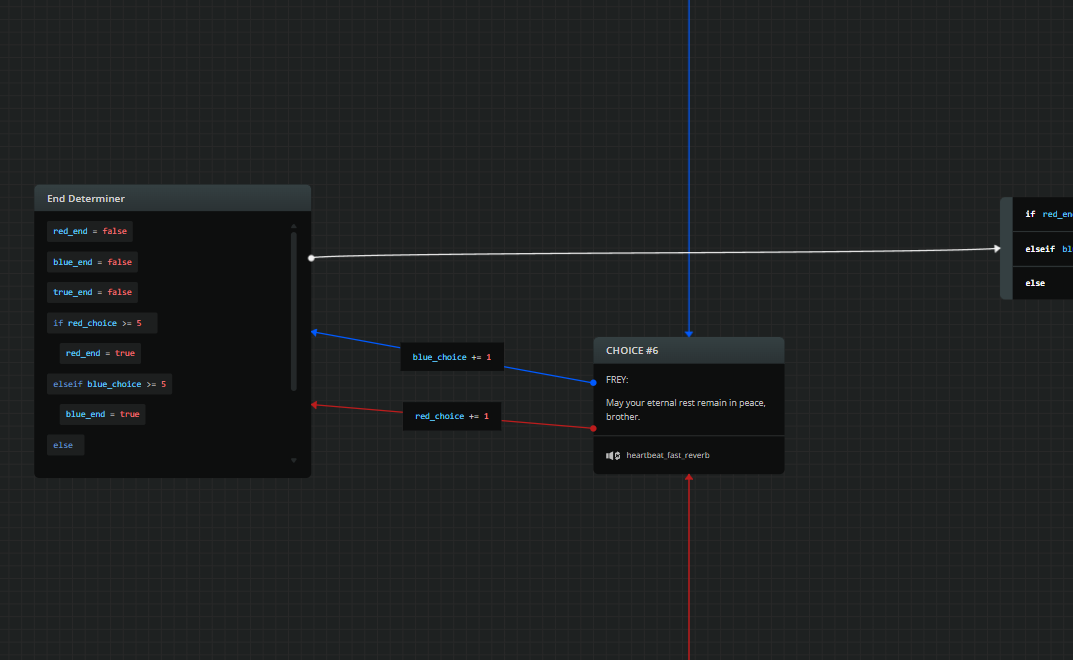
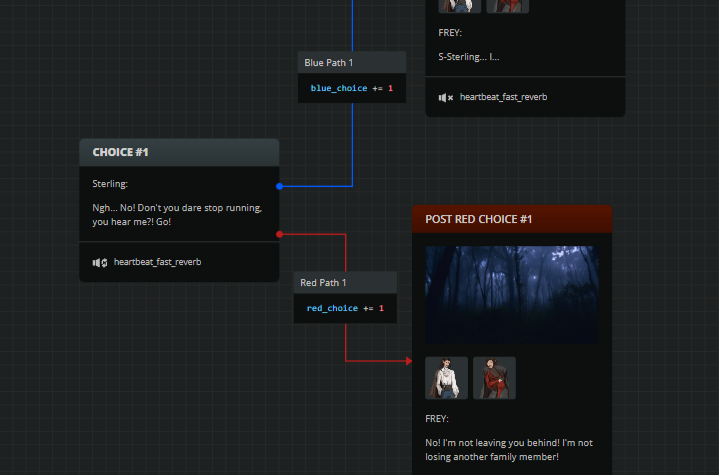
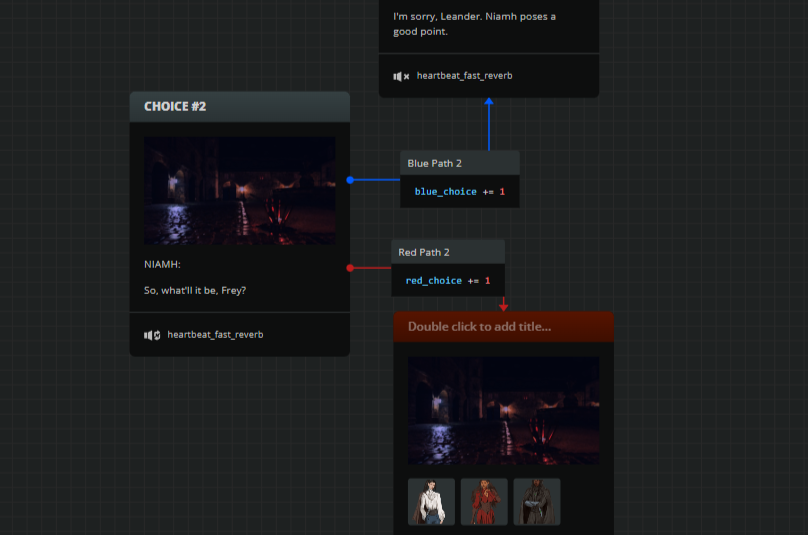
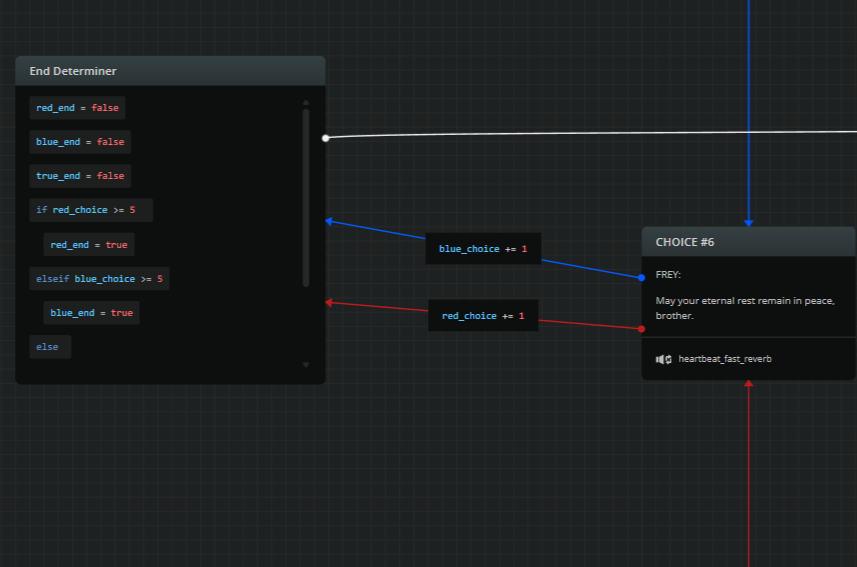
STIGMATA works by calculating the number of red vs. blue choices the player makes. There are three endings, all of which depend on the choices that are made. If there is an overwhelming amount of red choices, the player will get the red ending, and vice versa for blue.
To get the true ending, the player has to make a mixture of red and blue choices.
To achieve this, each choice is counted using Arcweave’s unique Arcscript. Then, there is an end determiner at the end of the game that calculates the number of red vs. blue choices and dictates which ending the player gets.
Though we didn’t have enough time to implement this feature during the Game Jam, we hoped to make it so that the player could only achieve the “true ending” if they had already gotten both the red and blue endings.
Dialogue Iteration Preview
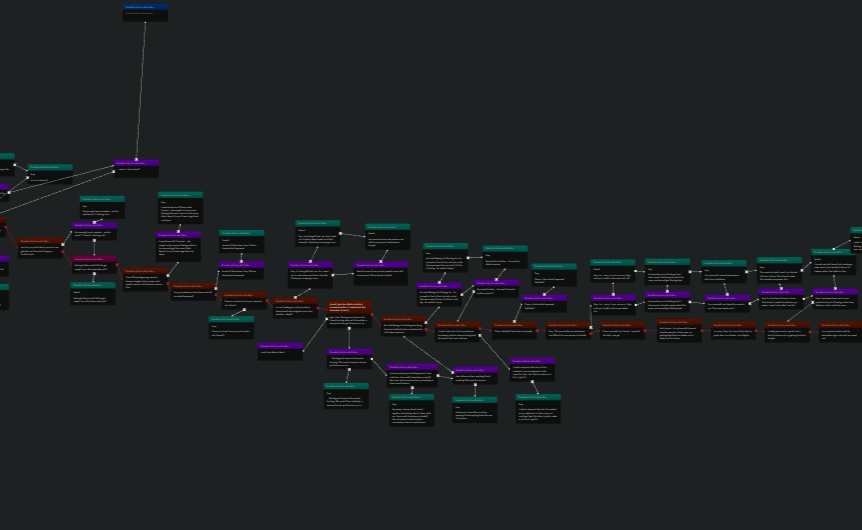
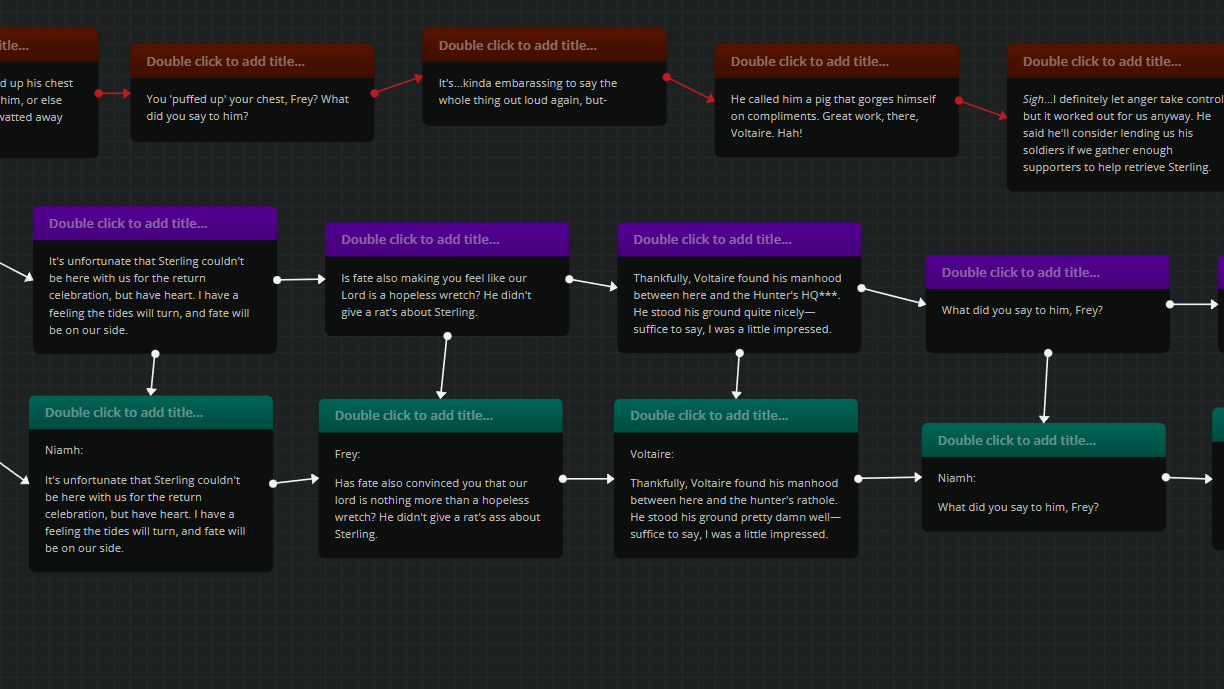
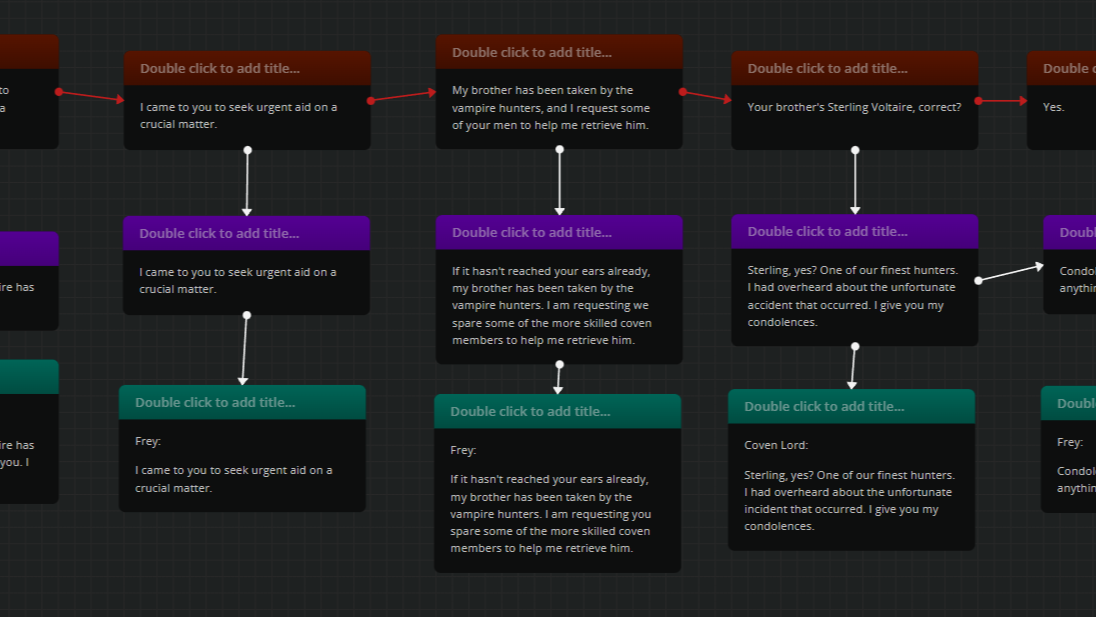
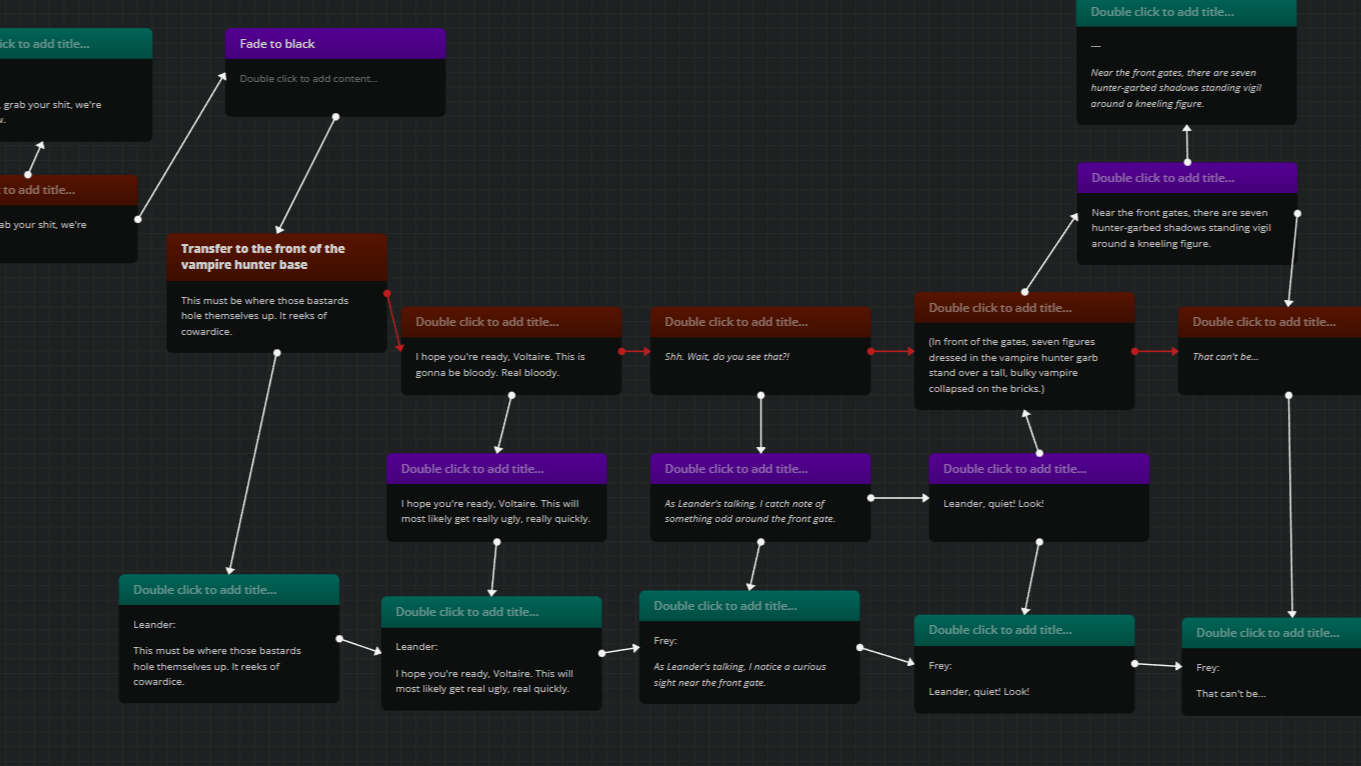
Here are multiple previews of the iterations that my co-author and I went through while working on the project. We had over 3000+ elements and 40,000+ words on this project, so there was an extraordinary amount of dialogue to comb through.
In all of these previews, the red elements represent the first draft, whereas the purple represents my edits of the first draft.
The green elements are the final, revised iteration that we used for the game.
We utilized Arcweave’s element system in this way so that we could visualize our iterative work and catch any mistakes.
First Draft vs. Final Revision Example
Character Designs & Art
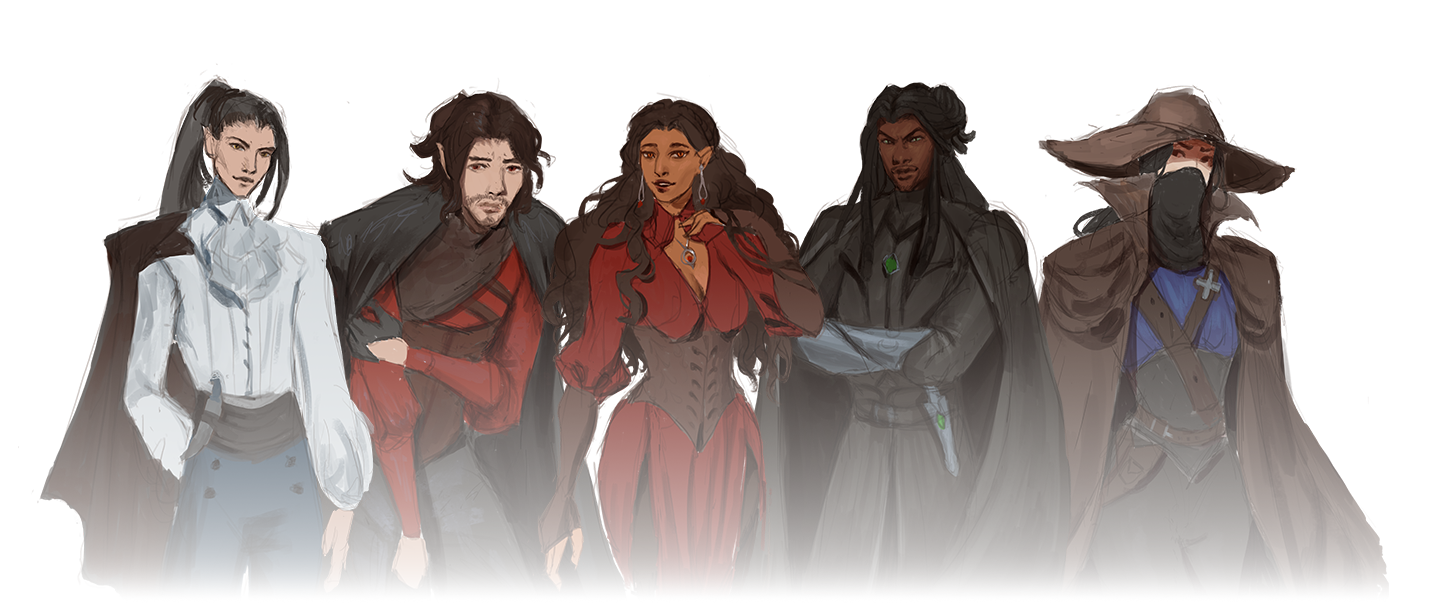
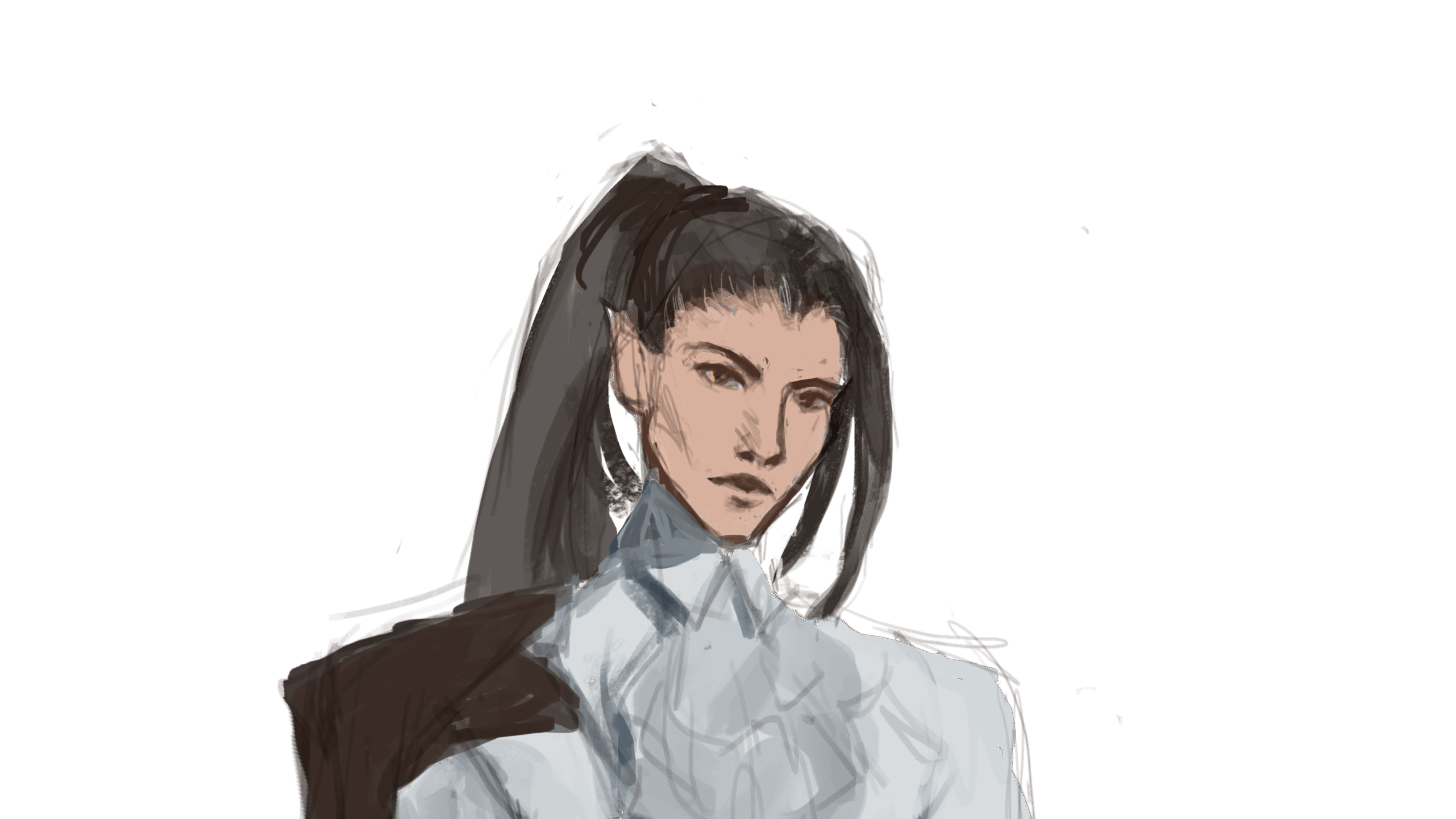
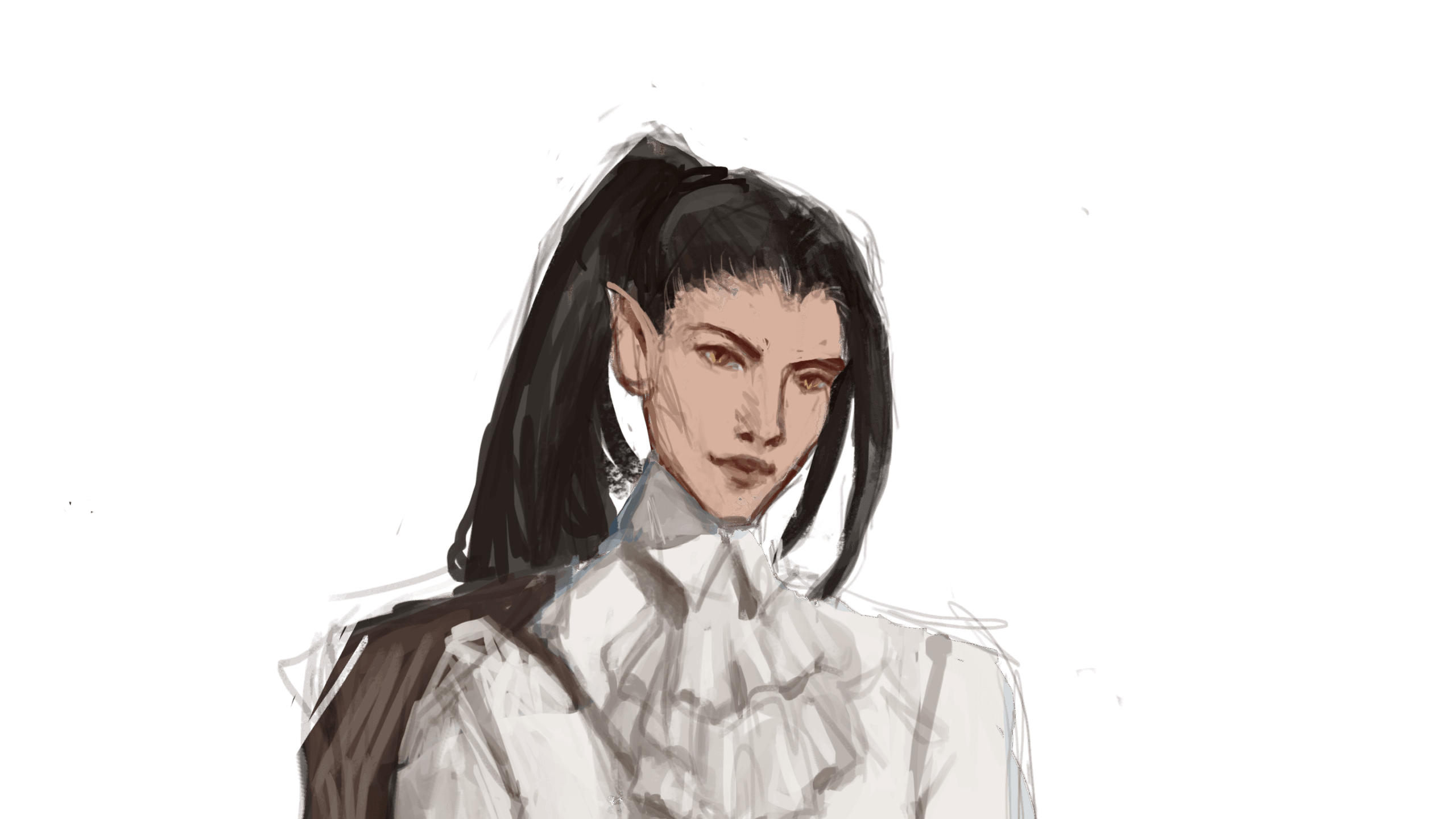
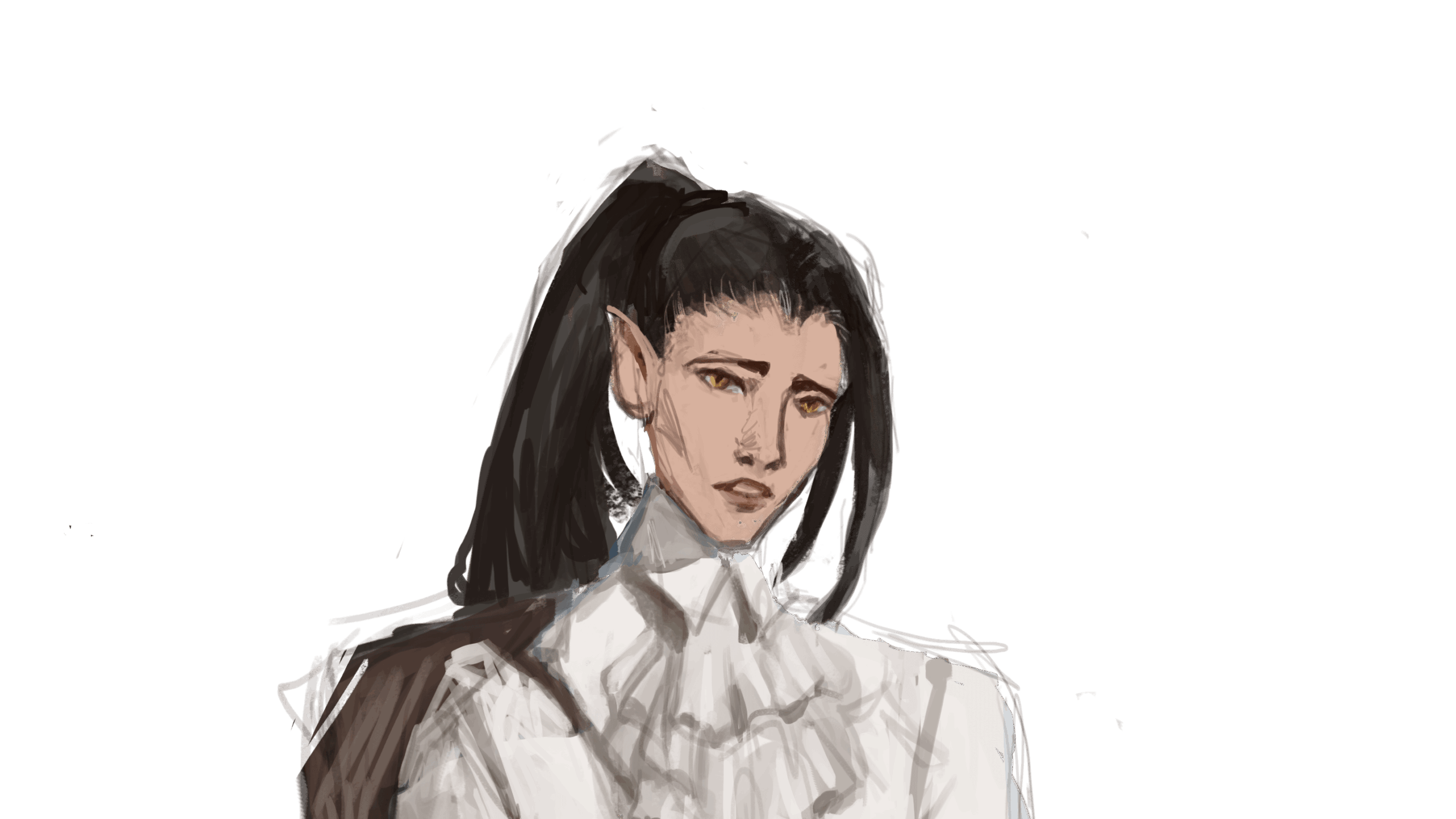
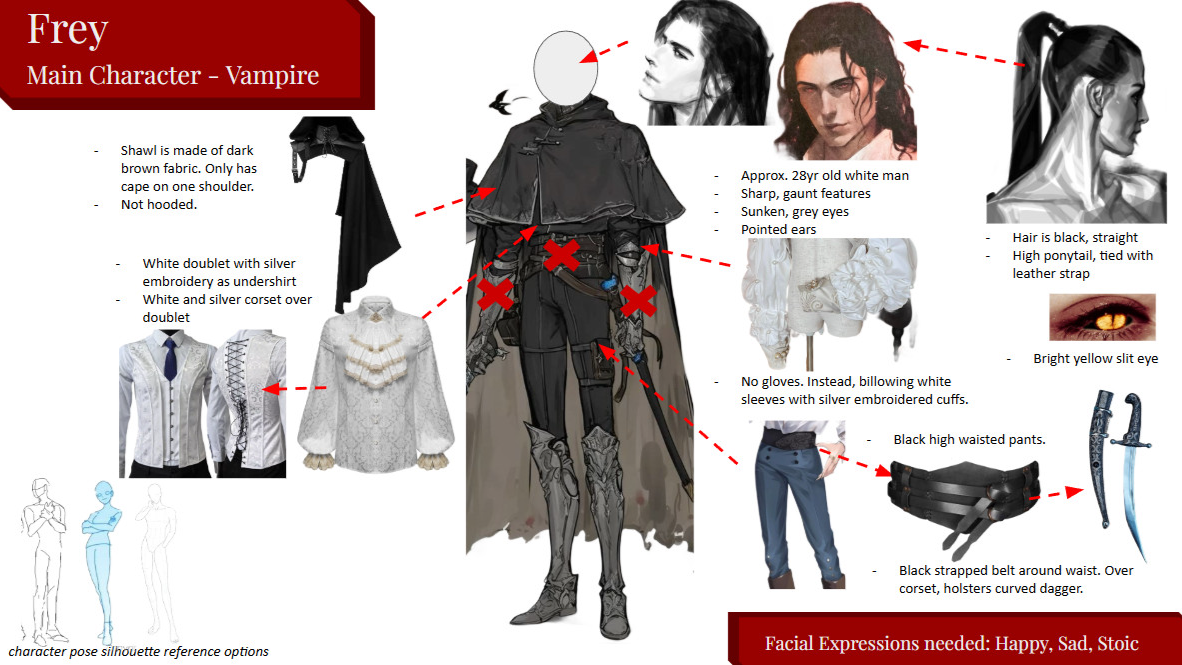
Player Character: Frey
Frey is the main character of Stigmata.
Our main goal with Frey was to drastically change his character depending on what choices the player made. By doing so, we’d represent that being overly “human” or overly “vampire” only brought out the worst in Frey, and ended in catastrophe.
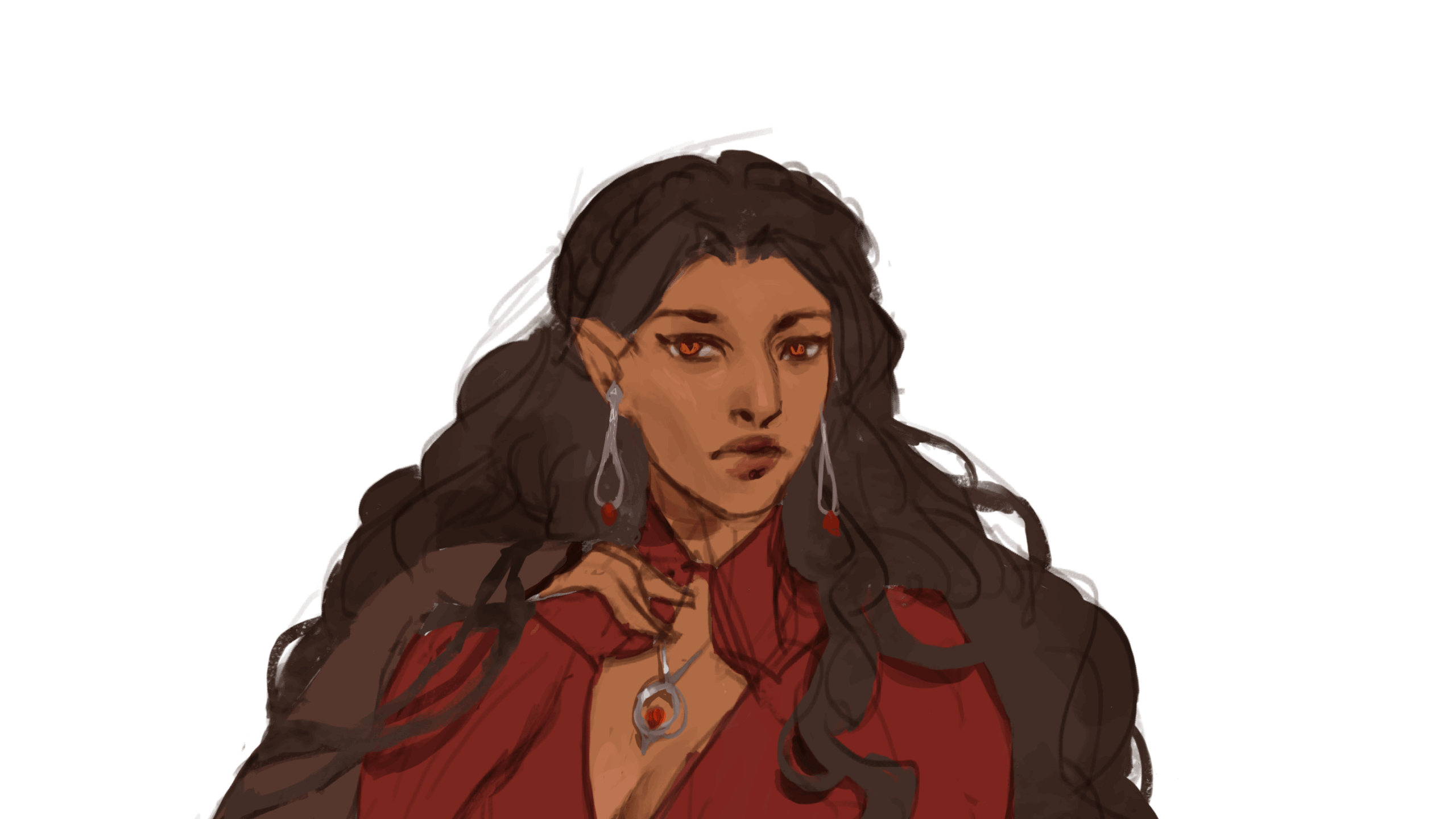
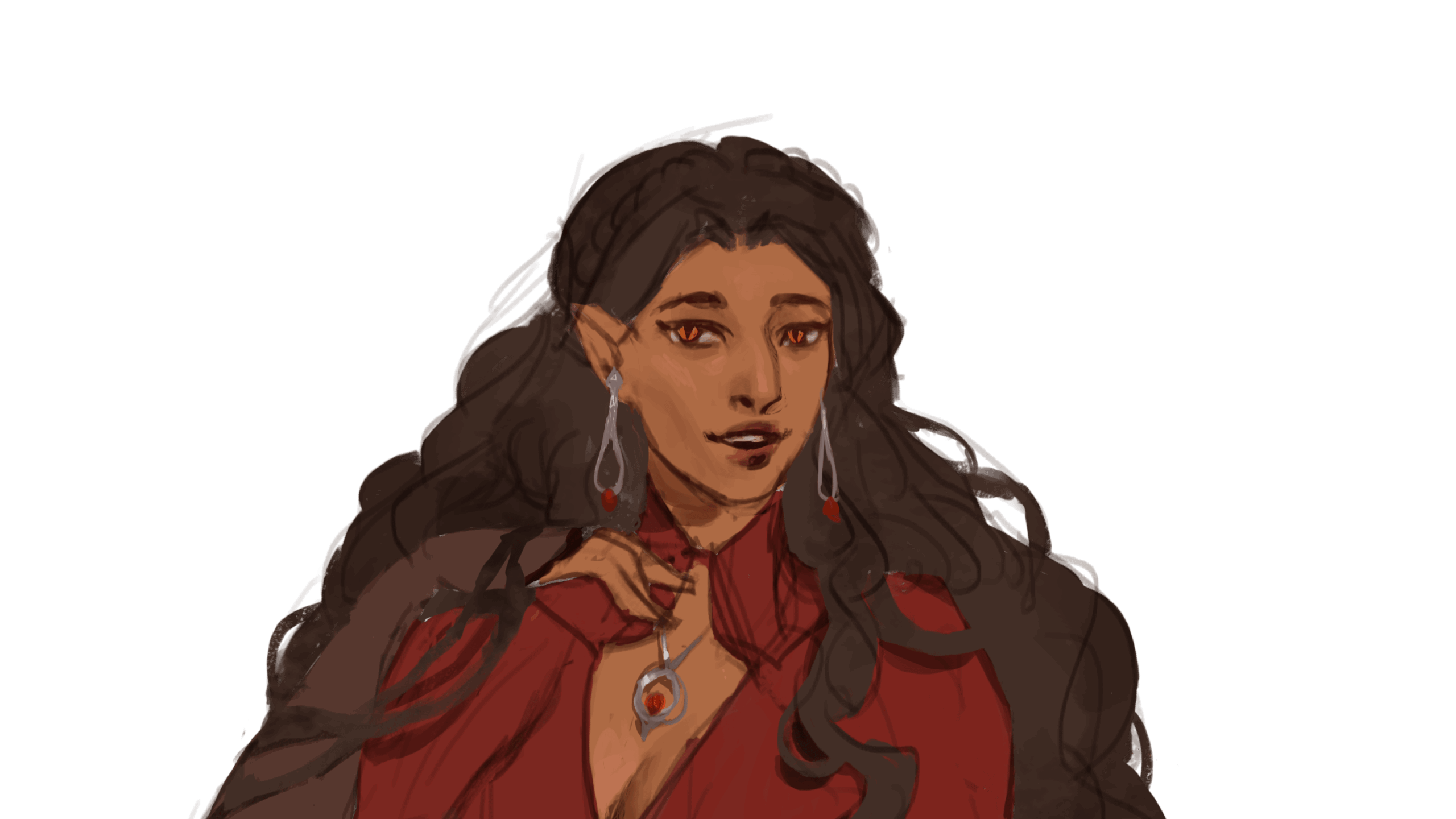
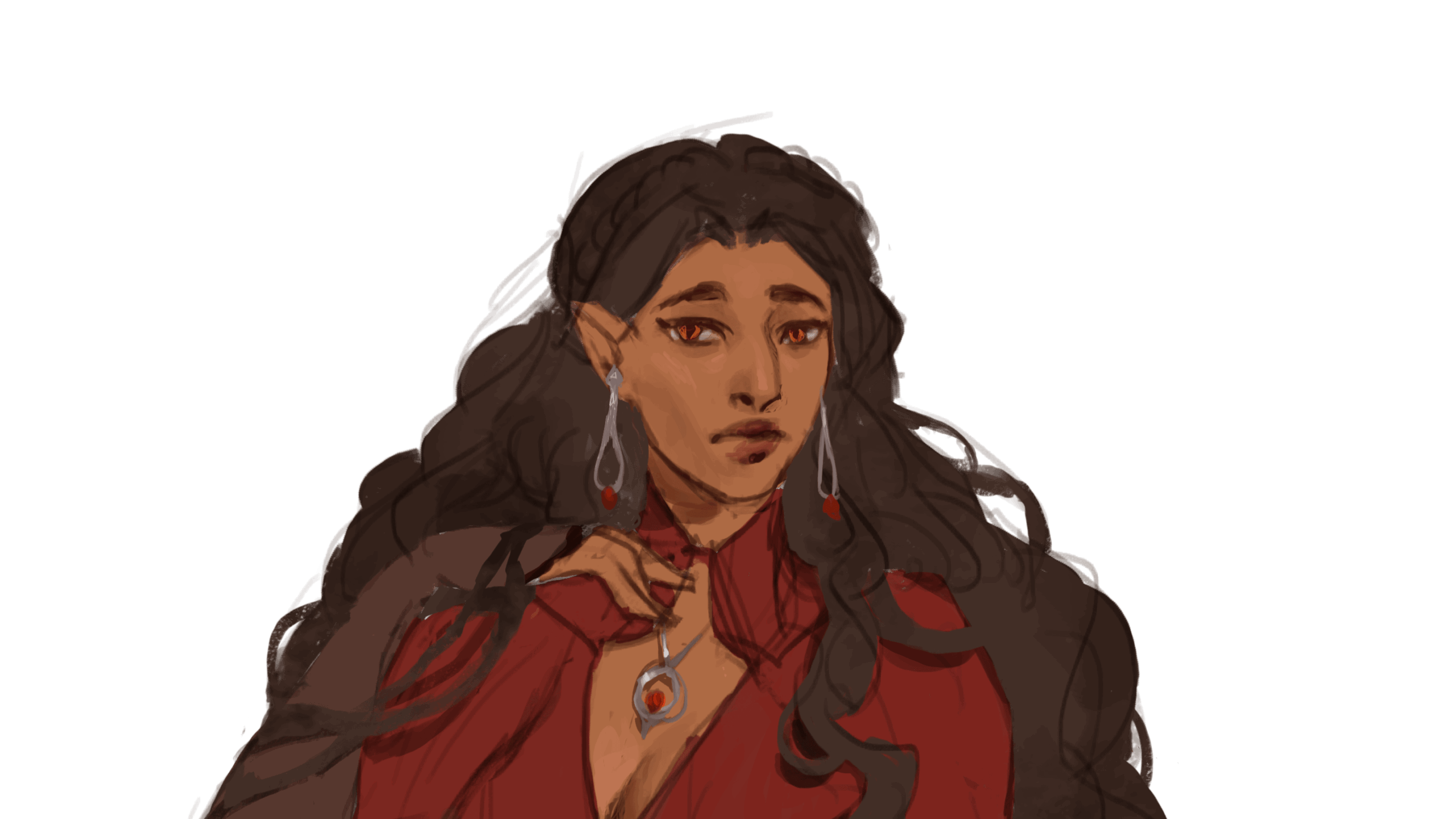
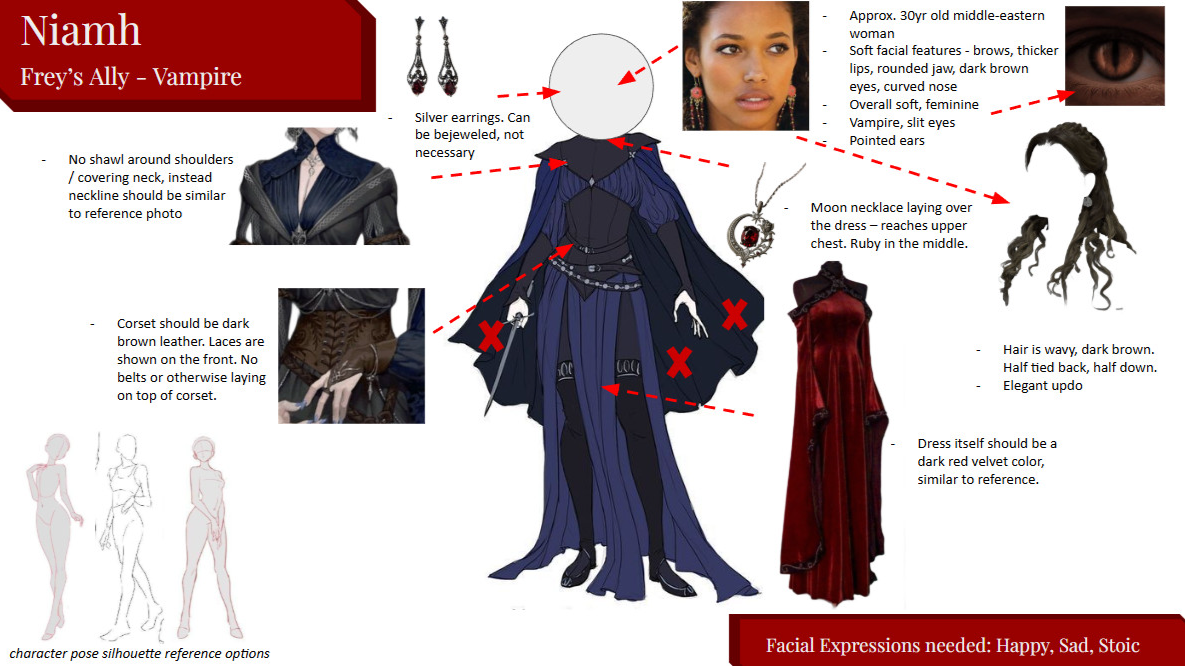
Ally Character: Niamh
Niamh is one of the supporting characters of STIGAMATA, and an ally of Frey. She is representative of the “human” path, and thus, much of her dialogue can have blue hints.
She is logical, thoughtful, and loves Frey and his family deeply; however, she is very passive and law-abiding. She considers the safety of the coven paramount.
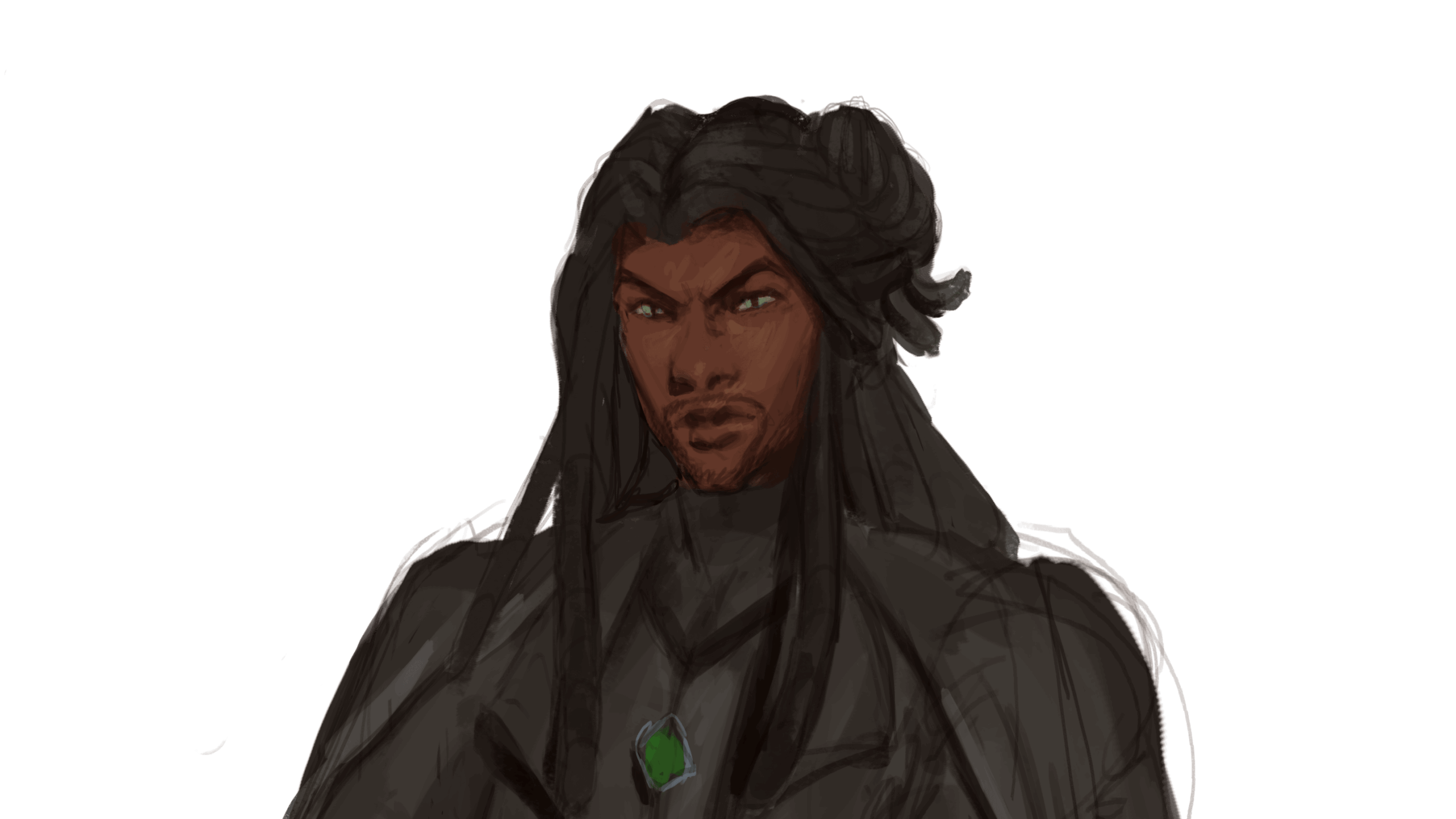
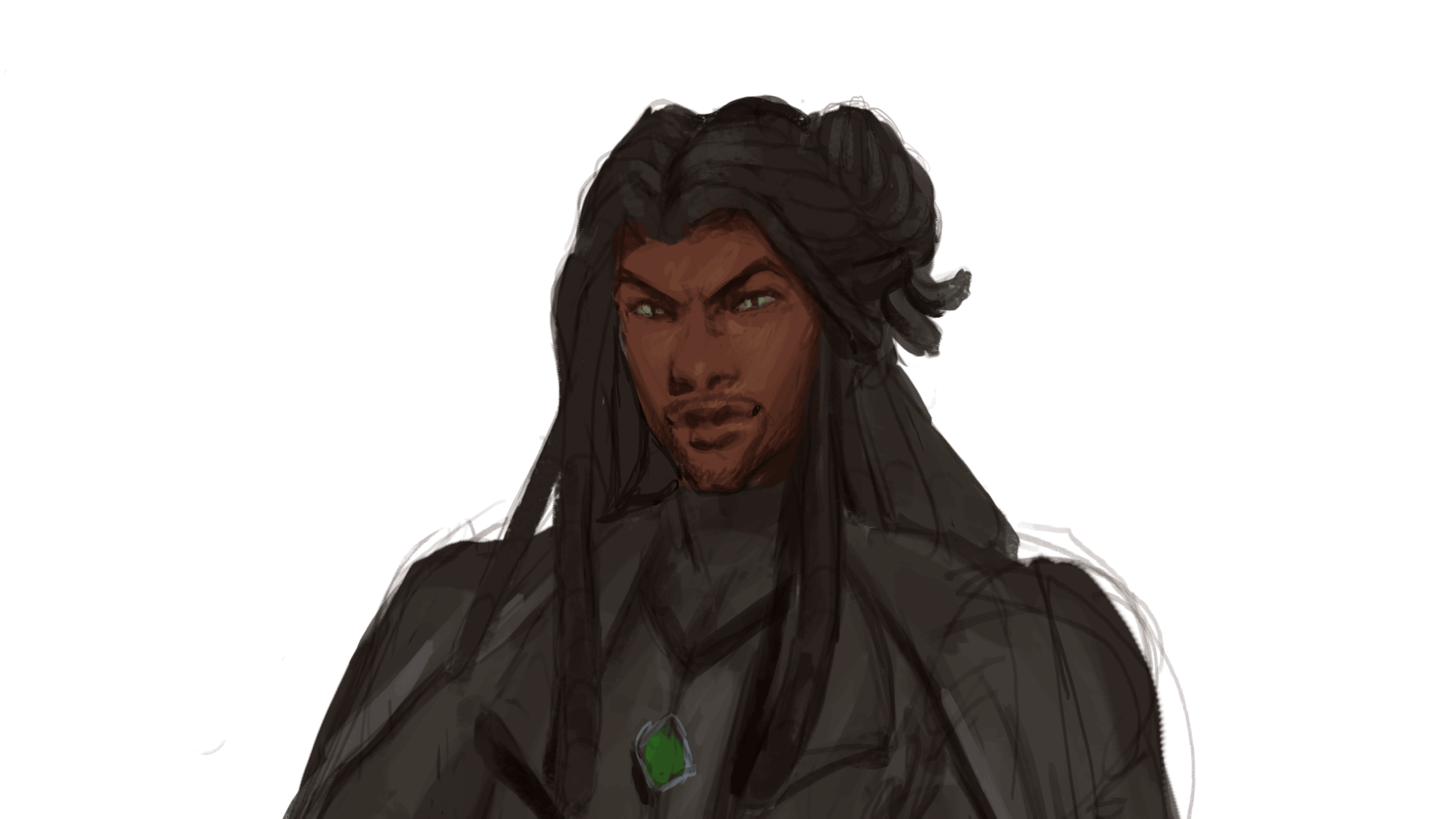
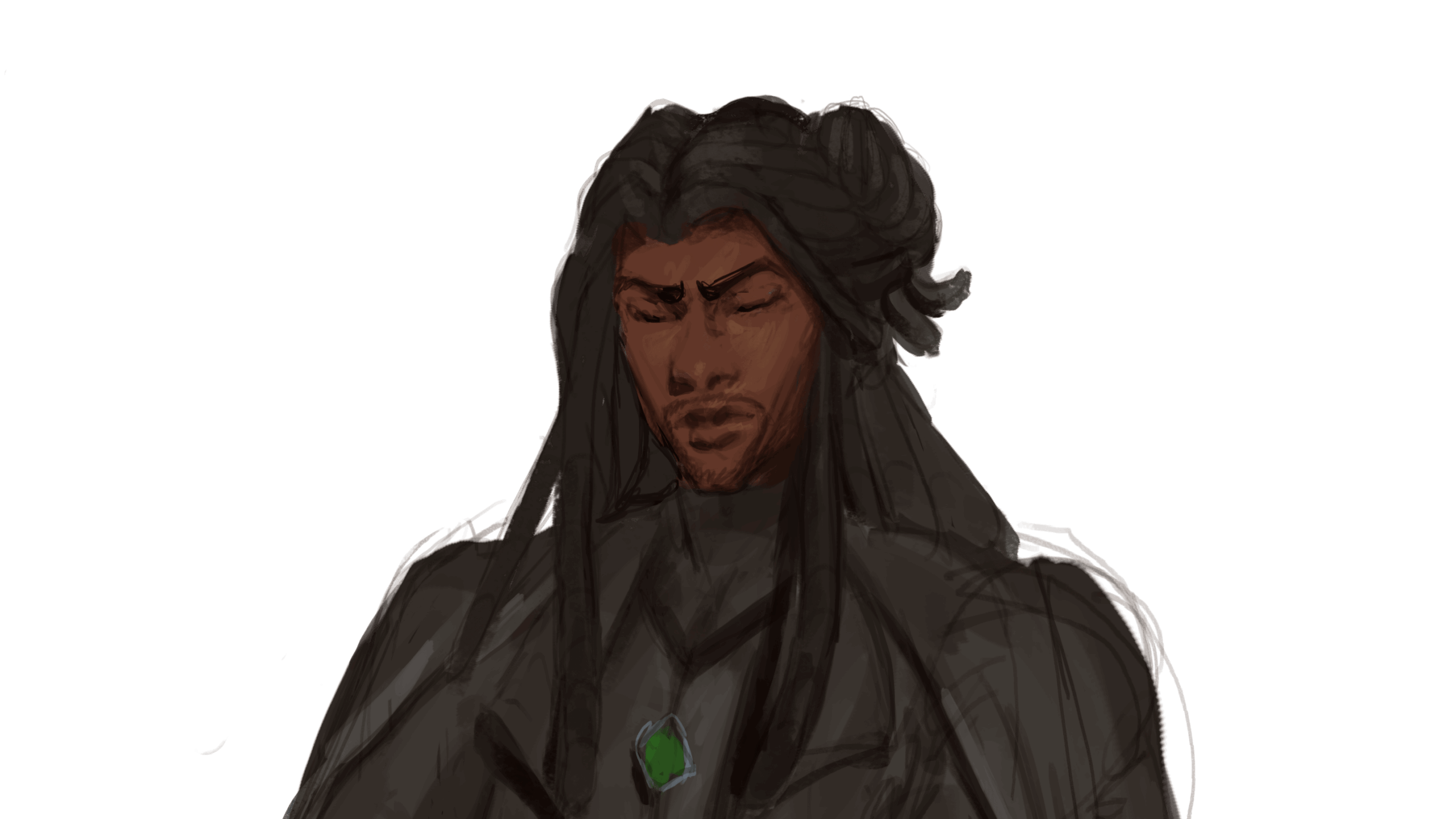
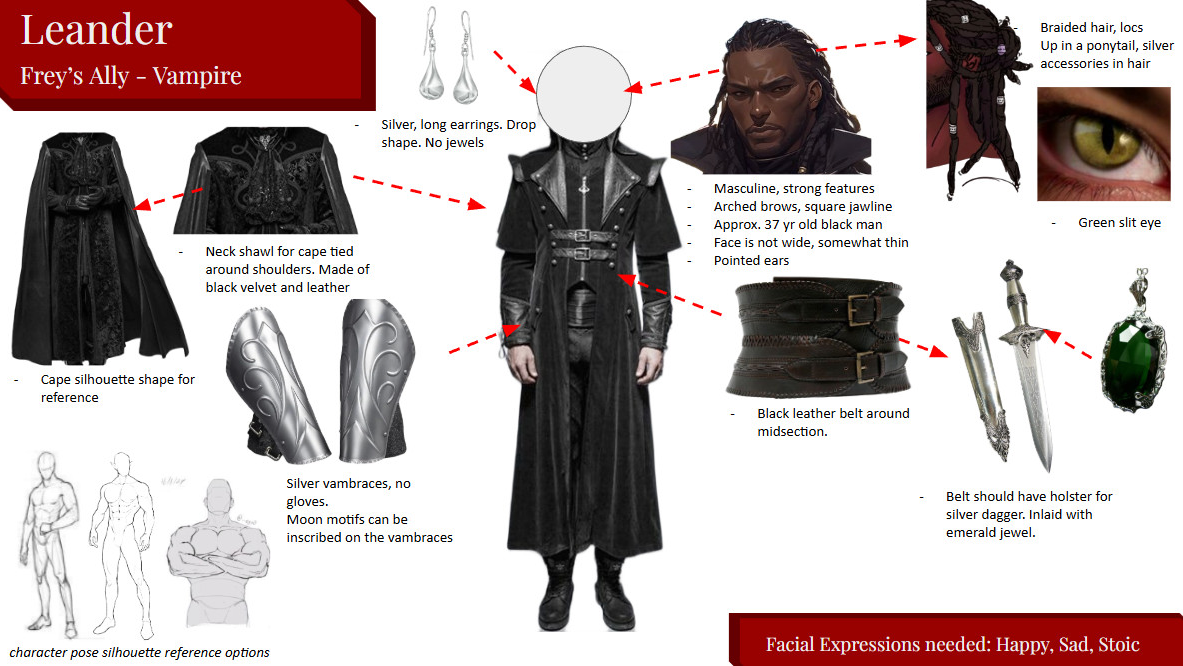
Ally Character: Leander
Leander is one of the supporting characters of STIGMATA, and an ally of Frey. He is representative of the “vampire” path, and thus much of his dialogue has red hints.
He is headstrong and persevering. He does not take no for an answer. However, he does strangely have a soft spot for Frey, though loath to admit it. As for the reasoning, well…
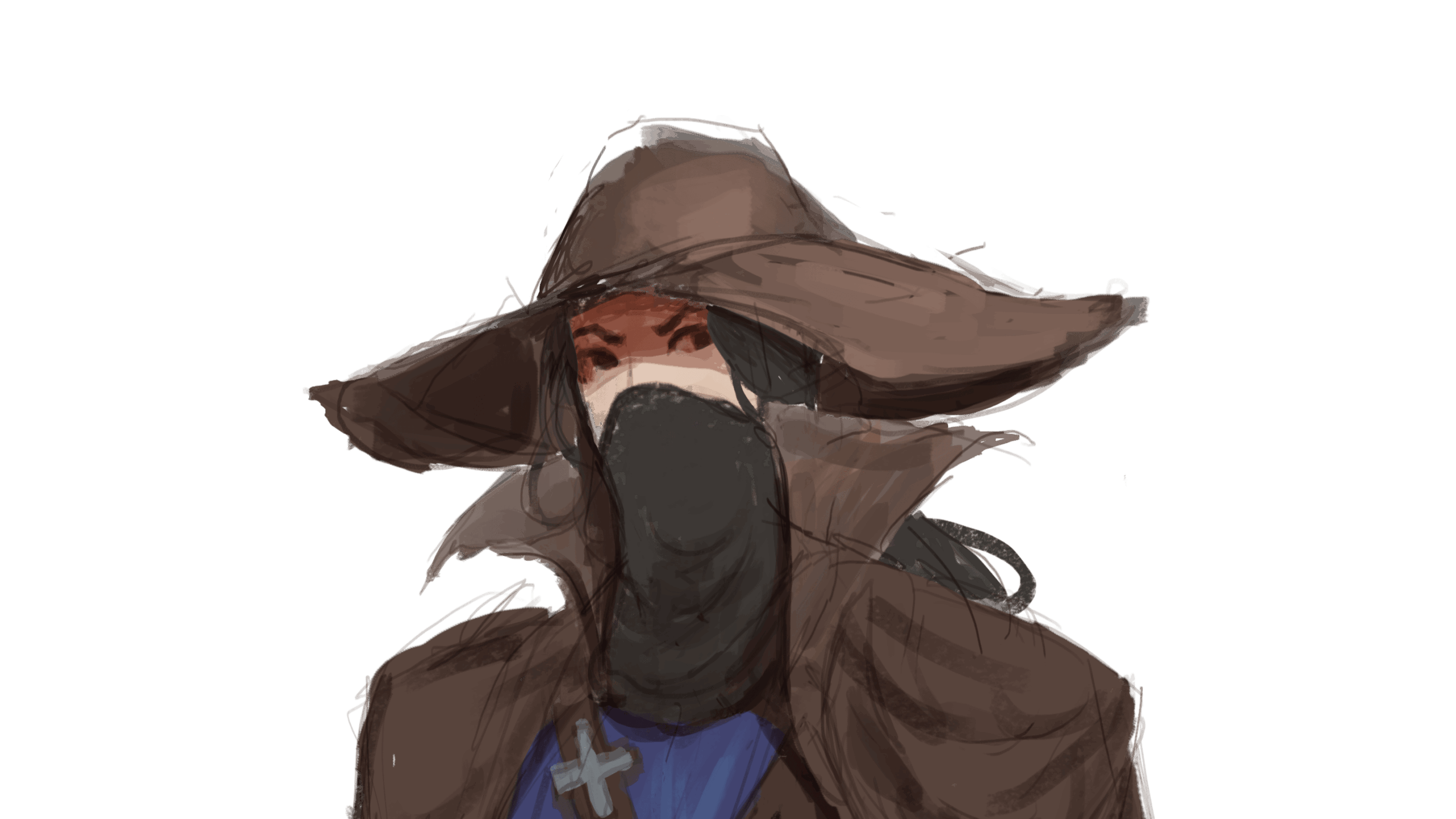
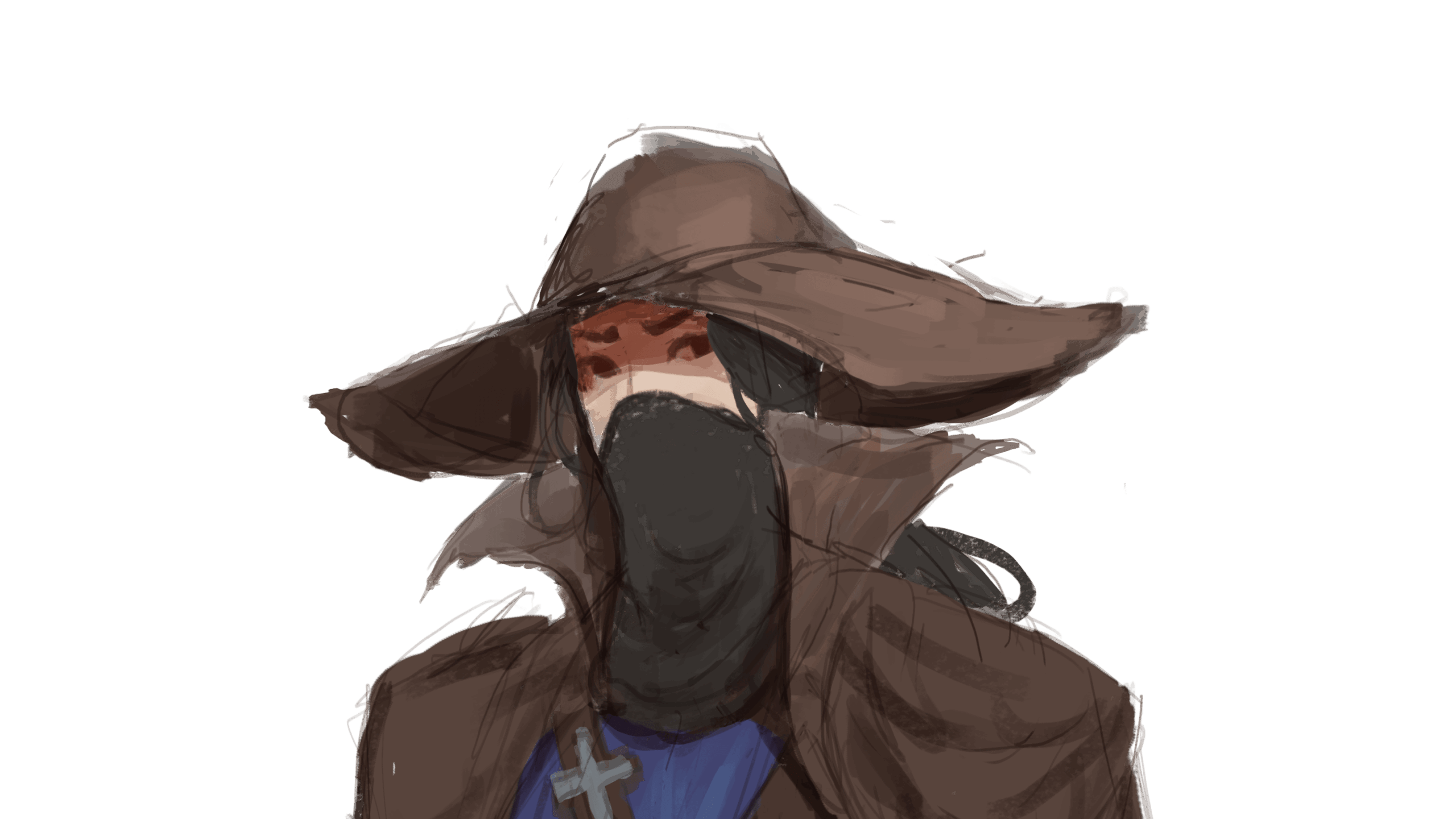
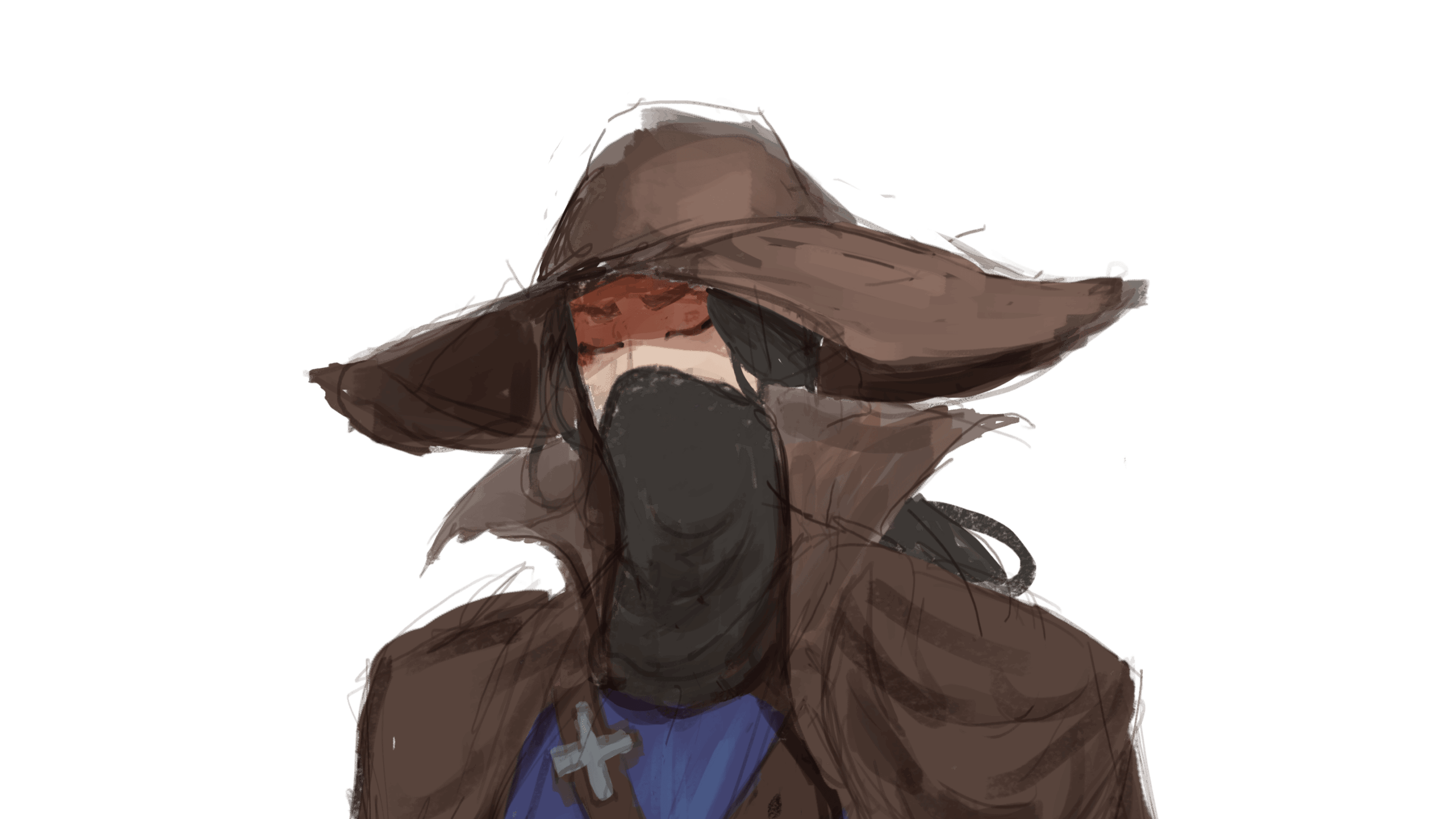
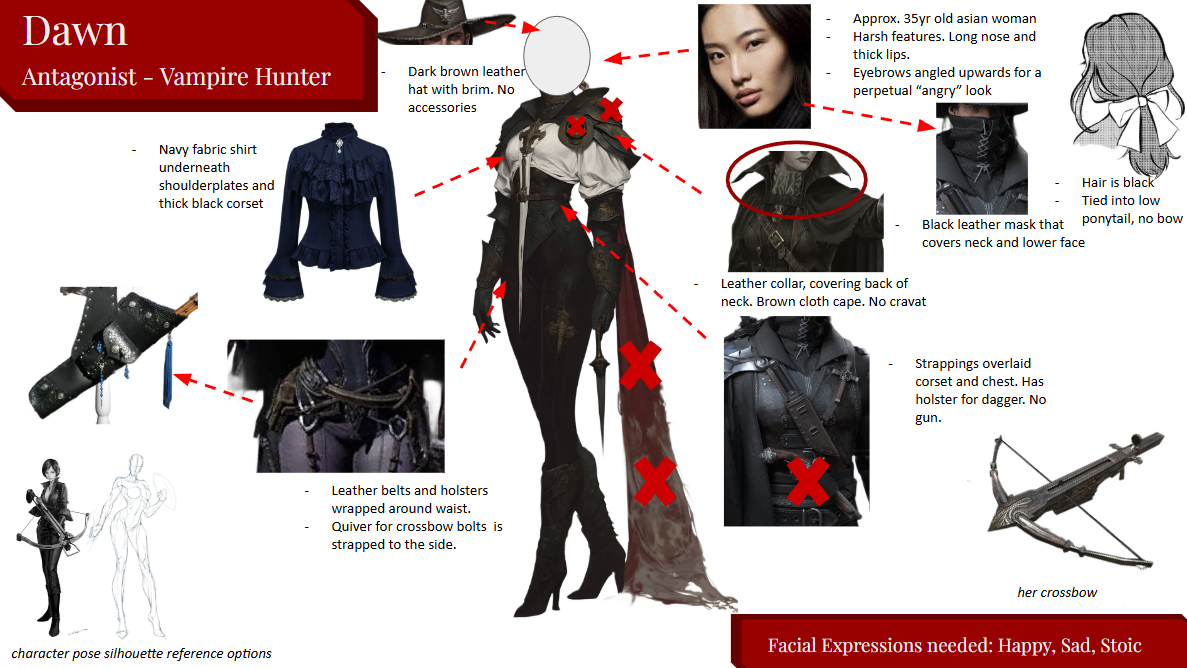
Enemy Character: Dawn
Dawn is the main antagonist of STIGMATA. She is the High Captain of the vampire hunters.
Regardless of whatever path Frey chooses, Dawn will hunt him down. This is to exemplify that, in the end, a vampire will always be a vampire in Dawn’s eyes. Favoring “human” choices makes no difference.
Dawn is steadfast in her duty and will see it to the very end.
Genre Content & Research
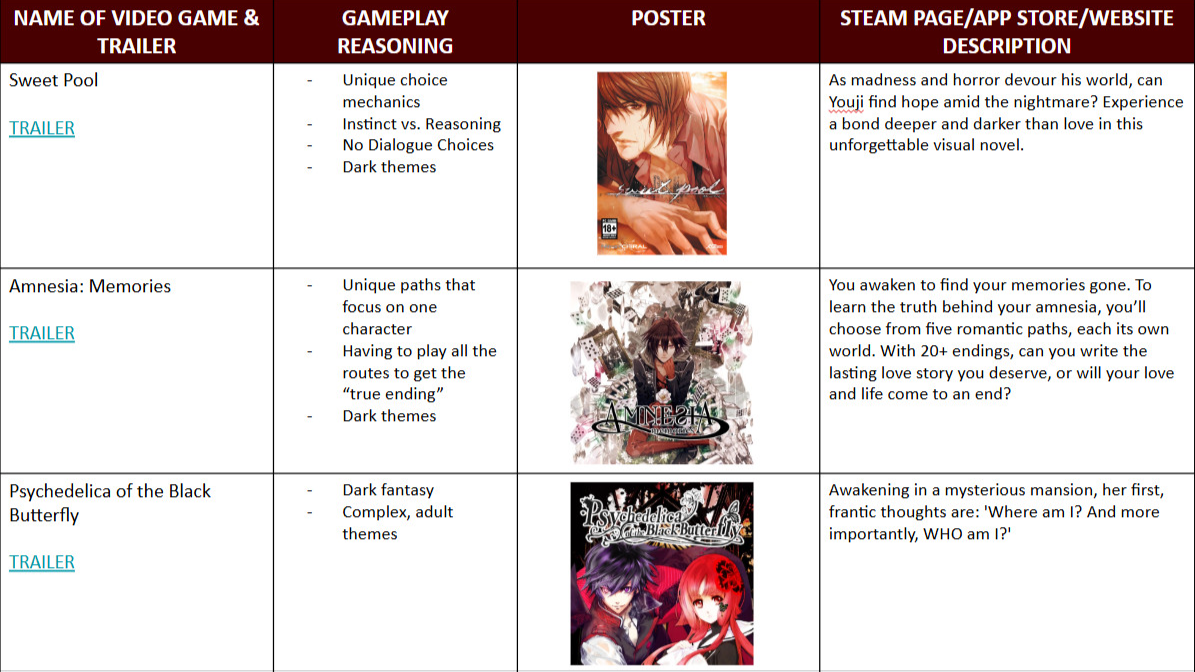
STIGMATA was heavily influenced by NITRO-CHiRAL’s Sweet Pool. The choice mechanics in both games are almost identical. STIGMATA’s choice mechanics, however, shifted slightly to emphasize the religious symbolism that is often found in vampire settings.
Additionally, in Amnesia: Memories, the player must complete all previous routes to achieve the “true ending”. This was a feature we wished to put in STIGMATA, but didn’t have enough time to do so due to the game jam’s time limit. In the future, this is a feature we’d like to include.
Beyond that, every game featured in our research focuses on dark settings and themes.